


Utah-based immigration attorney Laura Lui is puzzled by the idea that Tonga, a country of just 100,000 people, could pose any threat to the United States.
“I don’t understand why my country is on that list,” she said, referring to a report that the Trump administration might add Tonga to a new travel ban involving 36 countries. “We’re a small nation without significant natural resources. We aren’t a danger to the U.S.”
According to a Washington Post article citing a U.S. State Department memo, citizens from Tonga, as well as Vanuatu and Tuvalu, could soon face travel restrictions barring them from entering the U.S.
In Tonga, where many citizens have relatives in U.S. states like Utah, Hawaii, and California, such a ban could prevent families from reuniting for religious, cultural, or personal reasons. Henrietta McNeill, a researcher at the Australian National University, explained that family members often travel back and forth to provide support during times of need, illness, or transitions.
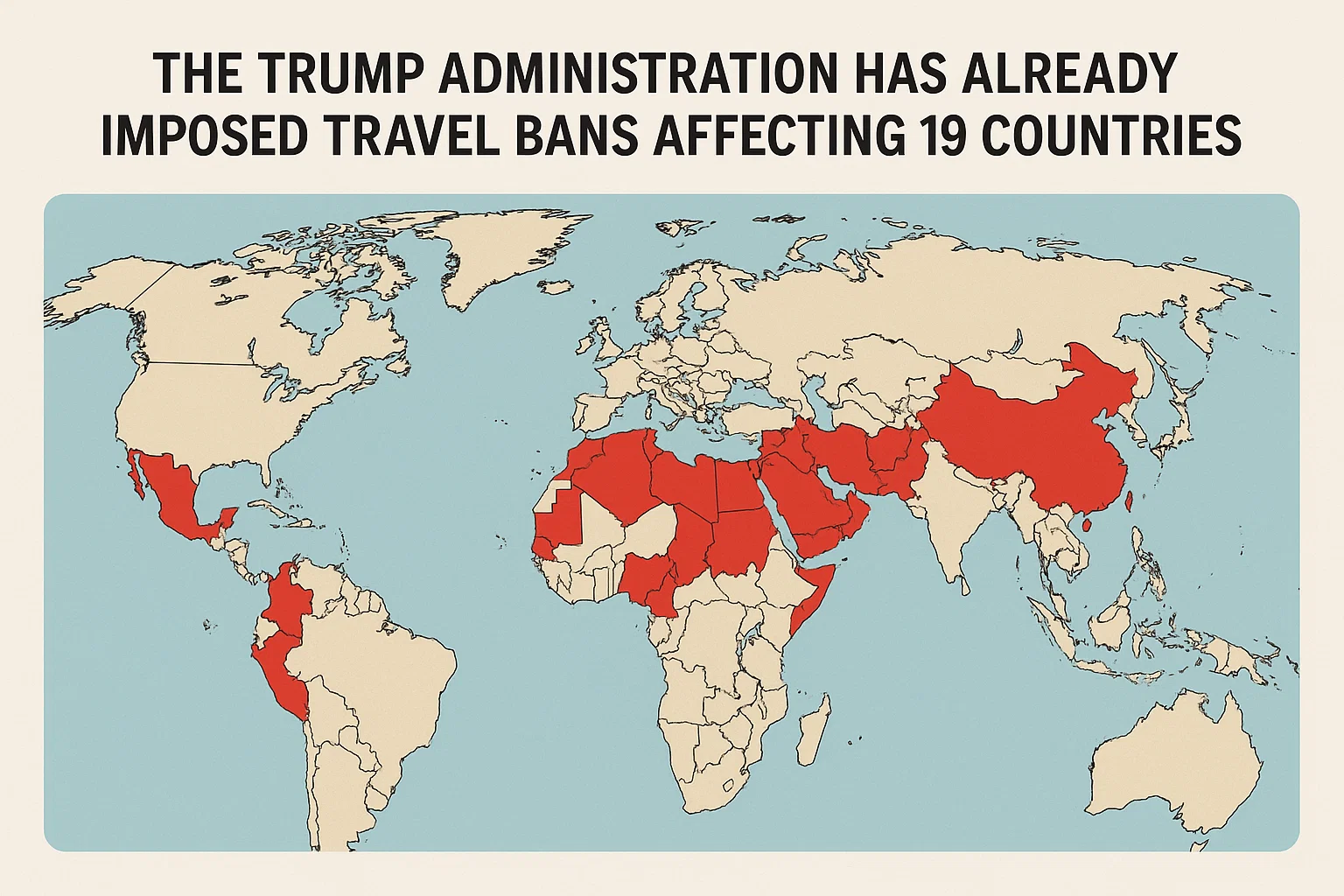
The Trump administration had already enacted travel bans affecting 19 nations, raising anxiety among Pacific Islanders living in the U.S. Now, Pacific communities at home and abroad are questioning why their countries are being considered for the expanded ban.
The U.S. State Department explained that travel bans serve national security interests and are determined based on a country’s security infrastructure, visa overstay rates, and cooperation with U.S. repatriation efforts.
Tonga’s foreign minister is discussing the matter with U.S. representatives, while Vanuatu’s government is still awaiting detailed reasons for its inclusion. Vanuatu’s Internal Affairs Minister, Andrew Solomon Napuat, said the government first learned of the potential ban through media reports and is seeking clarification.
Critics argue that a ban could not only harm Pacific nations but also damage U.S. efforts to strengthen its influence in the region, which has become strategically contested. The proposed list of 36 countries includes 25 African nations, key U.S. partners like Egypt, and several countries from the Caribbean and Central Asia.
Earlier this month, new restrictions were placed on travelers from 12 nations including Afghanistan, Iran, and Yemen, adding to existing partial bans on seven other countries. President Trump stated that additional countries could be included as global threats evolve.
State Department spokesperson Tammy Bruce said that affected nations would have 60 days to comply with U.S. security requirements, including information-sharing protocols and identity management systems. She stressed that these standards are minimal and achievable.
While the Trump administration has not specified why the Pacific Islands are targeted, the EU and UK recently revoked Vanuatu’s visa-free status due to concerns over its citizenship-by-investment scheme, known as “golden passports.” Additionally, reports of visa overstays by some Tongans in the U.S. may have influenced the decision.
However, Dr. McNeill suggests there are less severe ways to handle migration concerns.
Vanuatu’s Prime Minister Jotham Napat emphasized the importance of maintaining strong ties with the U.S., expressing hope for open discussions to resolve the issue.
Tonga’s Prime Minister ‘Aisake Eke confirmed that the nation’s foreign minister, Crown Prince Tupouto’a ‘Ulukalala, is engaging with the U.S. Consul on the matter. Tuvalu’s government has not yet responded publicly.
The potential travel ban has sparked backlash among Tongans, both in the U.S. and abroad. Utah-based Tongan-American radio host Stephanie Mahina criticized the proposal as a distraction from other political issues, pointing out that the U.S. was built by immigrants. She accused President Trump of using the ban as a power move that disregards the people he serves.
Malaki Koloamatangi, a Pacific politics expert at Tonga National University, called the move discriminatory, noting that targeting small populations like Tonga’s appears racist.
“If the goal is to limit immigration, larger countries would be more logical targets,” he argued.
Bruce clarified that the U.S. is evaluating countries based on their security systems rather than geographic location.
The ban could also negatively impact Vanuatu’s kava exports and the value of its citizenship-by-investment program, Dr. McNeill added.
Dr. Koloamatangi warned that the U.S. risks losing influence in the Pacific region, especially as it tries to counter China’s growing presence. “This kind of move may push the Pacific closer to China and other Asian powers,” he said. “It’s unclear what Trump hopes to accomplish.”
