
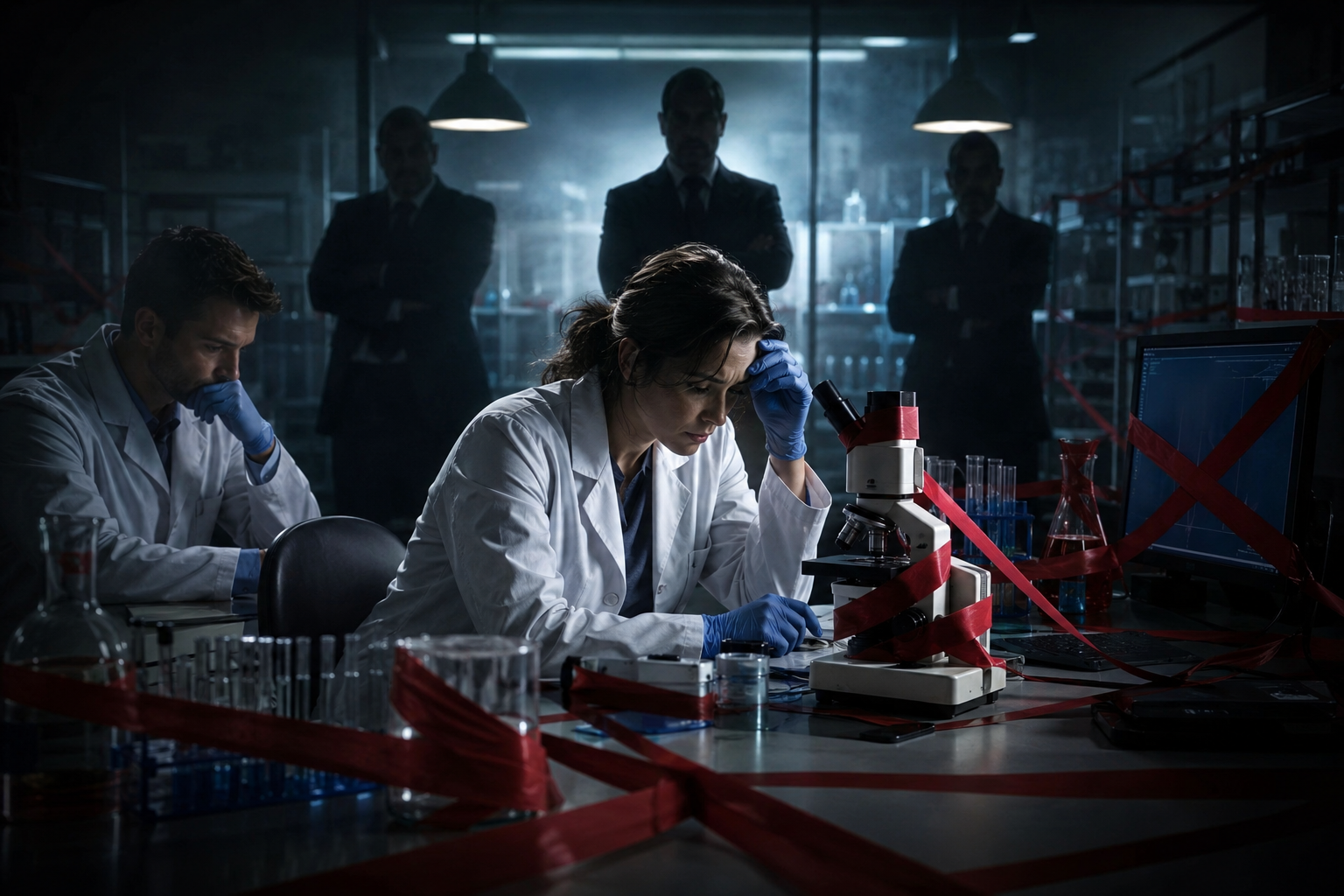
A proposed change to United States federal grant rules has prompted scientists and historians to warn about the dangers of allowing political priorities to determine which research receives public funding.
The US Office of Management and Budget has proposed a framework that would give political appointees greater influence over grant approvals, eligibility requirements and the cancellation of previously awarded funds. Critics say it could also limit international collaboration, restrict how researchers communicate their findings and block work considered inconsistent with the administration’s definition of the national interest.
The debate matters because the federal government remains one of the most important supporters of American science. Official data show that federal agencies funded about 40 per cent of US basic research in 2022, meaning changes to government grantmaking could affect universities, laboratories and scientific careers across the country.
The Science News report compares the current concerns with the rise of Soviet agronomist Trofim Lysenko under Joseph Stalin. During the 1930s, Lysenko rejected Mendelian genetics and promoted the disputed idea that characteristics acquired during an organism’s lifetime could be inherited by its descendants.
Lysenko claimed that treating seeds with freezing water could rapidly create crops capable of surviving harsh winters. Stalin supported the promise of a quick increase in food production and elevated Lysenko to powerful scientific positions, despite strong objections from established geneticists.
His agricultural methods were imposed on collective farms but failed to deliver the promised results. Poor germination and crop losses added to the Soviet Union’s food crisis, while scientists who defended mainstream genetics were dismissed, imprisoned or forced to publicly abandon their work. Some died in custody or were executed.
The consequences extended far beyond agriculture. By suppressing genetics for political reasons, the Soviet Union fell behind in hybrid-crop development, molecular biology and research connected to the discovery of DNA. Historians argue that scientific fields can take decades to recover once laboratories, training programs and networks of expertise are dismantled.
Researchers cited in the report fear that selective funding decisions could create a similar chilling effect in the United States. Scientists may avoid politically sensitive subjects, young researchers may leave the profession and institutions could lose knowledge that cannot simply be rebuilt after a change of government.
The article points to funding disputes involving mRNA technology, vaccines, infectious diseases, health disparities and public-health programs as signs that political priorities are already influencing research directions. Critics argue that restricting these fields could allow other countries to overtake the United States in medical and technological innovation.
Historians also stress that the comparison with Stalin’s Soviet Union has limits. The United States has democratic institutions, courts, universities, independent media and scientific organisations capable of opposing government decisions—protections that Soviet researchers did not have.
Nevertheless, Lysenko’s legacy remains a warning about replacing evidence-based decisions with politically convenient conclusions. Once governments begin rewarding research for supporting an official position rather than for its scientific quality, the damage can affect public health, agriculture, innovation and national competitiveness for generations.
