


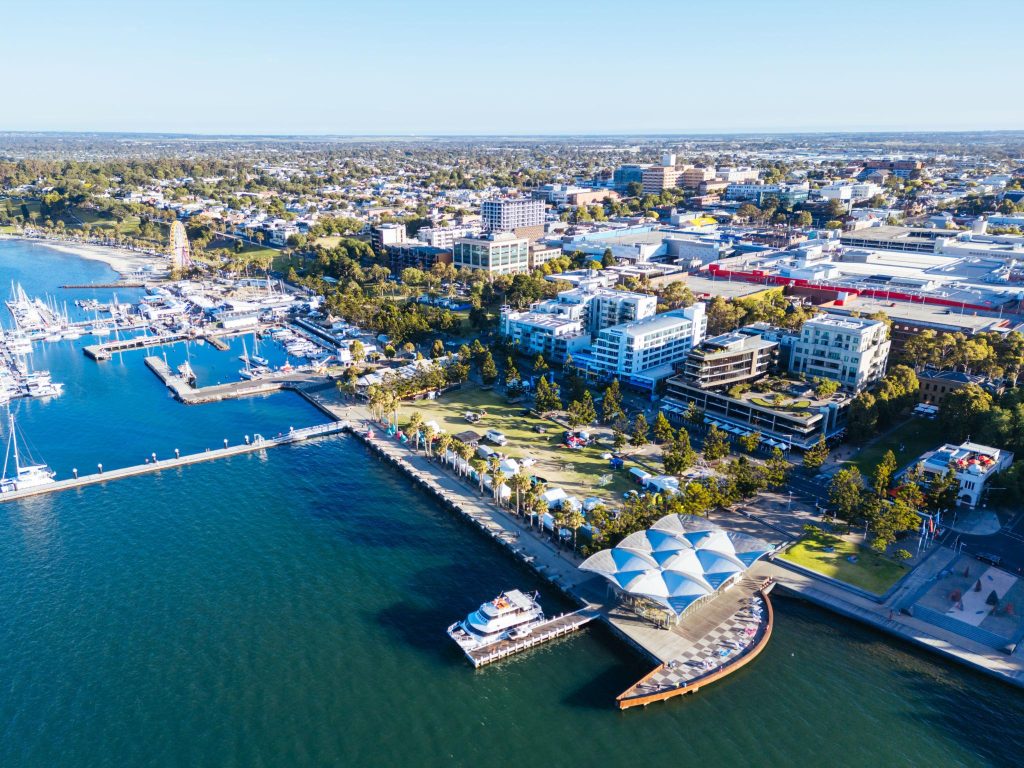
Perth, Adelaide, the Gold Coast, Geelong and Western Sydney have been identified as the urban centres most likely to drive Australia’s next major phase of economic expansion.
A new economic report suggests the five fast-growing regions could generate hundreds of thousands of jobs, attract significant private and public investment and reduce Australia’s traditional dependence on the central business districts of Sydney and Melbourne.
Each location is developing its own specialised industries, infrastructure and workforce capabilities, allowing it to compete for businesses, skilled workers and investment that previously concentrated in the country’s two largest cities.
Perth remains strongly positioned to benefit from global demand for mining, energy and critical minerals. Western Australia’s resources sector continues to support large-scale investment, exports and employment, while growing interest in battery materials and renewable-energy projects is creating opportunities beyond traditional mining.
The city’s established engineering, logistics and professional-services sectors are also expected to benefit as governments and companies expand critical-minerals processing and clean-energy supply chains.
Adelaide is increasingly emerging as a centre for defence, space technology and advanced manufacturing.
Major defence programs, research institutions and technology companies have helped strengthen South Australia’s industrial base. Investment linked to naval shipbuilding, aerospace, cybersecurity and high-value manufacturing is expected to create new employment opportunities and attract specialised workers.
The Gold Coast is expanding through a more diverse economy that now extends well beyond tourism and property development.
Health care, education, professional services, digital industries and major infrastructure projects are becoming increasingly important contributors to the city’s growth.
The latest economic figures cited in the report indicate the Gold Coast economy has expanded by about 25 per cent since 2020–21, outperforming Greater Brisbane and the average growth rate recorded across Australian capital cities.
Tourism remains an important foundation of the local economy, but investment in hospitals, universities, innovation precincts and transport infrastructure is helping the city develop a broader and more resilient business base.
Geelong has also undergone a major economic transformation after decades of dependence on traditional manufacturing.
The Victorian city has expanded into clean energy, advanced manufacturing, health care, education and scientific research. Its proximity to Melbourne, lower business costs and growing population have made it increasingly attractive to companies seeking alternatives to operating in the capital.
New industrial projects and research partnerships are expected to further strengthen Geelong’s position as a centre for innovation and specialised production.
Western Sydney is expected to play one of the most significant roles in Australia’s future economic development because of its rapid population growth and major infrastructure investment.
The region is already Australia’s fastest-growing population centre and is receiving billions of dollars in public and private investment.
Western Sydney International Airport is central to the region’s transformation. The airport and surrounding development precincts are expected to support aviation, freight, logistics, tourism, manufacturing and professional-services employment.
New roads, rail connections, housing developments, hospitals and education facilities are also reshaping the region and improving its ability to attract businesses.
The report says these emerging cities offer several advantages, including lower property and operating costs, expanding populations, access to skilled workers and improving infrastructure.
Businesses are increasingly willing to establish offices, distribution centres and regional headquarters outside traditional CBD locations, particularly as technology and flexible working arrangements reduce the need for companies to remain concentrated in central Sydney or Melbourne.
Government spending has played an important role in supporting the shift.
Investment in public transport, airports, health facilities, universities, industrial precincts and urban development has encouraged private companies to commit capital to these regions.
The report argues that this trend is making Australia’s economy more geographically diverse.
Rather than relying heavily on financial services, property and corporate activity centred in Sydney and Melbourne, future national growth could increasingly come from regional economies specialising in defence, resources, renewable energy, logistics, technology, advanced manufacturing and health care.
A wider distribution of economic activity could improve Australia’s resilience by reducing the country’s exposure to downturns affecting a limited number of industries or locations.
It could also create more employment opportunities closer to where Australians live, reducing pressure on major-city transport systems and housing markets.
However, economists warn that rapid growth will create new challenges.
The success of the five cities will depend on governments and businesses maintaining investment in transport networks, housing, education, health care and workforce training.
Housing affordability is expected to become a particularly important issue as more workers and businesses move into these locations.
Without sufficient housing construction, rising demand could push up property prices and rents, making it more difficult for essential workers and younger households to remain in growing communities.
Planning reform will also be required to ensure new residential, commercial and industrial developments can be approved and delivered quickly enough to support increasing populations.
Skills shortages represent another potential obstacle. Defence, technology, engineering, construction and health care are already competing for qualified workers, meaning governments may need to expand training programs and improve connections between employers, universities and vocational institutions.
Despite these risks, the report suggests Perth, Adelaide, the Gold Coast, Geelong and Western Sydney are well placed to become increasingly influential economic centres.
Their growth reflects a broader change in the structure of the Australian economy, with investment and employment spreading beyond the traditional capitals.
As their specialised industries continue to expand, the five regions are expected to play a major role in shaping Australia’s long-term productivity, employment and economic resilience.
