


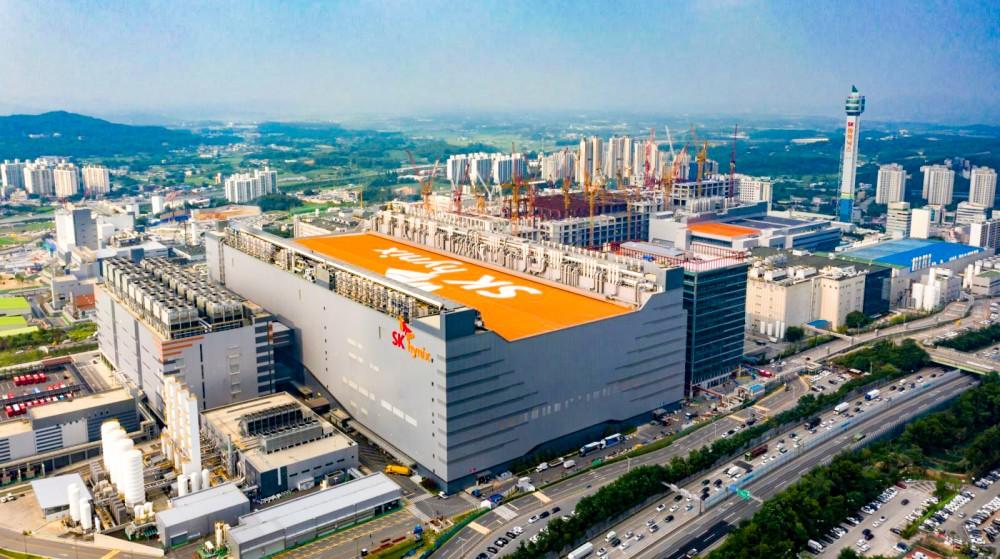
South Korea’s semiconductor giants, led by Samsung Electronics and SK Hynix, have transformed the country’s economy and financial markets, turning memory chips into one of the nation’s most powerful economic engines. The global surge in demand for artificial intelligence (AI) infrastructure has dramatically increased the value of these companies, boosting exports, lifting the stock market and strengthening South Korea’s position as one of the world’s leading technology economies.
The AI boom has created unprecedented demand for high-bandwidth memory (HBM) chips used in advanced AI processors supplied to companies such as Nvidia. SK Hynix has emerged as a global leader in this specialised market, while Samsung continues investing heavily to expand its AI memory production. Together, the two companies account for a substantial share of South Korea’s stock market and remain central to the country’s export performance.
The semiconductor surge has delivered enormous economic benefits. In June 2026, South Korea’s exports climbed to a record level, with chip exports nearly tripling from a year earlier as AI-related investment accelerated worldwide. The strength of the semiconductor sector helped generate a record trade surplus while supporting broader industrial activity, including data centre construction and advanced manufacturing.
The windfall has also reshaped government policy. Seoul recently announced plans for a Future Response Fund, which would channel additional tax revenue generated by the semiconductor boom into long-term investments, youth employment, housing initiatives and next-generation industries such as AI, advanced computing and data centres. Officials describe the strategy as a way to convert today’s chip profits into sustainable national growth.
The stock market has reflected both the opportunities and risks of this transformation. Earlier in 2026, South Korea’s Kospi became one of the world’s best-performing equity markets as investors rushed into semiconductor stocks. More recently, however, concerns over valuations and the sustainability of AI demand triggered a sharp correction, illustrating how heavily the market now depends on the fortunes of its chip manufacturers.
Analysts believe South Korea’s experience demonstrates how a globally competitive technology industry can reshape an entire economy. While dependence on semiconductors creates exposure to industry cycles, continued investment in AI chips, research, manufacturing capacity and advanced infrastructure is expected to keep Samsung and SK Hynix at the centre of South Korea’s economic strategy for years to come.
https://www.facebook.com/plugins/like.php?href=https://bbrw.com/how-south-koreas-chip-champions-reshaped-its-economy-and-stock-market/&layout=button_count&show_faces=false&width=105&action=like&colorscheme=light&height=21
