

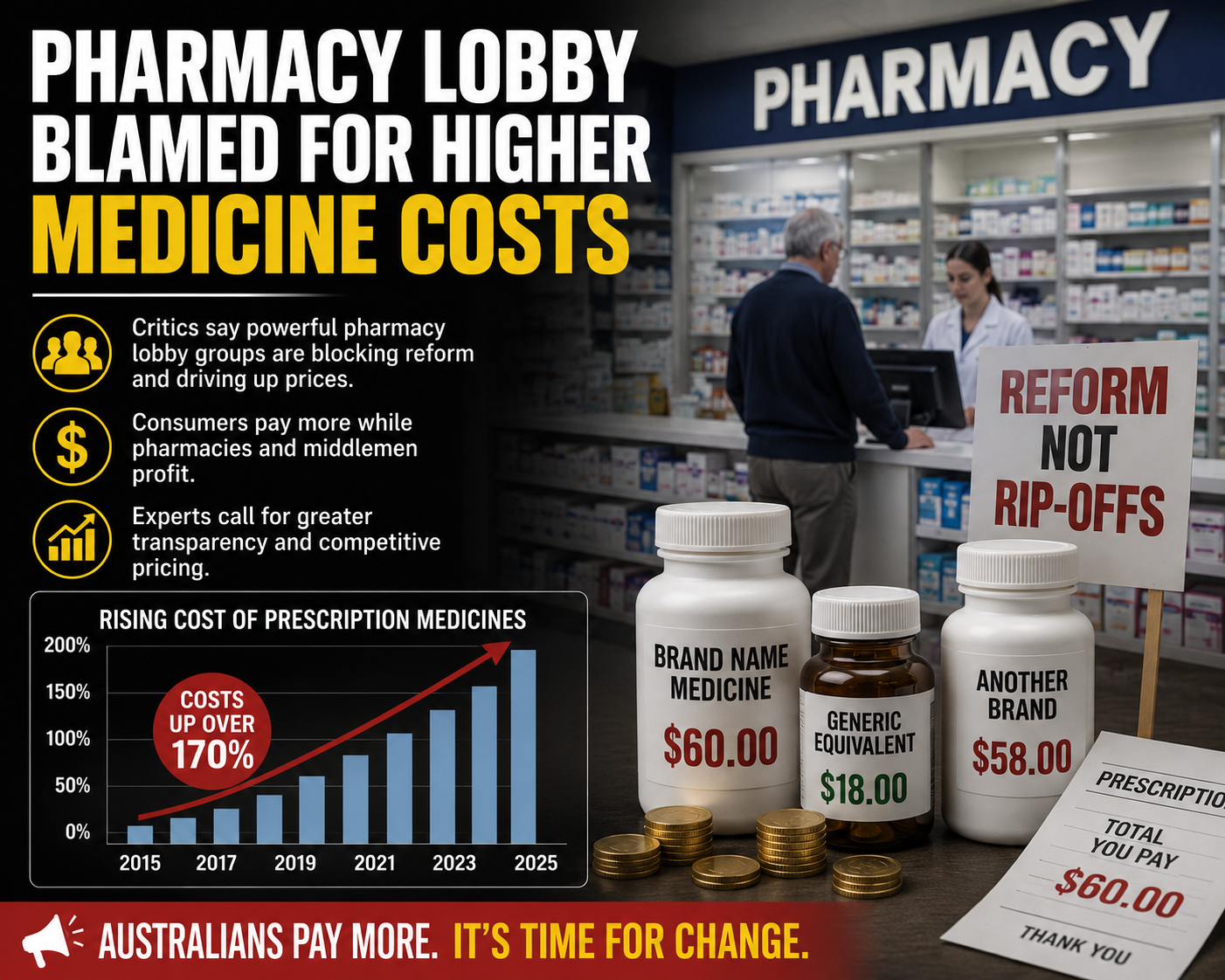
Australians may be paying more than necessary for prescription medicines because of opaque funding arrangements and the political influence of the Pharmacy Guild of Australia, according to a new report from the Grattan Institute.
The public policy think tank argues that the organisation representing most community pharmacy owners has gained excessive control over decisions affecting medicine prices and government funding. It says the existing system protects pharmacy profits while limiting competition and leaving patients and taxpayers with a poor deal.
Every five years, the federal government negotiates a Community Pharmacy Agreement with the guild. These agreements determine payments to pharmacies for dispensing subsidised medicines and delivering services such as vaccinations and chronic disease support.
The arrangements direct almost $4 billion in taxpayer funding to community pharmacies annually. However, Grattan says negotiations occur behind closed doors, with limited public scrutiny and little transparency about the evidence used to calculate payments.
Grattan health program director Peter Breadon described the process as an example of undue influence by a powerful vested interest. He said few other major Australian health funding arrangements were negotiated in the same way and comparable international systems were difficult to identify.
The institute claims the agreements provide generous protections for pharmacy owners, including measures that help shield their revenue when market conditions change. A survey conducted by the guild reportedly indicated that pharmacy owners’ profits had more than doubled over the past decade.
The Pharmacy Guild rejected the report’s characterisation of the sector. Guild vice-president Simon Blacker said the agreements recognised the essential role played by Australia’s network of more than 6,000 community pharmacies.
He said pharmacists delivered far more than prescription medicines, pointing to vaccinations, advice and support for people with chronic health conditions. The guild also cited its campaign to reduce the Pharmaceutical Benefits Scheme co-payment as evidence of its commitment to making medicines more affordable.
Dispensing fees questioned
One of the report’s central concerns is the dispensing fee paid whenever a pharmacy prepares a prescription. The charge, which is approximately $9 for an average medicine, is intended to cover activities such as receiving and checking the script, preparing the product and advising the patient.
Grattan found that the fee was not clearly connected to the actual cost of dispensing a medicine. It said previous efforts to determine that cost had been resisted, forcing the government to negotiate payments without sufficient independent information.
The report concluded that taxpayers may therefore be paying pharmacies more than required. The guild disputed that assessment, arguing that the analysis did not fully account for rising operating expenses or the range of professional services included in the fee.
Grattan also criticised an “allowable additional patient charge” that permits pharmacies to add up to $2.80 to the cost of certain medicines. The institute said the charge did not correspond to an additional service and recommended that it be abolished.
The report raised further concerns about rules that discourage pharmacies from offering discretionary discounts on some medicines. A $1 discount available to patients for about a decade is scheduled to disappear by 2029.
Although the amount may appear small for an individual purchase, the discount saved Australian patients approximately $48 million during the 2022–23 financial year.
The guild responded that these discounts had not been distributed evenly, with urban customers and some concession card holders more likely to receive them. It argued that lowering the PBS co-payment provided broader and more consistent savings for patients nationwide.
Pharmacy location rules under scrutiny
Grattan also called for an end to regulations controlling where new pharmacies can open. Under the current system, a proposed pharmacy generally must be at least 10 kilometres from an existing business, although exceptions may apply near medical centres or large supermarkets.
The guild says these restrictions help preserve a nationwide pharmacy network by preventing businesses from concentrating only in commercially attractive metropolitan locations while leaving rural and disadvantaged communities without adequate services.
Grattan argues that the rules instead protect established pharmacy owners from competition. It says countries that have removed similar restrictions have often experienced an increase in pharmacy numbers, longer operating hours and, in some cases, lower consumer prices.
Rather than limiting competition throughout the market, the institute recommended that governments directly support pharmacies in areas where services may otherwise be unviable. This could include rural subsidies and workforce incentives intended to maintain reliable access to medicines.
Call for major funding reform
The Grattan Institute recommended ending Community Pharmacy Agreements after the current arrangement expires in 2029. It wants pharmacy funding to be determined through a more transparent and independent process.
Should the government retain the agreements, Grattan said negotiations should include practising pharmacists and patient representatives rather than being conducted primarily between the government and pharmacy owners.
It also proposed giving the Independent Health and Aged Care Pricing Authority responsibility for determining appropriate funding rates. The authority already plays a role in assessing costs across other parts of Australia’s health system.
Federal Health Minister Mark Butler did not say whether the government would adopt the recommendations. He said the current pharmacy agreement had involved consultation with stakeholder organisations.
The report has intensified debate over how Australia funds community pharmacies and balances access, affordability and business viability. While the guild maintains that its advocacy supports a stable national pharmacy network and cheaper medicines, Grattan argues that greater competition and transparency would deliver better value for patients and taxpayers.
