


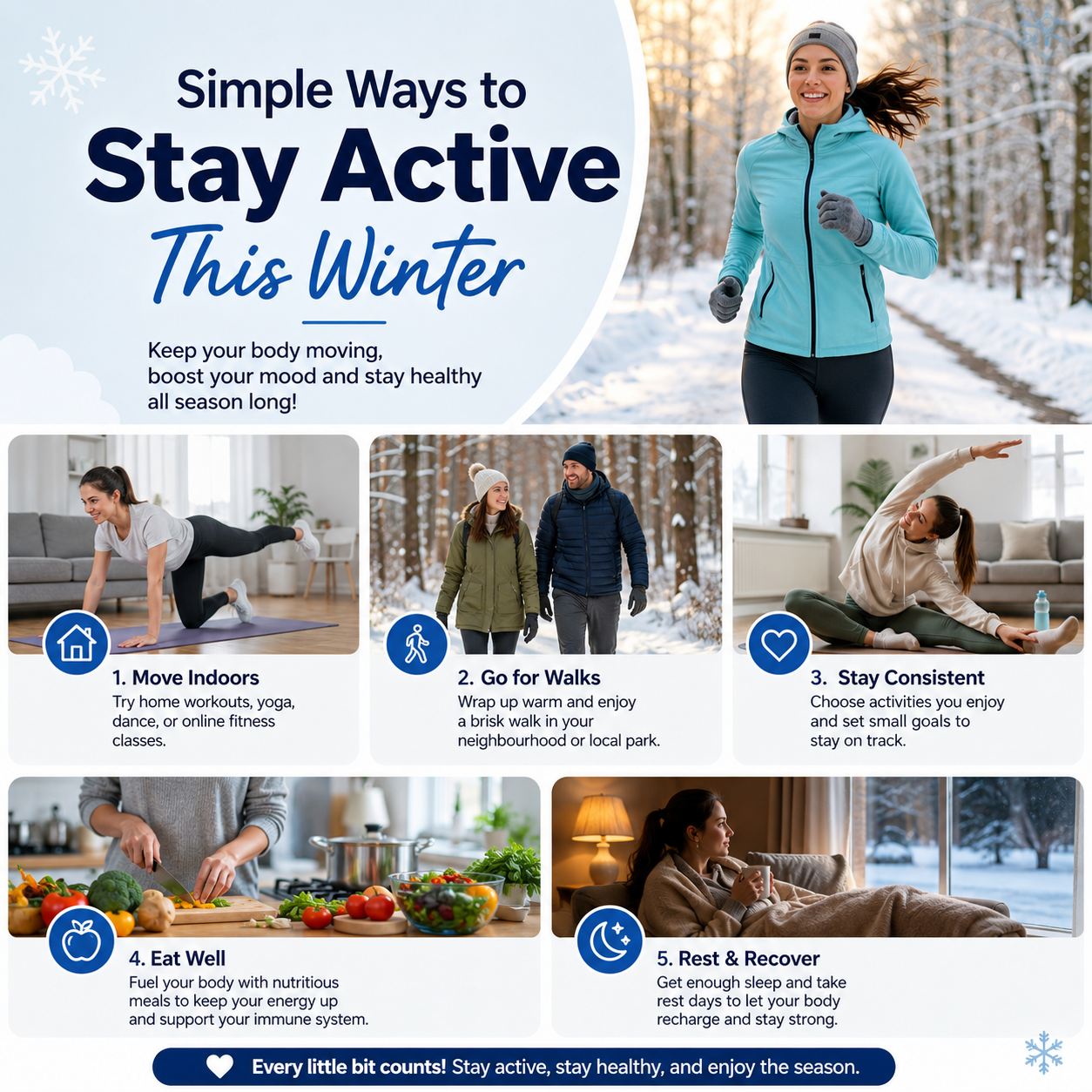
Cold mornings, shorter days and dark evenings can make winter exercise difficult, but health experts say maintaining regular movement is especially important during the colder months.
University of Queensland exercise physiologist Shelley Keating recommends viewing physical activity as essential healthcare rather than something done only for weight loss. Regular movement can support mood and general wellbeing, while inactivity may contribute to weight gain, insulin resistance, higher cholesterol and elevated blood pressure.
People struggling with motivation can change their workout time, exercise during lunch breaks or divide activity into short sessions throughout the day. Ten to 15 minutes of squats, calf raises, push-ups, stair climbing or walking can still provide meaningful benefits.
Indoor workouts, gyms and exercising with friends can make routines more comfortable and improve accountability. Preparing clothes and equipment the night before also removes common excuses.
Experts say winter goals should remain realistic. Exercising twice a week may be more sustainable than chasing personal records or demanding schedules. Most importantly, people should choose activities they genuinely enjoy, whether that involves dancing, hiking, walking, group training or gym sessions, because enjoyable exercise is easier to continue over time.
