

US President Donald Trump has renewed his call for Saudi Arabia to establish formal diplomatic relations with Israel, saying the kingdom’s participation in the Abraham Accords is a key condition for moving forward with a civilian nuclear cooperation agreement.
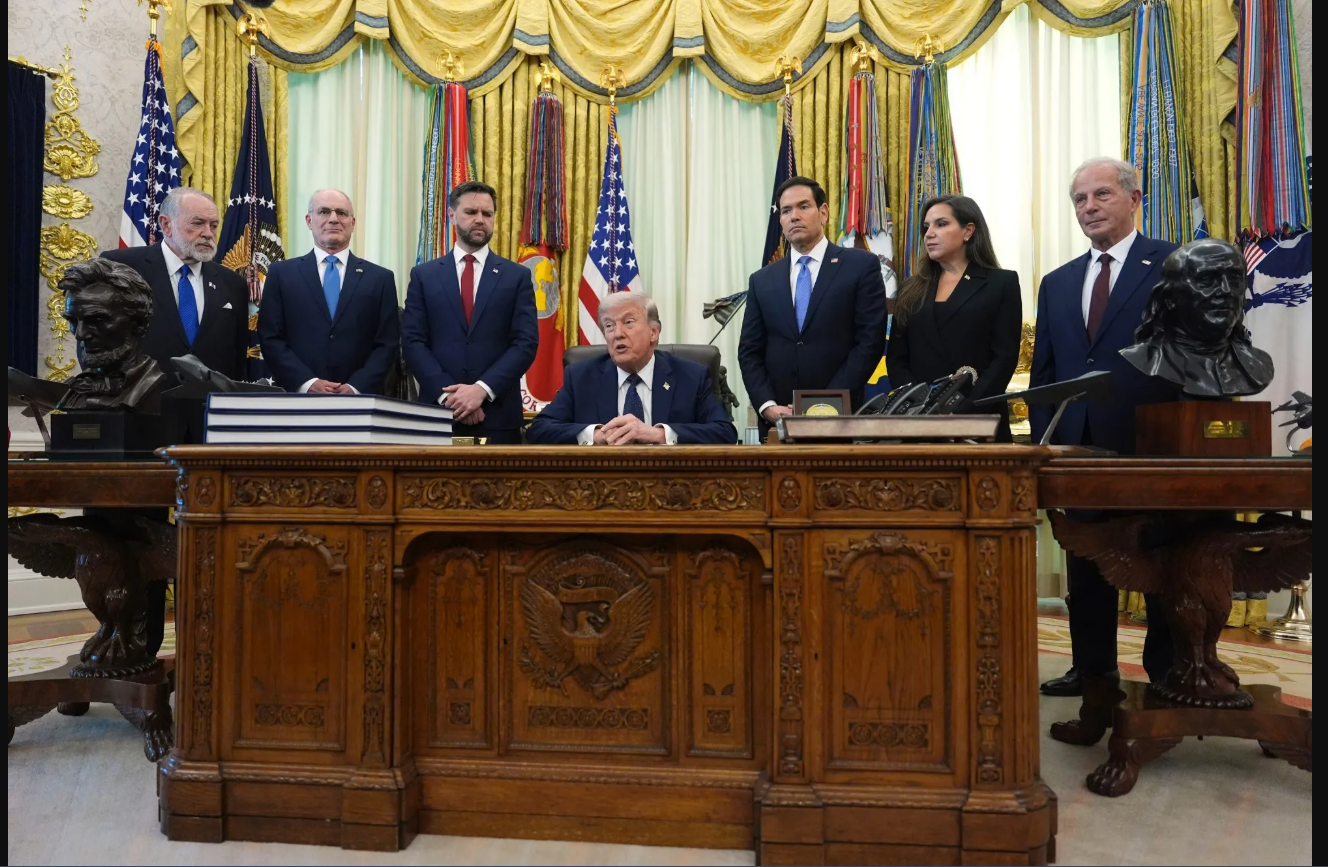
Speaking at the White House on Friday, Trump said the United States would not complete the nuclear deal with Riyadh unless Saudi Arabia agrees to join the US-brokered framework aimed at normalising ties between Israel and Arab countries.
When asked about whether the US Energy Department had moved ahead of his administration by announcing the nuclear agreement without publicly mentioning the Israel condition, Trump rejected the suggestion.
“No one moved ahead of me,” Trump said, adding that Saudi Arabia’s inclusion in the Abraham Accords was always understood. He said, “It is time now” for Riyadh to take that step.
The United States and Saudi Arabia announced a civil nuclear cooperation agreement earlier this week, describing it as a long-term partnership designed to expand energy cooperation, technology sharing and economic ties. However, Trump later introduced the Israel normalisation requirement, linking the nuclear agreement to Saudi Arabia joining the Abraham Accords.
Saudi Arabia has not yet officially responded to Trump’s latest remarks. Riyadh has previously stated that it would not establish diplomatic relations with Israel unless there is meaningful progress towards creating an independent Palestinian state — a condition opposed by Israel’s current government.
The Trump administration initially presented the nuclear agreement as a major economic and security partnership between Washington and Riyadh, without publicly referring to Israel. The deal is expected to last for several decades and would allow the transfer of US nuclear technology and expertise to Saudi Arabia.
Reports suggest the agreement could permit Saudi Arabia to develop parts of its own civilian nuclear programme, including uranium-related activities, although Trump later insisted that there would be no enrichment of nuclear material.
Saudi Arabia’s Energy Ministry said the agreement would help diversify the country’s energy sources, promote advanced technologies and increase investment opportunities between the two nations.
US Secretary of State Marco Rubio defended the agreement, saying it would not contribute to nuclear proliferation because American companies would oversee key parts of the project and Washington would maintain monitoring capabilities. US nuclear technology firm Westinghouse is expected to play a major role in the programme.
The latest development highlights the growing diplomatic pressure on Saudi Arabia as Washington seeks to expand the Abraham Accords and encourage wider Arab-Israeli normalisation.
