


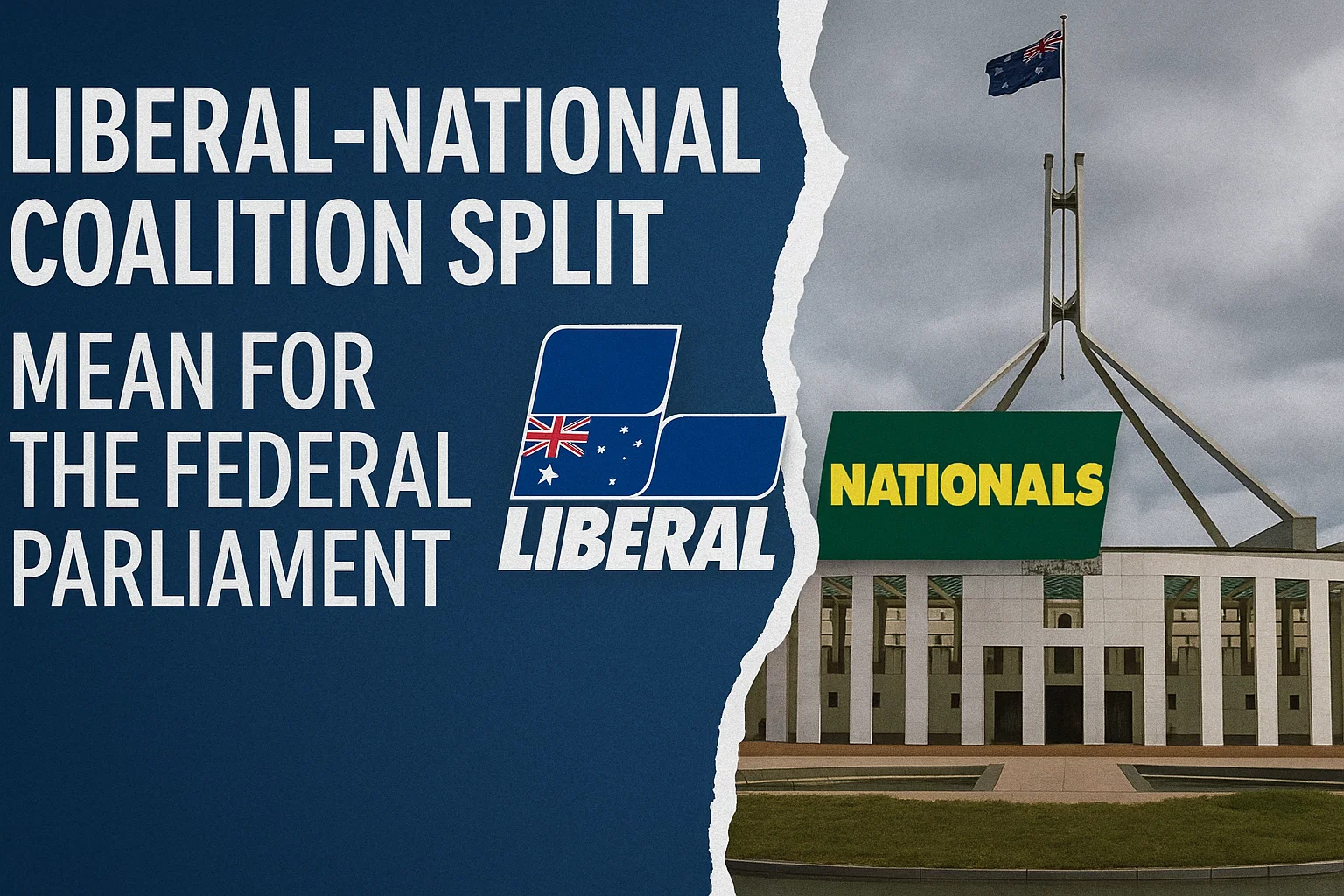
After nearly a century of political partnership, the Liberal and National parties are once again testing a separation, following internal disagreements over opposition leadership and policy priorities.
National Party leader David Littleproud confirmed the split after private discussions with Liberal leader Sussan Ley failed to reach consensus on a new opposition structure in the wake of their federal election defeat.
Ley, who became Liberal leader last week, promised that there would be no unilateral decisions and all Coalition policies would be reviewed. However, negotiations with the Nationals faltered when the party insisted on retaining control over four specific policy areas: divestiture powers to regulate supermarket giants, support for nuclear energy, a regional development fund, and the universal telecommunications service obligation.
The Nationals also wanted the autonomy to vote independently on certain Coalition policies while maintaining their positions in the shadow cabinet—requests that were ultimately rejected.
Nationals Senate leader Bridget McKenzie said the split came after a “reasonable request” was turned down by what she described as a previously trusted partner.
While surprising, the move has received support from some urban Liberals, who believe the Coalition’s alignment with Nationals’ policies has cost them seats in metropolitan areas. Despite the separation, both parties acknowledge their dependence on each other to regain government and have left the door open for future collaboration.
Who is the Official Opposition Now?
With the Nationals exiting the Coalition, the Liberal Party now becomes the official opposition in the House of Representatives, taking full control of frontbench roles and leadership positions. The Nationals will operate independently, like other minor parties such as the Greens and independents.
Currently, Labor holds 93 seats. The Liberals control 28 seats, while the Nationals have 15. This reconfiguration grants the Liberals greater influence in the opposition, including full authority over shadow cabinet appointments.
Changes to the Shadow Cabinet
In a Coalition, opposition frontbench roles are shared based on an agreement between party leaders. The Nationals previously held key portfolios, including agriculture, infrastructure, and veterans’ affairs, and had hoped to secure an economic role this time around.
However, with talks failing, Sussan Ley will now assign all shadow roles exclusively to Liberal MPs. This will result in financial losses for some Nationals, as frontbenchers receive an additional 25% on top of their $234,000 base salary. Littleproud, as party leader, will retain his higher wage.
Implications for LNP and CLP MPs
In Queensland and the Northern Territory, the Liberal-National Party (LNP) and Country Liberal Party (CLP) remain merged at the state level. Federally, their MPs choose whether to align with the Liberal or National party rooms. This arrangement remains unaffected by the federal split.
David Littleproud, though an LNP MP, sits with the Nationals, as did former Liberal leader Peter Dutton. LNP President Lawrence Springborg emphasized that policy and parliamentary cooperation remain at the discretion of the respective party rooms.
Impact on Parliament
The federal split is unlikely to disrupt the Labor government’s legislative agenda in the House of Representatives, where it maintains a clear majority. However, in the Senate, it gives Labor more flexibility to negotiate with various groups, including the Greens, Liberals, or Nationals, to pass legislation.
Treasurer Jim Chalmers characterized the split as a “nuclear meltdown,” highlighting the opposition’s internal chaos.
Historical Context of the Coalition Split
Though the Coalition has been largely stable over the decades, it has experienced previous splits, notably in 1987 during Queensland Premier Joh Bjelke-Petersen’s failed bid for prime minister. That campaign fractured the federal Coalition, leading to seat losses for the Nationals and a cautionary tale about internal competition.
Despite this recent separation, both the Liberals and Nationals have kept communication lines open. As ABC elections expert Antony Green noted, if the two parties contest the next election divided, there is no viable alternative government to Labor. A reunion, then, may be inevitable.
