


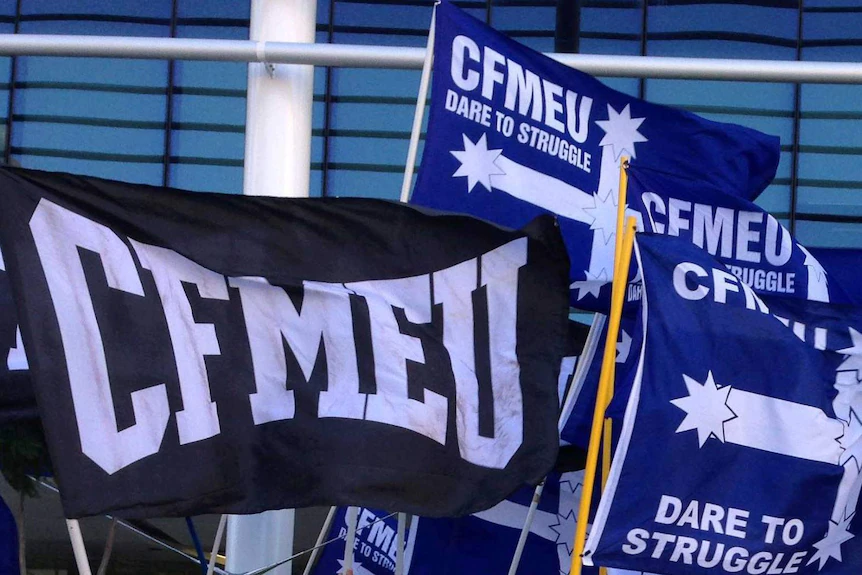
Former CFMEU officials have lost a High Court battle against amendments to the Fair Work Act, which placed the construction division of the union under administration.
The federal government initiated the takeover in August last year, immediately removing 270 union officers — most of whom were volunteers — and 11 paid staff, following allegations of bullying, corruption, and criminal infiltration.
The union challenged the legality of the new law, arguing it violated the Constitution, infringed on the implied freedom of political communication, and resulted in an unlawful acquisition of property.
However, the High Court unanimously dismissed the case, allowing the administration to proceed.
Allegations of Criminal Infiltration Prompted Government Action
The legislative changes followed reports in July last year alleging that outlaw motorcycle gangs had infiltrated the union, with bikie members allegedly appointed as delegates on major projects amid broader accusations of intimidation, bullying, and corruption.
Soon after, the Fair Work Commission sought a Federal Court order to appoint an administrator. In response, the government warned that if the union opposed administration, it would legislate changes to the Fair Work Act — which it eventually did.
Mark Irving KC was appointed as the administrator. In his first report to parliament in February, Mr. Irving noted that the High Court challenge had disrupted administrative processes, as some complainants were hesitant to fully cooperate amid uncertainty over whether the former leadership might return.
Legal Arguments and Government Response
The union presented four main arguments, questioning whether parliament had constitutional authority to enact the law. The government argued that, as a trading organization collecting membership fees, the union fell under section 51(xx) of the Constitution.
The union also contended that placing the organization under administration was punitive, but the government maintained the law did not infringe on basic human rights and was not a form of punishment.
Additionally, the union claimed the law unconstitutionally restricted the implied freedom of political communication, as it removed elected officers and hindered members’ ability to associate and organize politically without the administrator’s consent.
The government countered that any restrictions were justified, as the administration served the legitimate purpose of restoring lawful and effective union operations for the benefit of its members.
The final issue concerned whether the administration amounted to an unlawful acquisition of property. The government rejected this, arguing that it would be unreasonable to require compensation for placing the union under administration to eliminate criminal influences.
Decision Welcomed by Government and Administrator
Mark Irving KC welcomed the High Court’s ruling, stating it affirmed the legitimacy of the administration. He emphasized the administration’s goal of returning the union to its members as a strong, democratic, and corruption-free organization.
Workplace Relations Minister Amanda Rishworth also welcomed the decision, saying construction workers deserve a union free from criminal activity, corruption, and violence. She added that the administrator could now continue his work with full confidence.
