


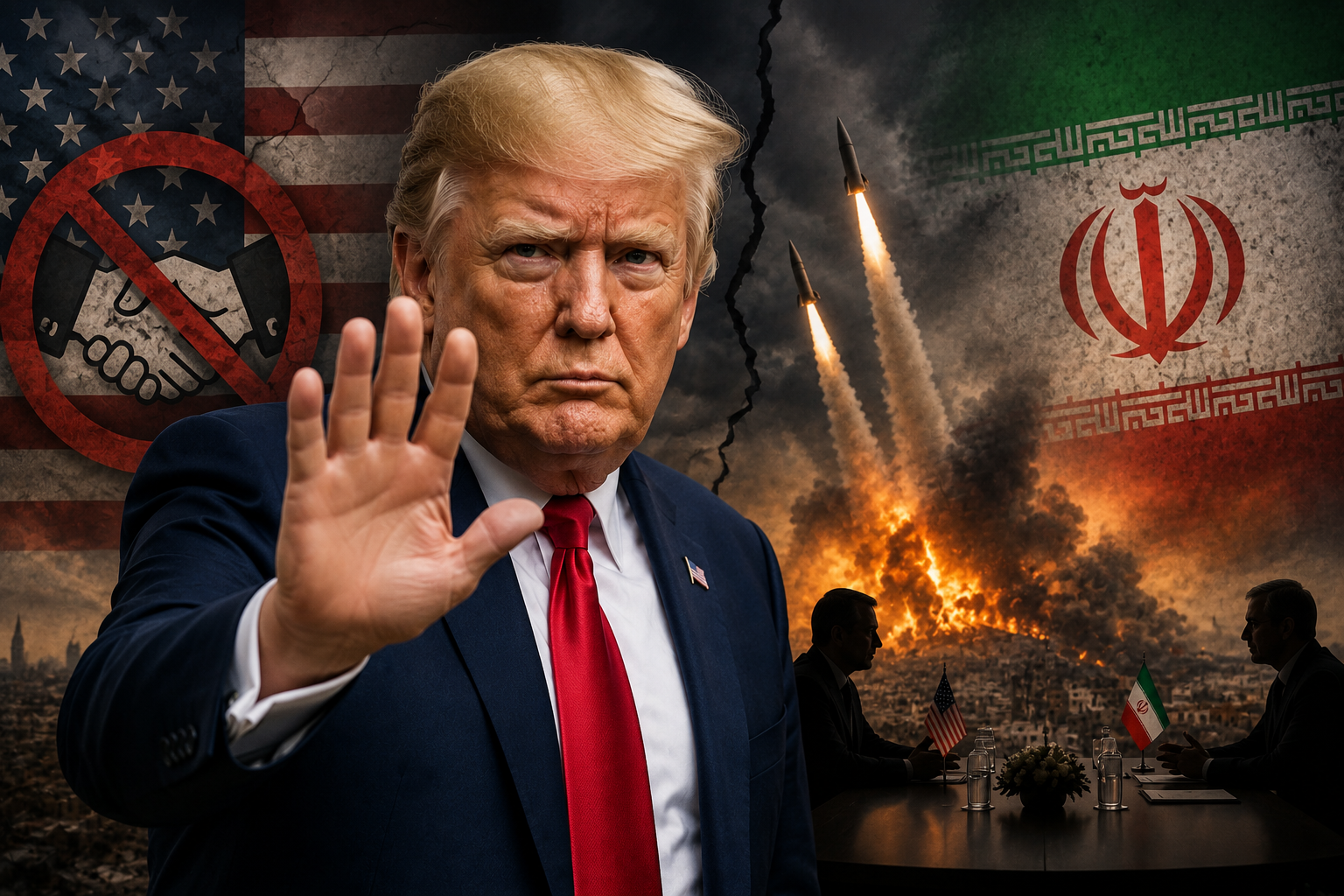
US President Donald Trump has declared that Washington no longer considers its ceasefire with Iran to be in effect, while agreeing to continue negotiations aimed at securing a broader peace agreement.
In a social media statement on Friday, July 10, Trump said Iran had requested further discussions and that the United States had accepted. However, he made clear that Washington regarded the ceasefire as finished following renewed military exchanges between the two countries.
The announcement followed several nights of US airstrikes and Iranian retaliation, which disrupted a period of relative calm and raised concerns that the two sides could return to a wider conflict. The renewed hostilities also pushed energy prices higher and created further uncertainty about the future of diplomatic negotiations.
The latest escalation has placed significant pressure on an interim understanding reached between Washington and Tehran. That arrangement was intended to reopen the Strait of Hormuz and establish a 60-day negotiation period during which both sides would work towards a more comprehensive agreement.
Both governments have since accused the other of violating the June 18 memorandum. The United States alleged that Iran had attacked commercial vessels passing through the Strait of Hormuz, one of the world’s most important routes for oil and gas shipments.
American forces responded with strikes against Iranian targets. Tehran then launched attacks against US military facilities in the region, including bases in Kuwait and Bahrain. Despite two nights of exchanges, no additional attacks were reported on Thursday, suggesting that both sides had temporarily stepped back from further escalation.
Regional mediators, including Qatar, have reportedly been working to reduce tensions and prevent the confrontation from developing into a full-scale war. Trump’s willingness to continue negotiations was viewed as a sign that diplomatic channels remained open even though the formal ceasefire had collapsed.
A US official also confirmed that technical-level discussions were expected to continue. Trump had delivered a similar message earlier in the week during the NATO summit in Turkey, where he said the ceasefire had ended but indicated that he would not block further negotiations.
Iran has warned that attacks against its infrastructure would be met with equivalent retaliation. Mohammad Bagher Zolghadr, secretary of Iran’s Supreme National Security Council, said the warning applied to both the United States and Israel.
The renewed tension was further intensified by a US Treasury decision to cancel a waiver that had allowed Iran to sell oil internationally. The policy change threatens an important source of Iranian revenue and adds another major obstacle to diplomatic efforts.
Financial markets responded quickly to Trump’s announcement. Oil prices rose to their highest levels of the trading session before retreating, while stock markets initially declined and later recovered some of their losses. The relatively modest market reaction suggested that investors were concerned about renewed war risks but did not immediately expect a return to unrestricted conflict.
Negotiations had already slowed as Iran held several days of funeral ceremonies for former supreme leader Ali Khamenei, who was killed during an airstrike on the first day of the conflict. He was buried on Thursday in Mashhad, in north-eastern Iran.
Khamenei’s son and successor, Mojtaba Khamenei, had not appeared publicly or in a video since taking office, creating uncertainty about his health and his involvement in negotiations with Washington. His office announced that he would hold a memorial ceremony for his father, raising expectations of his first public appearance since the war began.
The fighting has also severely affected commercial traffic through the Strait of Hormuz. Shipping activity briefly increased following the interim agreement but returned to near standstill after the latest military exchanges.
The strategic waterway has remained largely closed since hostilities began. Reduced energy shipments have increased global oil and gas prices and forced several countries to draw on emergency reserves, creating a growing threat to the international economy.
Trump’s decision to continue talks while formally ending the ceasefire reflects the unusual nature of the current US-Iran confrontation. Military strikes, retaliation and negotiations are taking place simultaneously, leaving the two countries in a fragile position between diplomacy and renewed war.
Although both sides appear willing to keep communication channels open, major disagreements over shipping security, sanctions, oil exports and military attacks remain unresolved. The future of the negotiations may now depend on whether Washington and Tehran can prevent another round of violence while working towards a replacement for the failed ceasefire.
