


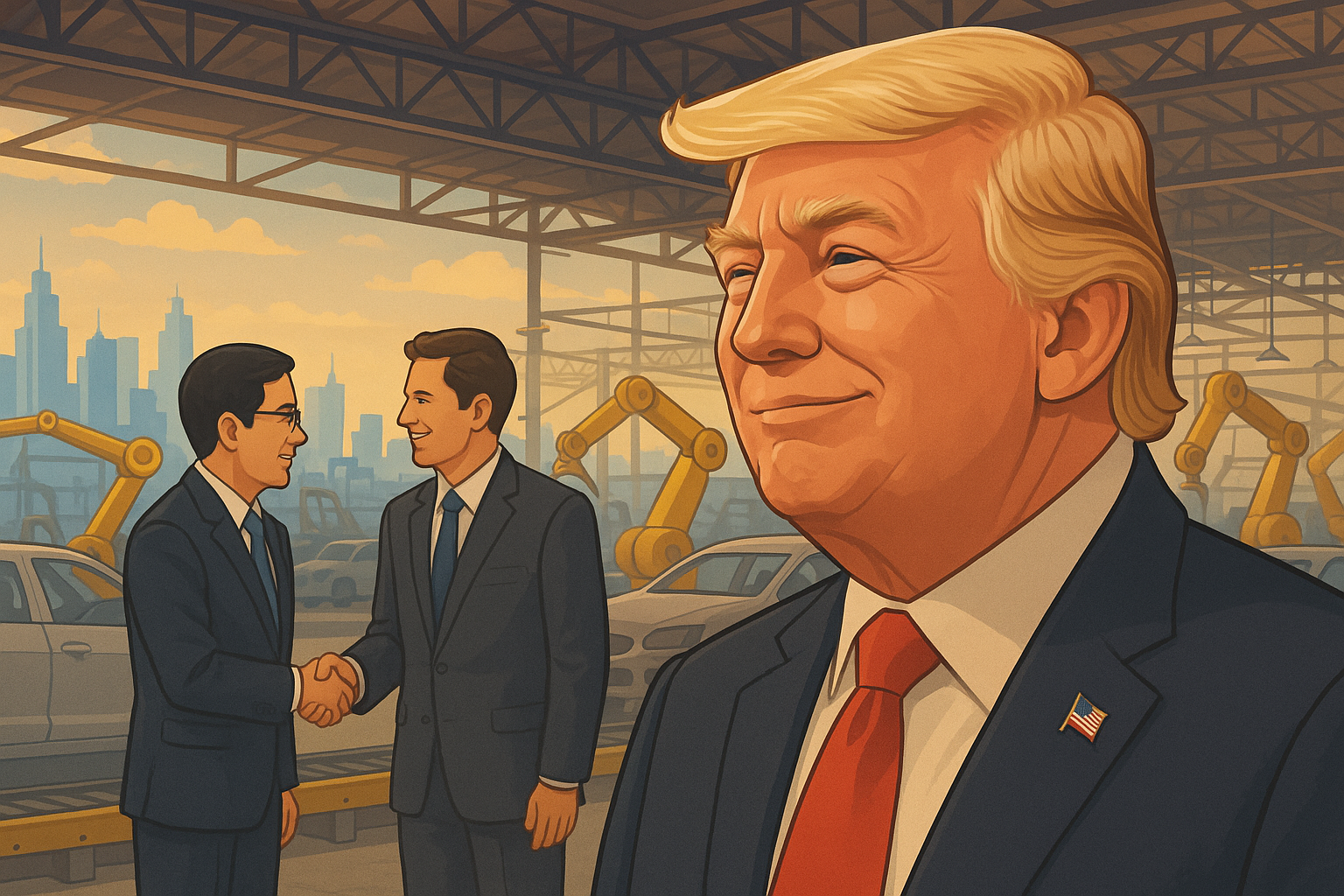
Trump’s New Tariff Deals Offer Greater Clarity for Asia’s Manufacturing Powerhouses
After months of trade uncertainty, recent tariff announcements from U.S. President Donald Trump are providing a clearer picture of the new global trade framework, particularly for Asia—the world’s key manufacturing hub.
On Tuesday (July 22), Trump unveiled a deal with Japan setting a 15% tariff on its exports to the U.S., including automobiles, which make up the bulk of the trade imbalance between the two nations.
Separate agreements with the Philippines and Indonesia established a 19% tariff, with Vietnam accepting a 20% rate, suggesting that most of Southeast Asia will likely fall within a similar tariff band.
“In today’s trade climate, a 15-20% tariff doesn’t seem harsh—10% is the new baseline,” said Trinh Nguyen, senior economist for emerging Asia at Natixis. “Even at those levels, U.S. companies still find it profitable to source goods from abroad.”
Meanwhile, U.S. Treasury Secretary Scott Bessent is set to meet with Chinese officials in Stockholm next week for a third round of talks. The aim is to extend the current tariff truce and broaden discussions—adding to signs that relations between the two economic superpowers are stabilizing. This follows the U.S. easing chip restrictions and China resuming exports of rare earth elements.
“We’re getting along very well with China,” Trump told reporters, citing a “very good relationship.”
After six months of trade tensions and soaring tariffs—peaking at 145% on China and nearly 50% for other Asian exporters—a sense of stability is returning. The financial markets responded positively: Asian stocks posted their best gains in a month, S&P 500 futures rose 0.2%, and Japan’s Nikkei-225 surged 3.2%, led by carmakers like Toyota.
Albert Park, chief economist at the Asian Development Bank, noted, “Markets remain optimistic, but I’m not sure the full impact of these tariff shifts has been priced in.”
In April, Trump paused the steepest tariffs following a rare simultaneous dip in U.S. equities, bonds, and the dollar—giving global policymakers space to negotiate more manageable trade terms.
While the new deals bring a measure of relief, uncertainties linger. Washington is still considering sector-specific tariffs—particularly on semiconductors and pharmaceuticals—that could significantly affect countries like Taiwan and India, neither of which has struck a tariff deal yet.
South Korea also faces elevated risks from these targeted tariffs, although the Japanese agreement might serve as a model for new President Lee Jae Myung.
Trump has indicated he may impose a blanket 10-15% tariff on about 150 smaller trading partners as negotiations proceed with larger economies that account for most of the U.S. trade deficit.
This growing predictability is helping global businesses with sprawling Asian supply chains plan ahead. Like during the 2018 trade war, the latest tariff hikes are expected to accelerate the relocation of manufacturing out of China, which still faces the region’s highest average tariff rate.
Despite the sense of relief, investors and businesses remain cautious. Manufacturing activity in Southeast Asia recently hit its weakest point since August 2021, with notable drops in new orders, hiring, and procurement, according to S&P’s PMI data.
As new tariff rates come into effect, the recent surge in shipments from Asia to the U.S.—intended to beat the levy deadlines—will likely slow.
Although tariffs at 15-20% are lower than Trump’s earlier threats, they still represent a significant increase from pre-2017 levels. Barclays analysts noted that these deals are pulling global tariffs toward the 15-20% range Trump favors, raising downside risks for Asian GDP growth.
While U.S. consumers have mostly avoided price shocks so far, economists warn the effects will soon ripple through the economy. Goldman Sachs now forecasts the U.S.’s average “reciprocal” tariff rate will rise from 10% to 15%, likely pushing up inflation and dampening growth.
Federal Reserve Chair Jerome Powell has said he wants to observe how the tariffs impact the economy before adjusting interest rates—a stance that has reportedly frustrated Trump.
Still, the president is touting the deals as a major victory. “I just signed the largest trade deal in history—maybe the largest ever—with Japan,” Trump declared at a White House event. “It’s a great deal for everyone.”
