


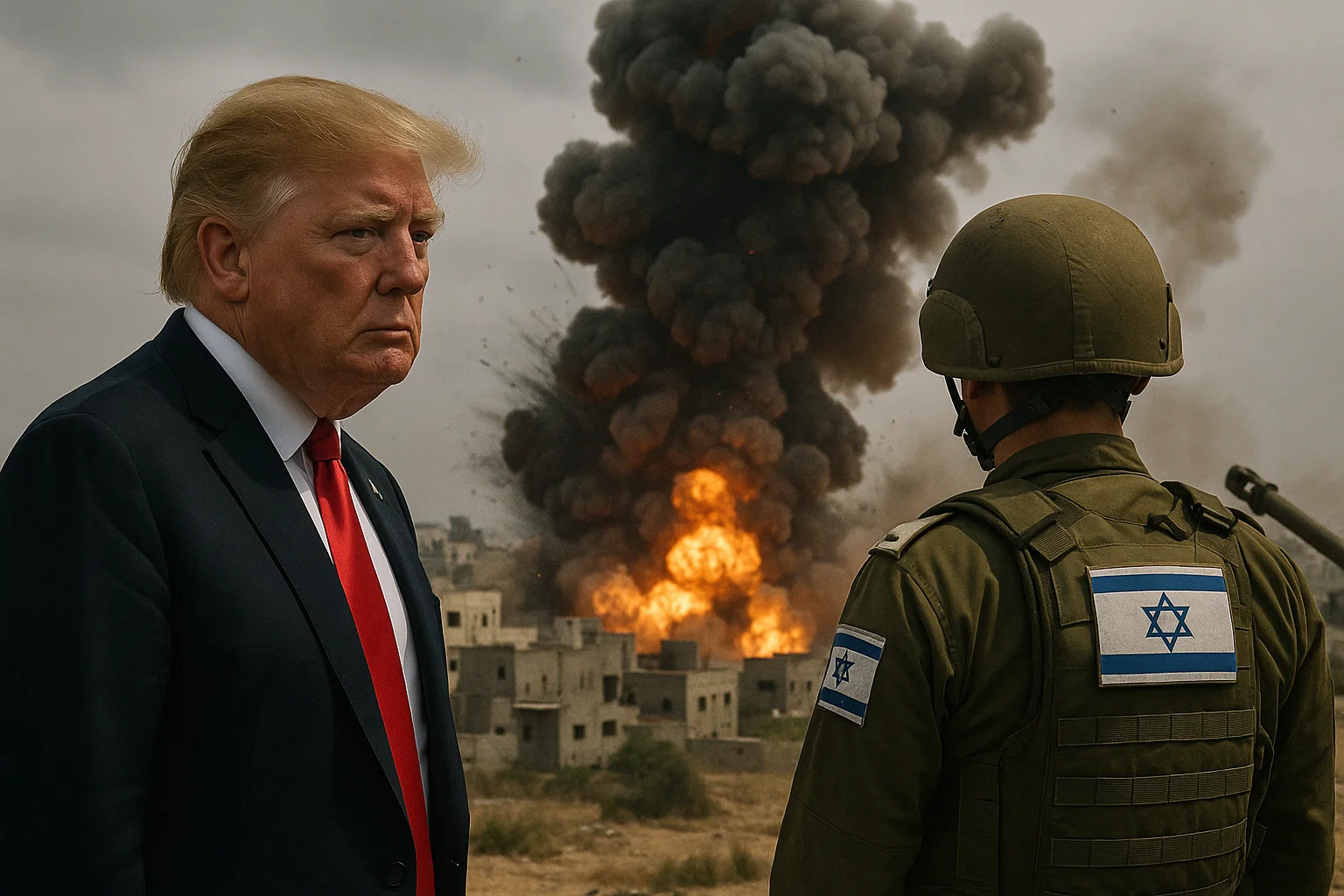
There’s a common thread running through the current turmoil in the Middle East: Israel is actively working to reshape the region’s political landscape.
At the core of this strategy is Israel’s push for regime change — particularly targeting Gaza, Lebanon, and Iran.
It’s rare for a nation to openly advocate for regime change in another, but Israel has made its goals unmistakably clear.
Israel’s Bold Military Agenda
Following Israel’s strikes on Iran, former U.S. President Donald Trump stated the U.S. had no role in the operation. However, while the U.S. denied direct involvement, it was informed in advance and remains deeply embedded in Israel’s military capabilities — supplying funding, intelligence, weapons, and technology.
The strikes marked a new level of aggression, including bombings of Iranian nuclear facilities — something even the U.S. has traditionally avoided. Israel has also escalated its assassination campaigns, targeting nuclear scientists and high-ranking officials.
Iran had been preparing for nuclear negotiations with the U.S., and an Israeli strike during such a delicate diplomatic moment was likely unforeseen. Steve Witkoff, a senior U.S. national security advisor, was scheduled to meet Iranian officials to negotiate an end to their nuclear ambitions. Trump had claimed a deal was nearly in place.
Netanyahu’s Strategy and Its Fallout
Prime Minister Benjamin Netanyahu’s actions have effectively derailed those discussions. His broader policy — strike first, remove regimes later — has left Gaza devastated and its 2.1 million residents trapped under continued bombardment.
In just over a year and a half, Israel has attacked multiple areas: Gaza, the West Bank, Lebanon, Syria, Yemen, and now Iran. While there is internal dissent in Israel over the humanitarian toll in Gaza, many Israelis back the campaign against Iran and its regional allies like Hamas, Hezbollah, and the Houthis.
However, skepticism is growing. Critics — including long-standing allies like the UK, France, and Canada — question whether Israel’s extensive bombing can actually lead to peace or regional stability.
The loss of international goodwill is stark. Countries that once stood firmly by Israel’s side after Hamas’s October 7 attacks are now questioning its prolonged blockade of Gaza and the humanitarian consequences — particularly the high civilian death toll.
Targeted Killings vs. Widespread Casualties
Israel claims Hamas hides among civilians, making precise targeting difficult. But Israel has proven capable of surgical assassinations: it has taken out Hamas and Hezbollah leaders in Iran and Lebanon with minimal civilian casualties.
So why has its Gaza campaign resulted in over 50,000 deaths — many of them women and children? Why has it chosen broad-scale destruction over targeted operations?
This has hurt Israel’s global image, especially as it shifts its focus to Iran. Many fear Israel lacks the international backing it once enjoyed, and its actions are viewed as extreme.
U.S.–Israel Dynamics and Plausible Deniability
The relationship between Netanyahu and Trump appears to operate under a model of covert cooperation — allowing Trump to maintain “plausible deniability.” Trump previously floated the controversial idea of removing Palestinians from Gaza and turning the area into a tourist destination. While he later downplayed the suggestion, Israel adopted it as policy.
Recently, Netanyahu called the plan a condition for ending hostilities, praising it as “brilliant” and a way to reshape the Middle East. This allows Trump to appear detached from the policy while Israel pursues it — despite widespread accusations of ethnic cleansing, which Israel denies.
Israel’s Finance Minister Bezalel Smotrich, a key supporter of the plan, has made openly inflammatory remarks about Palestinians, further fueling international concerns.
Similarly, when Israel attacked Iran, U.S. officials claimed the action was unilateral. Yet, without U.S. weapons, technology, and intelligence, such operations would be nearly impossible.
Despite earlier claims that he warned against such escalation, Trump later praised the strikes, calling them “excellent” and warning Iran that more was coming. This dual narrative feeds into a pattern where Israel acts militarily while the U.S. maintains a diplomatic shield.
Risk and Fallout
Bombing Iran has long been considered one of the most dangerous moves in the region due to Iran’s reach and influence across the Shia Muslim world.
Yet, that influence is precisely why Israel has systematically dismantled its adversaries. In Gaza, Israel has eliminated Hamas’s top leadership, including Yahya Sinwar and his brother Mohammed, along with several other key commanders.
Israel even assassinated Ismail Haniyeh in Tehran — a move that showcased its readiness to strike at the heart of Iran, where even the U.S. has hesitated.
This boldness reflects Netanyahu’s strategy, enabled by what appears to be an open window of support from Trump. While Trump promotes himself as a strongman who can deter global conflict, reality paints a more complex picture. In Ukraine and the Middle East, conflict has intensified despite his tough talk.
Uncertain Future
The consequences of Israel’s aggressive posture are still unfolding. The U.S.’s own failures in regime change have shown how elusive and destructive such ambitions can be.
So, what will the Middle East look like after the dust settles? And where will Israel stand in the global order?
Former Pentagon adviser Sanam Vakil believes Israel’s continued occupation of the West Bank fuels instability across the region. She noted that chaos creates opportunities for both state and non-state actors to advance disruptive agendas — and that Israel’s approach has made its own security more precarious.
Ami Ayalon, former head of Israel’s Shin Bet, perhaps summed it up best: “You cannot deter a people who believe they have nothing to lose. Israelis will only be secure when Palestinians have hope.”
By this logic, as Israel turns its focus to a distant adversary in Iran, peace with its closest neighbors becomes an even more distant dream.
