


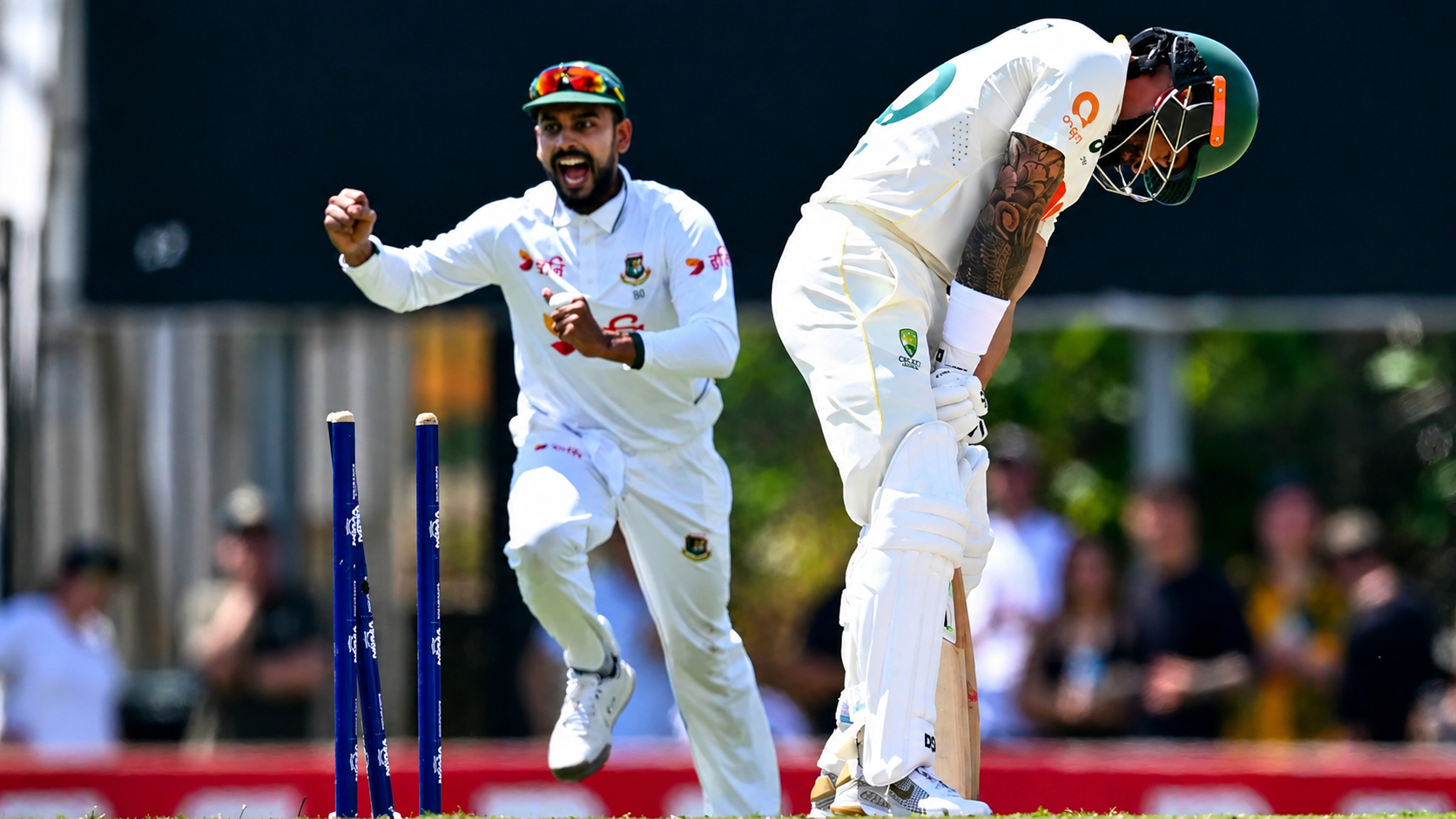
Bangladesh have produced one of Test cricket’s most improbable results, thrashing Australia by nine wickets in the first NRMA Insurance Test at Marrara Stadium in Darwin to claim their maiden victory on Australian soil. The emphatic win, completed in the second session of the fourth day, ranks among the greatest upsets in the game’s long history and marks the Tigers’ finest moment in 40 years of international cricket.
What began as the mother of all mismatches ended with Najmul Hossain Shanto’s side celebrating wildly under the Top End sun. Australia, winners of 18 of their previous 23 Tests and recent finalists in consecutive World Test Championship campaigns, arrived as overwhelming favourites. Bangladesh, by contrast, had lost 22 of their past 26 Tests outside Asia and suffered consecutive innings defeats to Zimbabwe and a Cricket Australia XI in the lead-up. Their last Test appearance in Australia had come more than two decades earlier. Few gave them a chance. By Sunday afternoon those assumptions had been comprehensively dismantled.
Australia’s first-innings total of 198 set the tone for a difficult match. Hasan Mahmud claimed a career-best 6 for 55, the best figures by a Bangladesh bowler against Australia, while Taskin Ahmed and Ebadot Hossain shared the remaining wickets. Steven Smith’s 71 provided the only substantial resistance as the home side lost their last five wickets for 69 runs. Bangladesh then compiled a commanding 426. Tanzid Hasan, in only his second Test, scored a composed maiden century of 101 from 197 balls. Captain Shanto added 84, Mehidy Hasan Miraz contributed a patient 65, and Mominul Haque made 49. Josh Hazlewood finished with 6 for 89 and claimed his 300th Test wicket in the process, yet Australia’s fielding lapses, including several dropped catches, allowed the visitors to stretch their lead to 228.
The third innings proved equally testing for the hosts. Resuming on the fourth morning effectively four wickets down and still 67 runs in arrears, Australia needed a monumental effort. Cameron Green delivered it. The all-rounder, under pressure to assert himself after limited recent opportunities, produced a gritty, near five-hour 104 – his third Test hundred and first on home soil. He scored just four boundaries and one six, grinding down Bangladesh’s attack on a pitch that was beginning to offer variable bounce. Nathan Lyon’s full-length dive for a crucial two runs helped Green reach the milestone, after which the 27-year-old kissed the Australian badge on his helmet in visible relief.
Yet Green’s rearguard could only delay the inevitable. Mehidy Hasan Miraz, named player of the match, exploited the rough created by Mitchell Starc’s footmarks with masterful off-spin. He claimed five wickets for 66, including Steve Smith the previous evening, Alex Carey, Beau Webster and Nathan Lyon. Four of those victims were right-handers. Hasan Mahmud added three more wickets to finish with outstanding match figures of 9 for 111 – the best by a visiting bowler in Australia in the past 15 years not named Jasprit Bumrah. Mahmud’s decisive delivery to Green, which kept low and crashed into the stumps via the toe of the bat, effectively sealed the contest. Australia were dismissed for 284, setting Bangladesh a target of just 57.
The chase was clinical. After Tanzid Hasan fell for a duck to Josh Hazlewood, Mominul Haque (30 not out) and Shadman Islam (25 not out) knocked off the runs without further alarm. Mominul’s cut boundary off Beau Webster brought the winning runs and sparked celebrations that will live long in Bangladeshi cricket memory. Captain Pat Cummins did not even bowl as the visitors cruised home with nine wickets in hand.
The result surpasses even the West Indies’ famous Gabba victory two years earlier for pure improbability. For Bangladesh it ranks above their 2017 home win over Australia in Dhaka. For Australia, the start of a demanding 20-Test schedule in 12 months could scarcely have been more chastening. The second Test of the series begins on 22 August at the Great Barrier Reef Arena in Mackay.
