


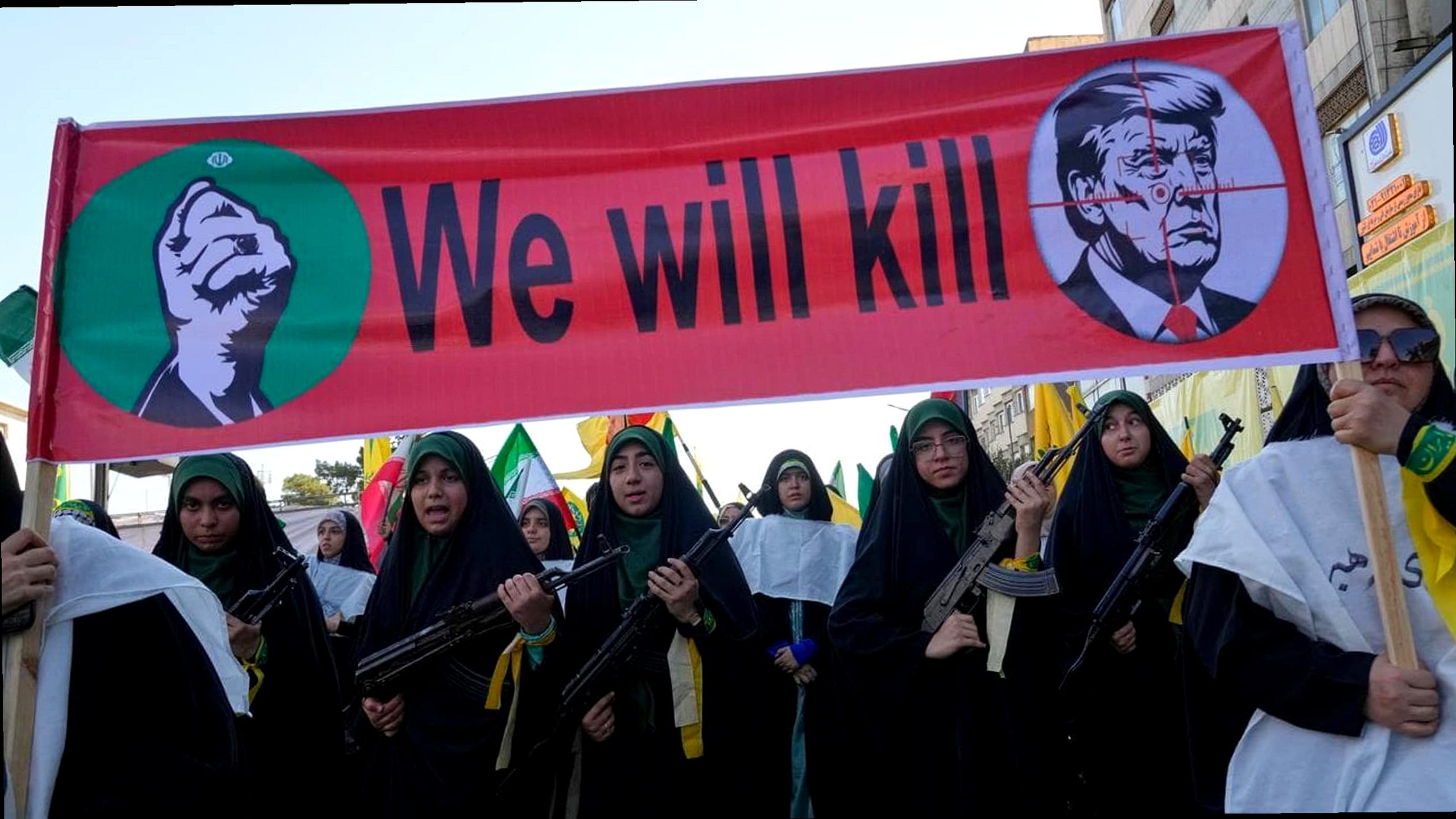
Fears are growing that the war between the United States and Iran could return to full scale, as diplomats warn that the current pause in heavy fighting may not hold and as both sides trade blows across the Gulf.
United States President Donald Trump said at a White House news conference on Friday that Tehran wants a deal to end the hostilities, but not one that is “acceptable” to him.
“We want to make a real deal, not a fake deal,” he said, adding that the Iranian government has been “bullshitting people for 51 years”.
Later in the same news conference, he renewed his consistent vow that “Iran will never have a nuclear weapon, ever”.
Trump has oscillated between favouring an agreement that would end the fighting and saying the United States does not need to make any deal at all, and that shifting position has left allies and adversaries alike unsure of what comes next.
Diplomats and analysts see the uncertainty about next steps, alongside the latest uneven back-and-forth hostilities, as reflective of the untenable position that both sides are in nearly nine months into the war.
A Middle Eastern diplomat said before Trump’s news conference that the Gulf Arab states are concerned about the potential for a resumption in full-scale hostilities and are working through existing communications channels to seek a sustainable, if only partial, solution.
Such a solution, the diplomat said, could remove all constraints from shipping in the Strait of Hormuz, a crucial thoroughfare for the global energy trade, in exchange for limited sanctions relief for Iran and paving the way for a resumption in broader negotiations to include Tehran’s nuclear program.
The diplomat, who spoke on condition of anonymity due to the sensitivity of the conversations, said those countries that are seeking to mediate put little confidence in public posturing from both the United States and Iran and took seriously only statements made in closed-door negotiations.
The Associated Press has reported that Israeli Prime Minister Benjamin Netanyahu has pushed for the United States to restart the war or allow Israel to launch airstrikes on Iran’s nuclear facilities and missile capabilities.
The pressure from Israel comes as Iran has widened its attacks on its Gulf neighbours in the past week, targeting a United States air base in Kuwait and launching several attacks on Bahrain following a United States fighter jet striking a Revolutionary Guard missile launch site Tuesday on Qeshm Island in the Strait of Hormuz.
It had been about two months since Tehran had ordered such attacks targeting United States facilities in neighbouring countries, and the country said it was in response to United States drone surveillance operations and an attack on Iranian communications towers.
Analysts described the tit-for-tat but somewhat measured attacks as part of a larger signalling from both sides that despite external pressure to reengage, there is little appetite or capability from either to return to the height of the war.
Iran’s strikes kick-started days after Trump said the conflict “militarily is effectively over” in the wake of his Republican Party losing control of Congress. Voters cited the unpopularity of the war and the hit to their pocketbooks from its economic effects.
But thousands of United States troops remain off the waters of Iran, maintaining a naval blockade to stem the flow of Iranian oil into the global market.
The Joint Maritime Information Center, a coalition overseen by the United States Navy, issued an updated warning this week that ships may be violating the blockade if they have been transferred cargo from another vessel that is under restrictions or are carrying goods that were loaded in Iran even if the ships never entered an Iranian port.
The Trump administration also is maintaining an economic pressure campaign targeting Iran’s few remaining international financial ties.
While Iran’s actions have intensified lately, the Trump administration has appeared to show some restraint compared with how the United States military was retaliating over the summer.
For now, the region waits. Gulf states are pushing quietly for at least a partial deal that would reopen the Strait of Hormuz to shipping and ease sanctions in return, while Washington weighs whether to negotiate, to hold the blockade in place, or to return to war at Israel’s urging.
