


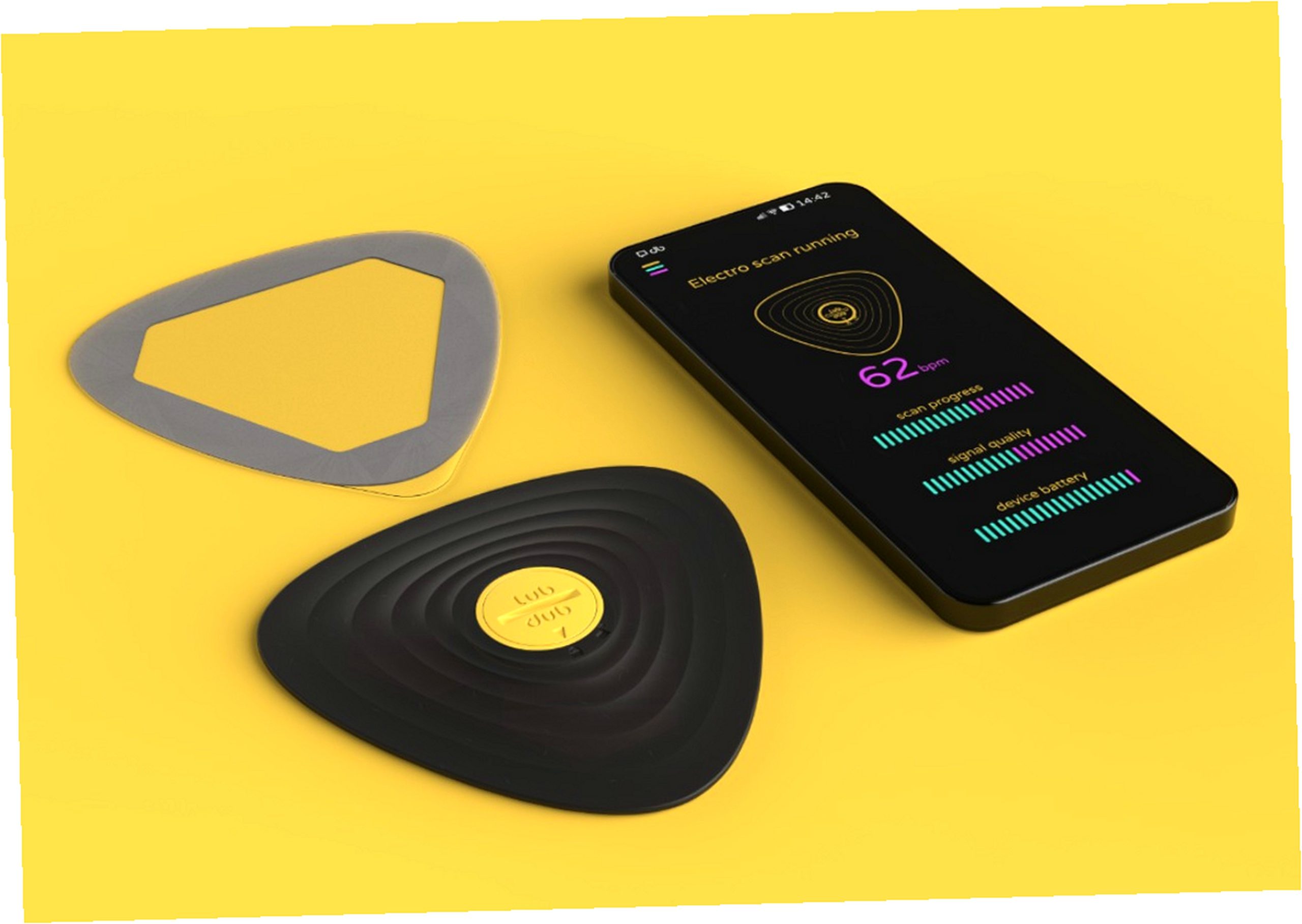
A lightweight wearable heart monitor developed from research at RMIT University is entering clinical trials in Perth, in a step that could change how heart rhythms are monitored outside hospital settings.
The device is a gel-free, waterproof wireless patch developed by Australian start-up Lubdub. Worn on the skin during everyday activities, it tracks heart rhythms continuously for up to 14 days and aims to deliver data comparable to that collected by medical-grade electrocardiogram (ECG) Holter monitors — the bulky wired devices currently used as the standard for extended cardiac monitoring.
The clinical trial begins this week at Midlands Medical Specialists in Perth, Western Australia. Patients who have been prescribed Holter monitoring will wear the prototype patch as part of the study, allowing researchers to compare its performance directly against the established technology in a real clinical setting.
Unlike traditional Holter monitors, which rely on wired electrodes and conductive gel, the Lubdub patch uses flexible sensors designed to maintain steady contact with the skin. Earlier testing involving healthy volunteers found the device comfortable to wear and produced promising results, according to RMIT.
RMIT Professor and Lubdub co-founder Sharath Sriram said the data collected by the patch was 18 times cleaner than that from traditional Holter monitors.
“The flexible sensors make better contact with the skin than those used in traditional Holter monitors,” he said.
That cleaner signal matters because noisy or patchy recordings can make cardiac reports harder to interpret and slower to prepare. Professor Sriram said the technology could also reduce the workload involved in preparing cardiac reports, potentially allowing the same workforce to monitor up to 85 per cent more patients before the introduction of additional tools such as artificial intelligence.
The trial will gather further evidence to support the technology’s development and its path towards potential regulatory approval. If the results confirm the early findings, the patch could offer patients a far more comfortable monitoring experience while giving clinicians higher-quality data to work with.
Lubdub’s ambitions extend beyond the patch itself. The company aims to integrate the ECG patch with non-invasive cardiac biomarker testing and wearable ultrasound imaging into a single software platform, creating a broader toolkit for heart health assessment. RMIT has licensed the intellectual property for its ECG and biomarker inventions to the company, and will continue working with Lubdub through research partnerships and access to pilot manufacturing facilities as the company progresses testing and development towards regulatory approval.
Professor Sriram said the technology could help improve access to cardiac monitoring, particularly in rural and remote communities, where access to specialist healthcare can be limited. A small, wearable patch that patients can use at home could remove some of the barriers that currently see people travel long distances or wait for hospital-based monitoring.
The need is significant. Cardiovascular disease is responsible for a third of deaths globally and nearly a quarter of deaths in Australia, yet early symptoms are often missed, Professor Sriram said.
The project has already drawn strong backing. Lubdub was selected by the Heart Foundation as one of its 10 most promising heart health projects for 2026. In September, the company also secured an oversubscribed $6 million seed funding round, exceeding its original $3 million target.
RMIT Deputy Vice-Chancellor Research and Innovation, Distinguished Professor Calum Drummond AO, said the partnership demonstrated how university research could be translated into commercial products.
“Lubdub is focused on making a real difference to heart health through cutting-edge electronics invented right here at RMIT,” he said.
For patients facing weeks of wired monitoring, and for clinicians working through backlogs of cardiac reports, the Perth trial is the first real-world test of whether a patch the size of a plaster can do the job of a Holter monitor — and do it better.
