


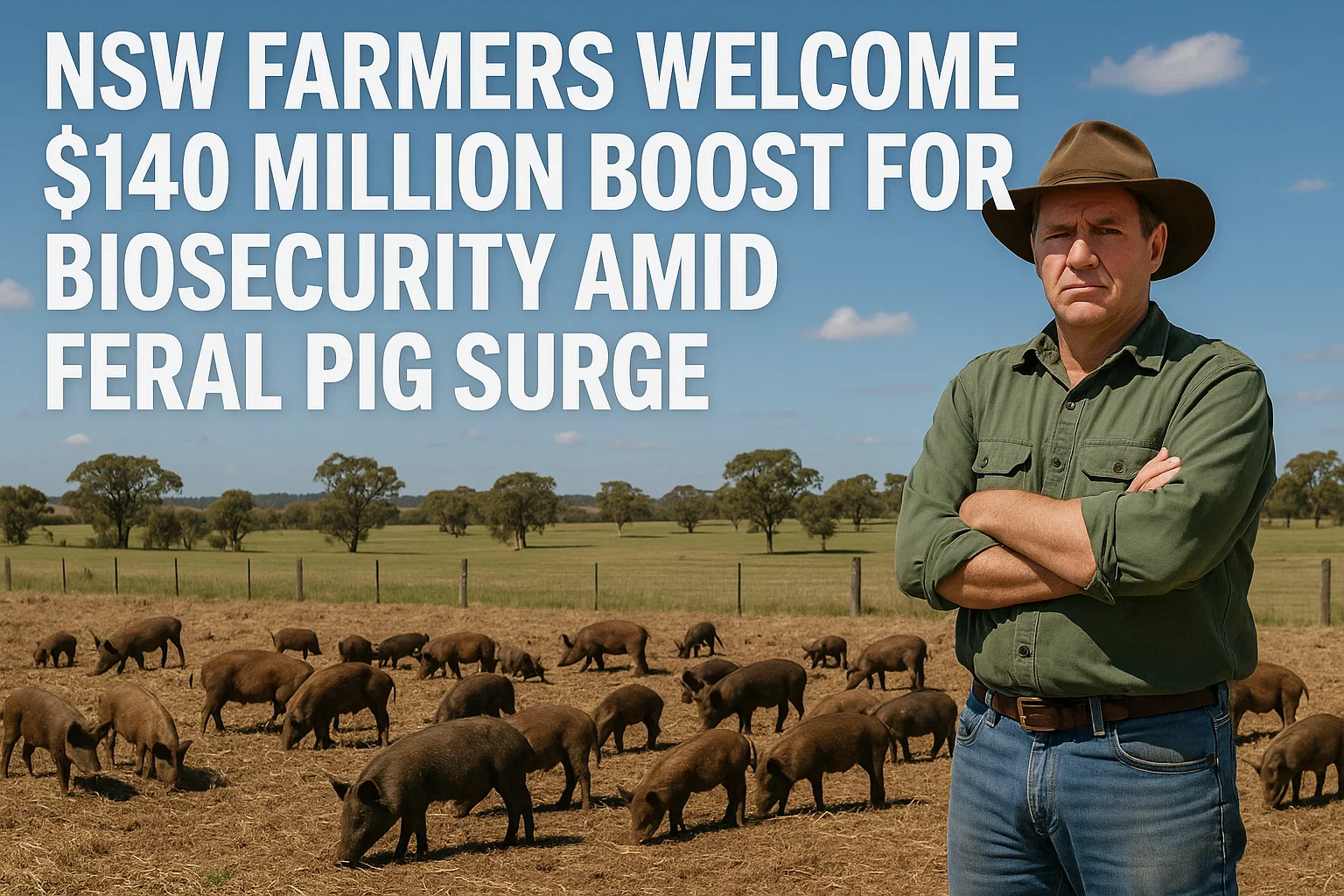
Cattle breeder Tim Vincent says the announcement of more than $140 million in new biosecurity funding for New South Wales couldn’t have come at a better time.
Vincent, who owns four properties including an Angus cattle stud near Tamworth, said the feral pig problem in the region was the worst he had seen.
“They’re turning up in places we’ve never seen them before,” he said.
“You can hear them at night near the house, fighting and making noise. There needs to be a widespread poisoning program.”
The NSW government is considering introducing a bounty system for pests like feral pigs, which destroy crops, pastures, and waterways and have been known to kill livestock and even attack people.
The recent announcement brings the state’s total biosecurity funding to a record $1.05 billion, with $141.2 million in additional investment. Of that, $100 million will go directly toward improving biosecurity, while $42.1 million will upgrade research and development infrastructure.
Strategic Spending Needed
While the Invasive Species Council welcomed the funding, CEO Jack Gough cautioned that spending must be strategic to be effective.
“I’m hoping we don’t just get flashy announcements claiming 100,000 pigs were killed,” he said.
“Those numbers mean little when there are millions more.”
Gough argued that bounties aren’t a long-term solution and often don’t contribute meaningfully to managing invasive species populations.
“They don’t lead to more effective control and can even open the door to fraud,” he said.
Instead, he advocated for more targeted action to stop the spread of pests like pigs and deer into new areas.
Wider Biosecurity Threats
The NSW Farmers Association president, Xavier Martin, said the funding was vital in helping farmers manage threats from invasive species, diseases, and weeds.
He warned that pests like fire ants, already problematic in Queensland, could have devastating impacts in NSW if allowed to spread.
“If fire ants take hold, they’ll transform our way of life, our environment, and our native species,” he said.
“These threats are beyond the capacity of individual farmers — they require coordinated state and national efforts. Prevention is always more effective than cure.”
Government Response and Future Goals
NSW Premier Chris Minns said the new funding was essential to safeguard the state’s agriculture industry.
“If we want our farming sector to thrive and access new markets, we first need to protect it here at home,” he said.
Agriculture Minister Tara Moriarty added that upgrading facilities might also help draw younger workers into the industry.
“Many in the current workforce are nearing retirement, and it’s important we create opportunities for them to pass on their expertise,” she said.
