


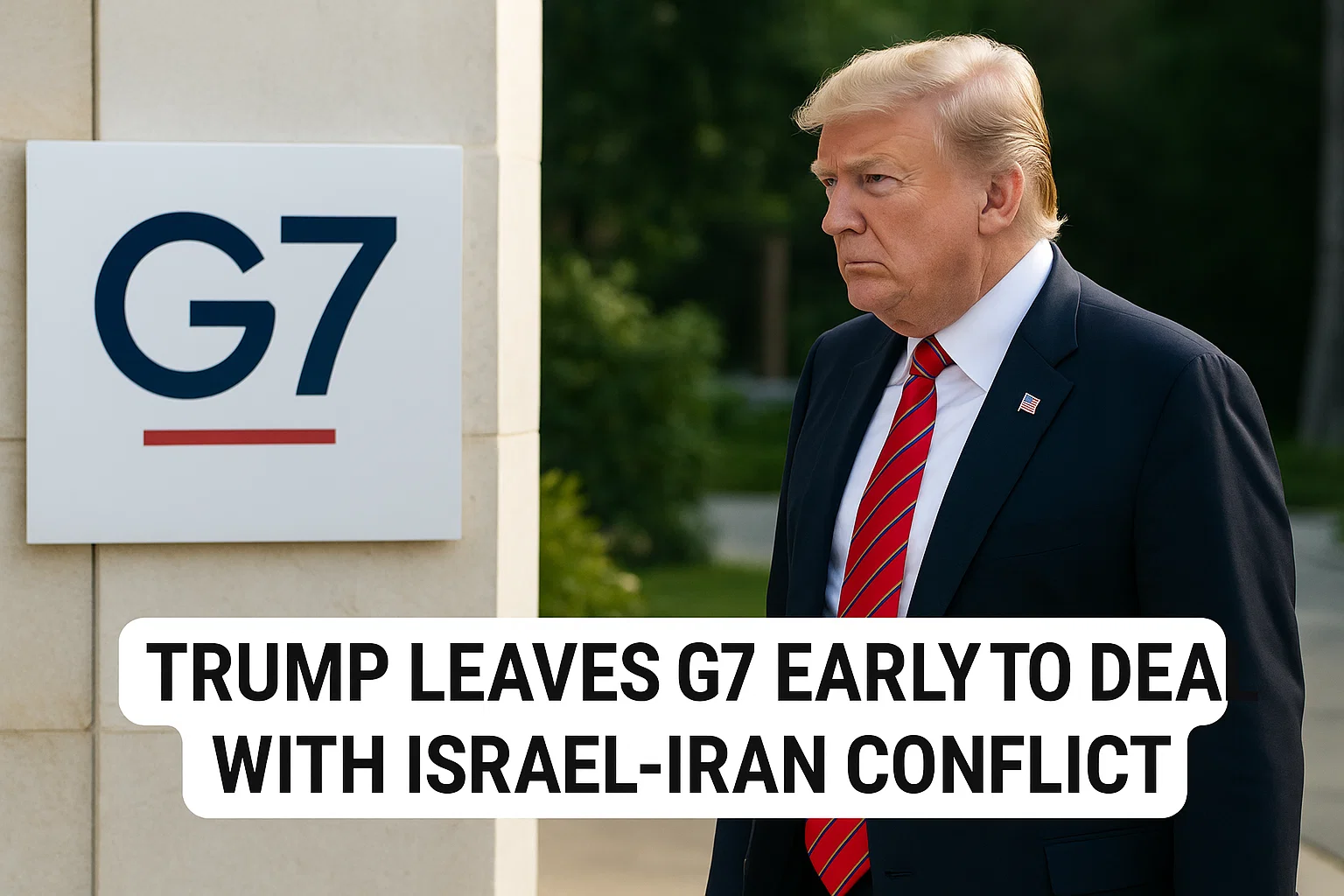
In his typically dramatic and unpredictable fashion, Donald Trump announced on the opening day of the G7 summit in Canada that he would be returning to Washington.
“I have to go back — very important,” Trump said, referring to the escalating conflict between Israel and Iran, which erupted after Israel launched a surprise attack on Iranian military and nuclear sites.
Initially, there were hopes Trump might broker a ceasefire. French President Emmanuel Macron even suggested discussions were underway to pause the fighting. However, Trump soon contradicted that via social media, saying his return to Washington had “nothing to do with a Cease Fire” and hinting at something “much bigger.”
Before departing, Trump instructed his National Security Council to prepare for a meeting in the White House Situation Room — a place often associated with crisis decision-making.
If Trump does manage to facilitate a peace deal between Israel and Iran — despite not delivering on promises to end conflicts in Gaza and Ukraine — it would mark a significant diplomatic victory.
Ceasefire on the Table?
According to Axios, the White House was exploring potential ceasefire talks with Iran. Given Iran’s military disadvantages, this seems plausible. Iran has lost significant ground: much of its leadership, infrastructure, and missile stockpiles have been destroyed, and key allies like Hamas and Hezbollah are weakened or eliminated.
“Their ability to retaliate is virtually gone,” said Ian Bremmer of the Eurasia Group. He also noted that Iran has exhausted a fifth of its ballistic missile reserves with minimal success in targeting Israel.
Despite this, there’s little indication that Israel is interested in stopping. Prime Minister Benjamin Netanyahu, who has historically resisted pressure to de-escalate, emphasized that more action is coming. He claimed Israeli pilots are preparing further strikes on Tehran and warned that the Ayatollah regime is in for unimaginable blows.
Reviving the Nuclear Deal?
Trump previously dismantled the 2015 Iran nuclear deal, promising to negotiate a better version — though that never materialized. Recent efforts to resume talks collapsed after Israel’s surprise assault killed Iran’s chief negotiator, halting a planned meeting.
This not only undermined diplomatic efforts but also cast doubt on America’s reliability as a mediator. Whether the U.S. was complicit or unaware of Israel’s plans, either scenario has damaging implications.
Iran, however, appears to be reconsidering talks. Axios reported that Iranian officials are exploring diplomacy. A senior U.S. official noted, “They want to talk — but we don’t know if they’re desperate enough yet.”
Bremmer added that Iran’s leaders may realize survival depends on negotiation: “They know if they don’t talk, the U.S. could get directly involved.”
U.S. Military Involvement?
Trump campaigned on keeping America out of new wars, especially in the Middle East. But certain developments could force U.S. action — including attacks on American bases or interference in the Strait of Hormuz.
Another option being considered is a strike on Iran’s Fordow uranium enrichment site, buried deep underground. While unreachable by Israeli weapons, U.S. forces could destroy it.
Former U.S. Ambassador to Israel, Dan Shapiro, said Fordow must be eliminated to prevent Iran from quickly building a nuclear weapon: “If Fordow survives, Iran remains capable of producing a bomb whenever it chooses.”
This sentiment was reflected in the G7’s statement, which called Iran the main source of regional instability and reaffirmed that it must never acquire nuclear weapons.
Regime Change?
Following Israel’s strike, Netanyahu addressed the Iranian public, urging them to rise against their rulers. He later claimed that senior Iranian officials were already preparing to flee.
However, Trump reportedly blocked an Israeli plan to assassinate Iran’s Supreme Leader, Ayatollah Ali Khamenei — wary of breaking long-standing international norms.
Shapiro explained that while Khamenei has extensive blood on his hands, his assassination could lead to more chaos, not less. There’s no ready opposition waiting to take power, and previous regime changes in Iraq and Libya only led to prolonged instability.
Iran’s Nuclear Sprint?
Iran could take the opposite route — rushing to build a nuclear weapon as its best shot at survival. Analysts fear that, like North Korea’s Kim Jong Un, Iran’s leadership may conclude that only nuclear capability can guarantee regime security.
“There is definitely a chance Iran could conduct a rapid, secret enrichment to weapons-grade uranium and even test a bomb,” said Shapiro.
With time running out, both Israel and the U.S. face a critical choice: use military force to halt Iran’s nuclear program, or bring it back to the negotiating table — while they still can.
