


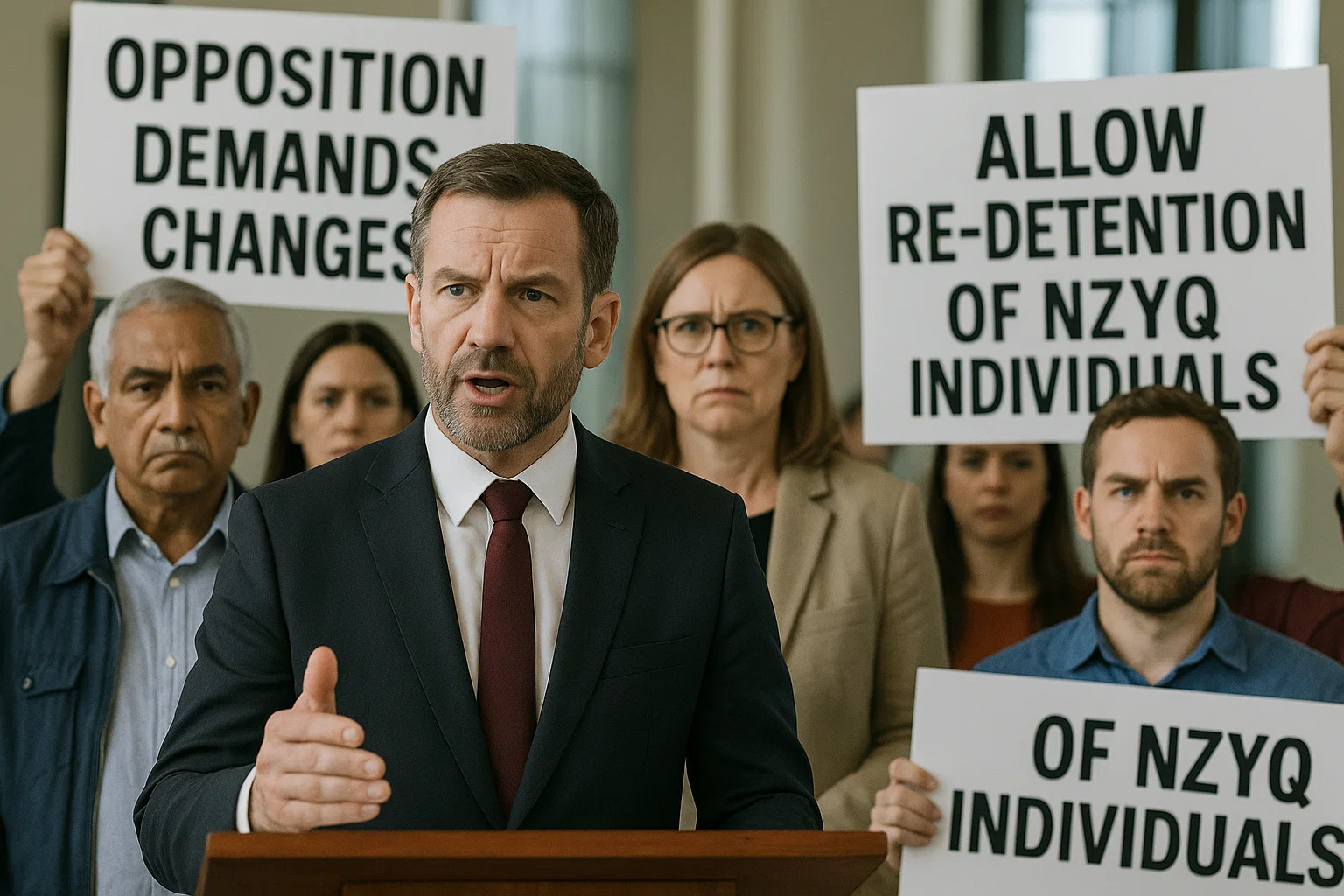
The Coalition is urging a rewrite of laws designed to allow the re-detention of former immigration detainees released under the High Court’s “NZYQ” decision, after the federal government admitted it has not been able to make use of the legislation.
The preventative detention regime, introduced in 2023, followed a High Court ruling that led to the release of a man known as NZYQ, who had a criminal record and no legal right to stay in Australia but could not be deported. The decision triggered the release of dozens more in similar legal situations—many with serious criminal histories—who had completed their sentences but remained in immigration detention.
In response, the federal government—backed by the Coalition—rushed through emergency laws late last year. These laws allowed the government to apply for Community Safety Orders to re-detain high-risk individuals from the NZYQ cohort, provided they posed a demonstrable threat to public safety.
However, renewed scrutiny has emerged following the alleged murder of a 62-year-old man in Melbourne’s Footscray mall by a former detainee who was on bail and wearing an ankle bracelet.
Shadow Immigration Minister Paul Scarr criticised the government for failing to act on powers it has held for more than a year.
“We were told work was progressing, evidence was being gathered… and now, 16 months later, we get this shocking admission that it wasn’t practical to use the powers,” Senator Scarr said.
“We should now consider how to amend the legislation.”
Legal Barriers and Government Response
While the Coalition supported the original 2023 laws, including proposing amendments at the time, Senator Scarr did not offer specific ideas for how to revise the regime.
He noted that until recently, the government had indicated it was preparing to re-detain some of the cohort.
But Home Affairs Minister Tony Burke said on Sunday that none of the individuals released met the legal threshold required under the current legislation.
“The reality is that the thresholds we’re dealing with—due to past High Court decisions—are harder to meet than I would like,” Mr Burke said.
While he has not given up on pursuing re-detention in some cases, the minister said his preference now is deportation.
The government remains cautious about a potential court loss that could further limit its legal tools. The original NZYQ decision ruled that indefinite detention was punitive and therefore unconstitutional—overturning more than 20 years of legal precedent.
That raises the risk that detaining individuals who have not committed a new offence, or applying harsh penalties for curfew violations or electronic monitoring breaches, could also be successfully challenged in the High Court.
At the time the laws were passed, the Law Council of Australia warned that preventative detention should be used only in rare, exceptional cases, and only after a fair hearing in court.
