


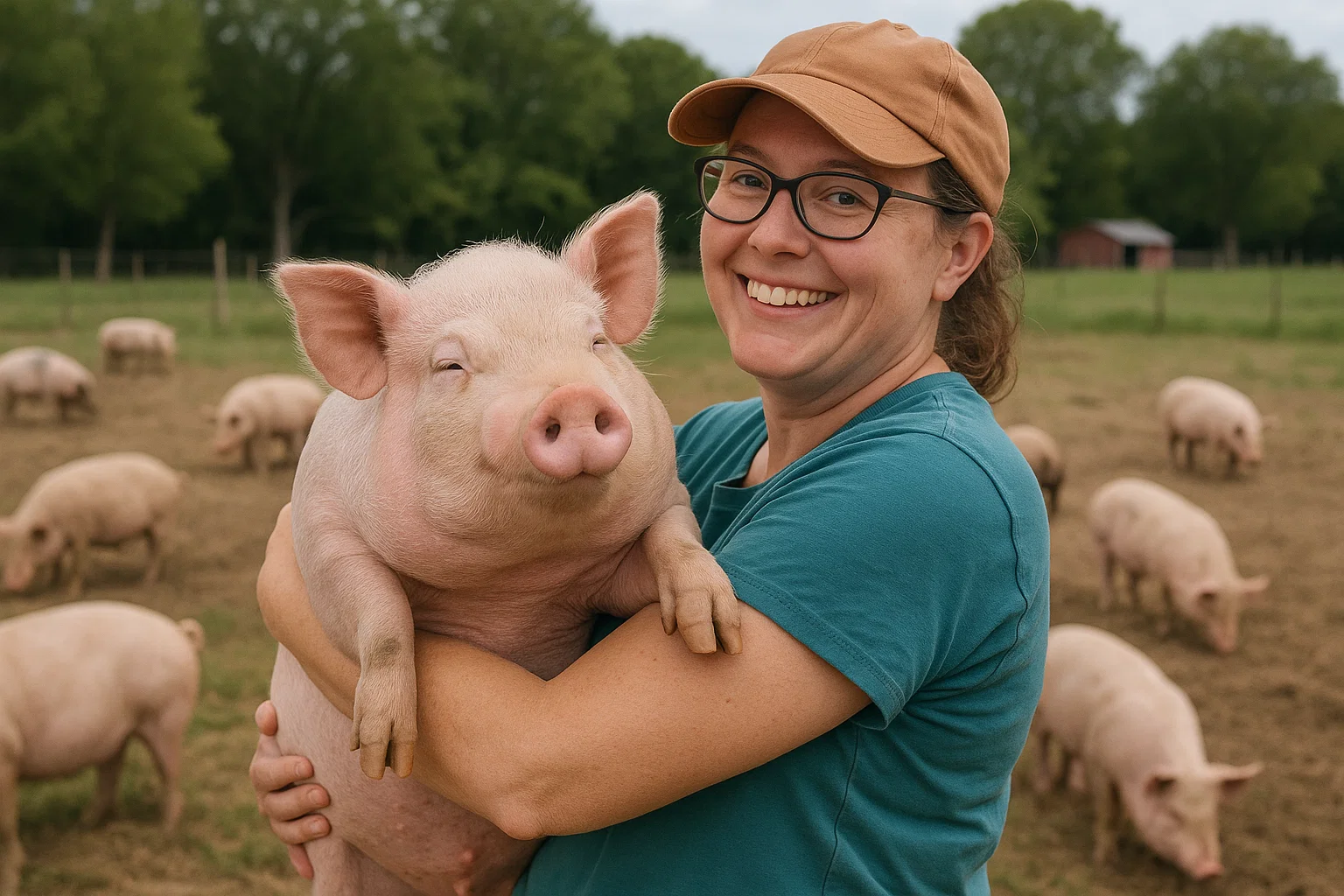
What do “teacup” pigs and unicorns have in common?
Neither one is real — no matter how much people wish they were.
Often marketed as ideal pets for children and suburban homes, so-called “teacup” pigs can grow into much larger animals, creating unexpected challenges for owners — something Tayla Anderson experienced first-hand.
Anderson said her mother surprised her with two piglets, and they were assured the pigs would stay small.
“We’d never had pigs before, so we trusted what we were told. We didn’t know any better,” she admitted.
Photo: Two muddy piglets (Supplied: Tayla Anderson)
But the pigs kept growing — reaching thigh height and becoming large enough for her to almost ride.
Luckily, Anderson was living on a small farm in Victoria and had the space to accommodate her unexpectedly large pets.
“I’ve visited many farms, and I’ve never actually seen a small pig,” she said.
Photo: Two large pigs that outgrew expectations (Supplied: Tayla Anderson)
Myth of the miniature pig
Dr Dakota Leschke, a pig health expert from the University of Queensland, said many new owners are misled into thinking they’re buying a permanently small pig.
“‘Mini pig’ is a loose term — they’re generally smaller than commercial pigs, but they can still be huge,” he explained.
“The smallest I’ve seen is about 100 kilograms, and some reach up to 250kg. Teacup pigs are more myth than reality.”
Unexpected growth, heartbreaking consequences
Photo: A woman pats a large pig named Belly (ABC New England North West: James Paras)
RSPCA animal care manager Georgie Casper said Australia doesn’t recognise “miniature pig” as an official breed.
“A commercial pig can reach 250 to 300 kilograms, although it takes about four to five years,” she said.
Kathy Anderson — not related to Tayla — runs a pig sanctuary near Tenterfield in northern NSW, where she cares for over 120 pigs of all sizes. Many are surrendered pets whose owners couldn’t cope once their “mini pigs” grew too large.
“We’ve had families give up pigs they bought for their kids, thinking they’d stay small,” she said.
“People might assume pigs are like small dog breeds — but pigs don’t work that way.”
Belly’s story
One pig, Belly, ended up at Kathy’s sanctuary after her owners realised they were unprepared for her size.
“She was so skinny and in pain,” Kathy said. “She was likely fed an inadequate diet like chicken feed to try to keep her small — some breeders recommend that.”
Belly now weighs 200kg.
Photo: Belly the pig now eats proper pig feed after a rough start (Supplied: Kathy Anderson)
The breeder’s perspective
South Australian breeders Rachel and Joel Redford say they frequently turn away potential buyers looking for “teacup pigs.”
“The idea of teacup pigs is completely misleading. That term shouldn’t even exist,” Rachel Redford said.
“We often get requests from people wanting to keep pigs in apartments, and we have to say no.”
While “miniature pigs” are not formally recognised, the Redfords say their breeding program, developed over 15–20 years, has produced smaller pigs — some growing only to around 70kg and about 30cm tall.
“These pigs were specifically bred for those traits,” she said, adding that reputable breeders are rare in Australia.
Photo: A large pig resting in a shelter (ABC New England North West: James Paras)
The importance of responsible ownership
Although RSPCA NSW has not seen a surge in pig-related complaints recently, Georgie Casper said misinformation is widespread.
“People need to understand the commitment. Pigs are intelligent, emotional, and curious animals,” she said.
“They require proper nutrition, shelter, transport options, and veterinary care.”
The NSW Department of Primary Industries also notes that keeping pigs — even on free-range properties — is considered intensive livestock agriculture, which may not be allowed in all zoning areas.
