


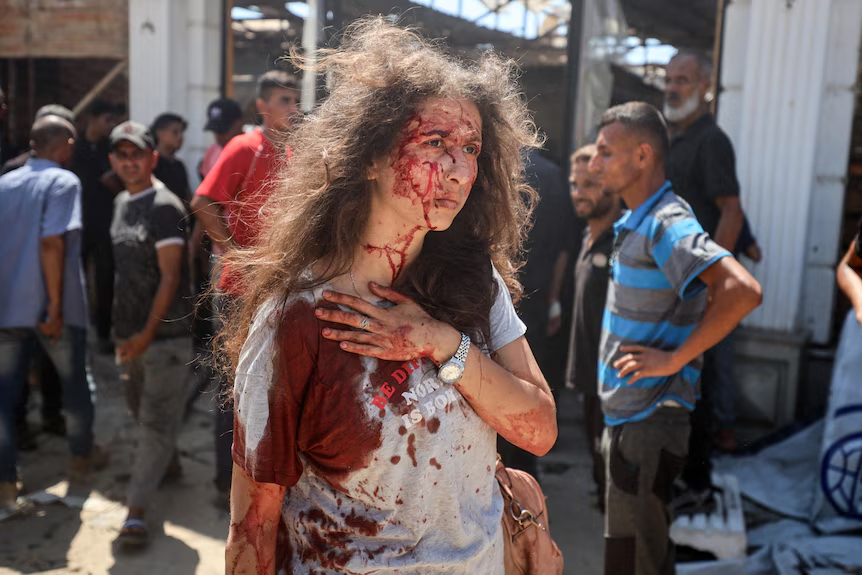
An Israeli airstrike on a coastal café in Gaza — widely used by journalists, students, activists, and locals for its internet access — has killed at least 30 people, including women, children, and several journalists, according to Gaza’s civil defence agency.
The strike targeted Al-Baqa Café, one of the few public venues still operating amid the ongoing war. It had served as a crucial hub for those seeking internet connectivity, power outlets, and workspace.
Eyewitness Ahmed Al-Nayrab described the aftermath to AFP, recalling a “massive explosion” and scenes of devastation:
“I saw body parts flying everywhere… It was a scene that made your skin crawl.”
Among those killed was 32-year-old Palestinian photojournalist and filmmaker Ismail Abu Hatab, who had gained recognition for exhibitions highlighting the struggles of life in Gaza. He had previously been injured in an airstrike in November 2023.
Another prominent journalist, Bayan Abu Sultan, was injured in the blast. Known for her reporting and social media presence, Sultan was confirmed among the wounded by multiple news outlets.
The United Nations Human Rights Office has denounced what it described as a pattern of journalist killings by Israeli forces. According to their data, 227 journalists have died in Gaza since October 7, 2023 — 18 of them in May 2025 alone. The Palestinian Journalist Syndicate has corroborated these figures.
The airstrike comes amid Israel’s latest offensive in the nearly two-year-long war that began when Hamas fighters entered Israel on October 7, 2023, killing over 1,200 people and taking 251 hostages. In response, Israel launched a military campaign that, according to Gaza’s health ministry, has killed more than 56,000 Palestinians, the majority of them civilians.
Attacked for seeking connection
Gaza has suffered multiple full and partial internet and communication blackouts since the war began, disrupting both civilian and media communications. From June 10 to 21, the Strip experienced a complete internet shutdown, which Palestinian telecom authorities described as the result of systematic attacks.
Groups such as the Committee to Protect Journalists (CPJ) and Reporters Without Borders (RSF) allege that Israel is deliberately targeting journalists — a claim Israel denies. RSF’s campaign director Rebecca Vincent stated:
“Israeli forces have done everything in their power to prevent coverage of what is happening in Gaza.”
Palestinian journalist Gathi Sabbah, 65, said last month that simply accessing public Wi-Fi had become life-threatening:
“You might be killed for trying to have internet access.”
He added that even visiting a café now poses deadly risks, noting that civilians have died just for being present in public places.
Gaza’s government media office issued a strong condemnation of what it called the “systematic targeting, killing and assassination” of Palestinian journalists.
In May, photojournalist Fatima Hassouna was killed in an Israeli strike just one day after learning a documentary about her life had been selected for the Cannes Film Festival.
