


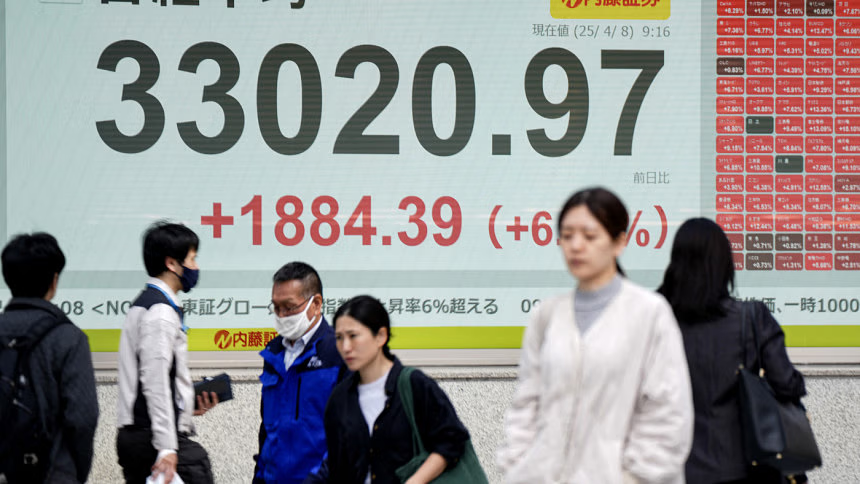
Asian markets advanced on Tuesday amid optimism surrounding potential trade agreements with the United States, although Tokyo’s Nikkei fell sharply after former President Donald Trump threatened new tariffs on Japanese goods, particularly rice and automobiles.
The U.S. dollar continued its decline as investors increasingly expect the Federal Reserve to implement at least two interest rate cuts this year. Attention is now turning to upcoming U.S. jobs data, which could influence the Fed’s timeline.
Market sentiment remains upbeat as investors monitor the progress of President Trump’s multi-trillion-dollar tax bill currently under Senate debate. Although few formal deals have been finalized and the July 9 deadline is approaching, expectations are high that either key agreements will be reached or the deadline extended.
Encouraging signals from Trump and key officials have lifted investor confidence. National Economic Council Director Kevin Hassett told CNBC that several trade frameworks—possibly “double-digit” in number—are nearing completion.
Adding to the momentum, Canada withdrew a tax on U.S. tech companies, prompting a resumption of trade negotiations that Trump had previously paused, raising hopes that other nations may follow suit.
U.S. stocks continued their rally on Monday, with the S&P 500 and Nasdaq reaching new record highs, helping boost Asian markets. Gains were seen across Shanghai, Sydney, Singapore, Seoul, and Taipei.
However, Tokyo’s Nikkei slipped 1% following Trump’s social media comments criticizing Japan for refusing U.S. rice imports despite domestic shortages and rising rice prices. The former president suggested imposing new tariffs on Japan, echoing earlier frustrations over car trade imbalances.
“I have great respect for Japan, but they won’t take our RICE,” Trump posted on Truth Social, implying retaliatory action may follow.
Japan’s rice prices have surged due to supply constraints, posing political pressure on Prime Minister Shigeru Ishiba ahead of this month’s elections.
“Trump’s remarks about rice and autos are creating concerns about a potential breakdown in trade talks with Japan,” said Hideyuki Ishiguro from Nomura Asset Management. “Such a move would shake confidence in Japanese equities.”
The yen strengthened on the back of expectations for U.S. rate cuts, adding further pressure on Japanese stocks. The Dollar Index dropped to its lowest since February 2022 amid speculation Trump may appoint a pro-rate-cut successor to Jerome Powell at the Federal Reserve.
Lower borrowing cost prospects also lifted gold prices, which rose over 1% to surpass $3,300, making the metal more appealing to investors.
Meanwhile, the fate of Trump’s proposed “Big Beautiful Bill” — which seeks to expand tax cuts and reduce entitlement spending — remains uncertain in the Senate. Some Republicans are concerned it could add over $3 trillion to the national deficit. Trump has urged lawmakers to pass the bill before July 4.
