


A shocking video showing the so-called “honour killing” of a woman and her alleged lover in a remote region of Pakistan has triggered widespread outrage, spotlighting deep-rooted tribal customs and sparking urgent calls for justice in a country where such crimes are often ignored.
Although hundreds of honour killings are reported in Pakistan each year with minimal public reaction or legal consequence, this incident—captured on camera—has struck a national nerve. The footage shows Bano Bibi, accused of adultery, being handed a Koran by her brother before telling him, “Come walk seven steps with me. After that, you can shoot me.” Moments later, he shoots her in the back, followed by the execution of her alleged lover, Ehsan Ullah Samalani.
The double killing, which took place in Balochistan province, went viral online, prompting a rare wave of condemnation from political leaders, religious scholars, civil rights groups, and clerics. Despite the video surfacing only recently, the incident reportedly occurred months ago near a provincial capital—raising concerns about systemic inaction.
Civil rights lawyer Jibran Nasir argued that the government’s response was performative rather than driven by justice: “This isn’t a reaction to a crime—it’s a reaction to a viral moment.”
Authorities have since arrested 16 individuals, including a tribal elder and the victim’s mother, Gul Jan Bibi, who claimed the killings were justified under “centuries-old Baloch traditions.” She insisted they were not carried out at the behest of the tribal chief and maintained, “We did not commit any sin.”
Bano’s brother—the shooter—remains at large.
Balochistan’s Chief Minister Sarfraz Bugti called the case a litmus test and vowed to dismantle illegal tribal courts, or jirgas, which police say sanctioned the killings. These informal councils, which issue extrajudicial rulings, are prevalent in rural Pakistan and often operate beyond the reach of state law.
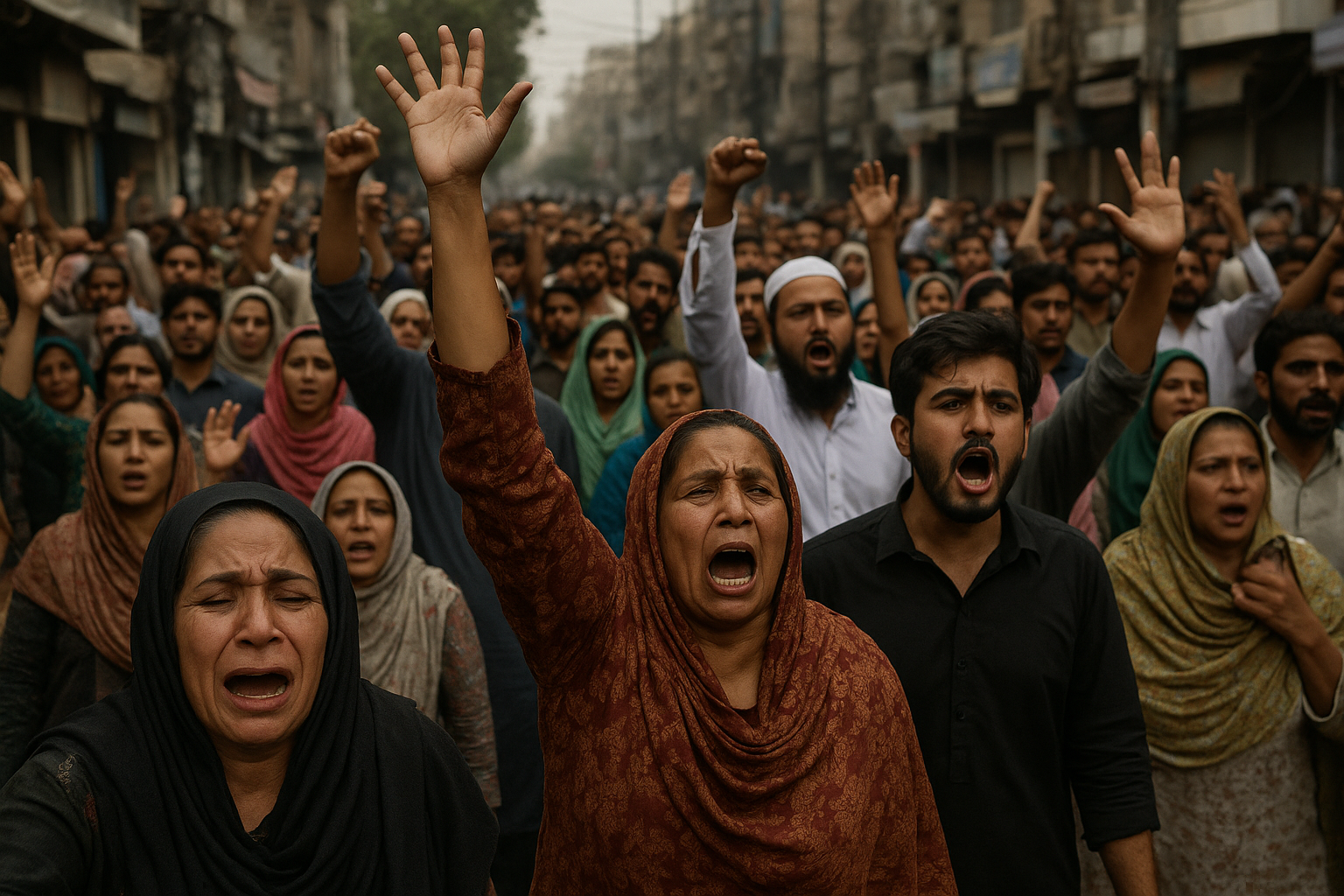
The video has since sparked a wave of online activism, with hashtags like #JusticeForCouple and #HonourKilling trending widely. The Pakistan Ulema Council denounced the murders as un-Islamic and demanded terrorism charges for those involved. In Quetta, dozens of activists and citizens staged a protest demanding justice and an end to parallel legal systems.
Anthropologist Arsalan Khan warned, however, that virality is a double-edged sword: it can pressure the state into acting, but may also serve to restore a family’s perceived honour in the eyes of their community.
Despite Pakistan outlawing honour killings in 2016—after the high-profile murder of social media personality Qandeel Baloch—rights groups say enforcement remains weak, particularly in areas dominated by tribal influence. The Human Rights Commission of Pakistan reported at least 405 honour killings in 2024 alone, most of them targeting women.
Constitutional expert Asad Rahim Khan noted that public outrage can sometimes force a response from a typically complacent state, but criticized the government for weakening judicial authority and even considering the revival of jirgas in tribal regions.
Prime Minister Shehbaz Sharif has reportedly asked officials to explore reintroducing jirgas in former tribal districts—drawing criticism from rights advocates who see this as legitimizing parallel justice.
The Senate’s human rights committee has condemned the Balochistan killings and demanded accountability for those behind the jirga ruling. Lawmakers warned that tolerating such systems risks enabling more violence.
Yet, activists like Jalila Haider are skeptical about lasting impact: “There’s outrage now, but it will fade—as it always does,” she said. “In many regions, the law has no presence. Only silence.”
She added that the killings reveal the deeper failure of the state to protect its citizens, especially in under-governed areas like Balochistan. “It’s not enough to condemn the jirgas,” she said. “The real issue is why the state continues to allow them to exist.”
