


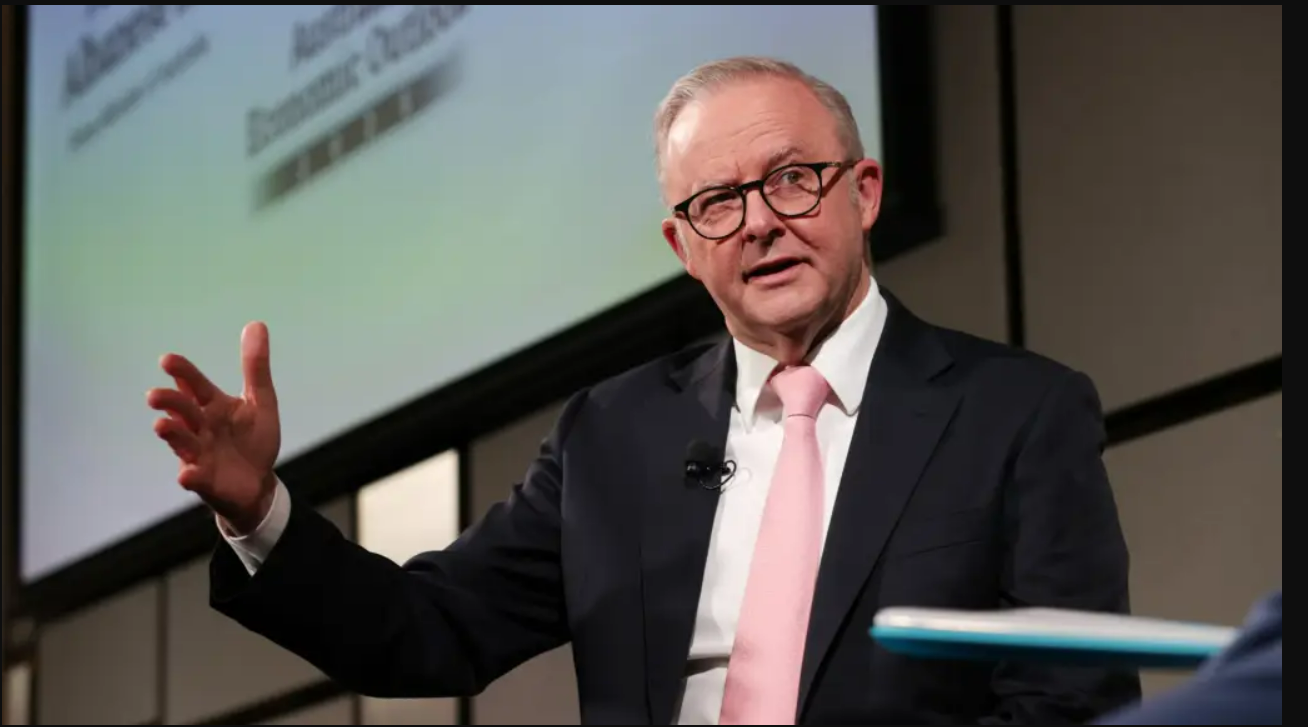
Prime Minister Anthony Albanese’s plan to establish a dedicated Office of Artificial Intelligence has received cautious support from crossbench and opposition MPs, although critics argue the federal government should have acted years earlier.
Mr Albanese is expected to formally promote the new office during a major speech in Sydney, describing the initiative as a world-leading model for coordinating Australia’s response to artificial intelligence.
The office will operate within the Department of the Prime Minister and Cabinet and is intended to bring together the government’s previously fragmented approach to AI policy.
According to advance extracts from the Prime Minister’s speech, the new structure is expected to provide clearer approval processes, faster decision-making and a more streamlined system for checking compliance with Australian standards.
Mr Albanese will argue that a coordinated national approach could also make Australia more attractive to international investors by providing greater certainty about regulation and government expectations.
He is expected to acknowledge that AI affects almost every government department and ministerial portfolio, while noting that the federal response has until now largely been developed separately across different industries and policy areas.
Community Strong Australia MP Allegra Spender welcomed the government’s decision but said the office should have been created much sooner.
Ms Spender said Australia should aim to become an active developer and decision-maker in emerging technologies rather than simply relying on systems created overseas.
She also highlighted growing community concerns about the expansion of data centres, the protection of personal information, online safety for children and the increasing use of deepfake technology.
While describing the government’s move as appropriate, Ms Spender said stronger federal leadership on AI had been needed earlier.
Opposition digital economy spokesman Aaron Violi was more critical, arguing the office should have been established about three years ago.
Mr Violi accused the Prime Minister of failing to provide leadership while artificial intelligence was already having a significant impact on Australian workers, businesses and communities.
He also criticised the limited information released before the office’s official launch.
According to Mr Violi, the government’s AI policy has shifted between the possibility of strict regulation and a lighter approach, creating confusion for businesses and the wider public.
He said the Prime Minister’s decision to intervene now did not address what he described as several years of uncertainty.
Based on information released ahead of the announcement, the Office of Artificial Intelligence will work closely with Industry Minister Tim Ayres and Assistant Minister Andrew Charlton.
The government plans to develop new Australian standards for the use and deployment of AI, with input expected from several departments.
The Attorney-General’s Department is likely to contribute to policies involving copyright and intellectual property, while Defence and Home Affairs will be involved in matters relating to national security.
Other portfolios are also expected to participate because of the broad effect AI is having on employment, education, business, privacy, infrastructure and public services.
Mr Charlton defended the initiative and said it would help Australia influence how artificial intelligence is introduced and used across the country.
He said the technology affected many areas of government and required stronger coordination between federal departments, state and territory governments and regulators.
According to Mr Charlton, placing the office within the Prime Minister’s department would help create a more consistent national framework.
He said Mr Albanese was well positioned to bring together different levels of government and ensure that policies were not developed independently or applied unevenly across jurisdictions.
Mr Charlton declined to characterise the new office as evidence of a more interventionist government approach.
Instead, he said the initiative followed earlier work on a national AI plan and government expectations for large data centres.
He argued the office would focus on implementing and coordinating policies that were already being developed, particularly by creating nationally consistent requirements for major AI infrastructure.
Further details about the office, including its powers, staffing, regulatory responsibilities and relationship with existing agencies, are expected to be announced as part of the Prime Minister’s speech.
