


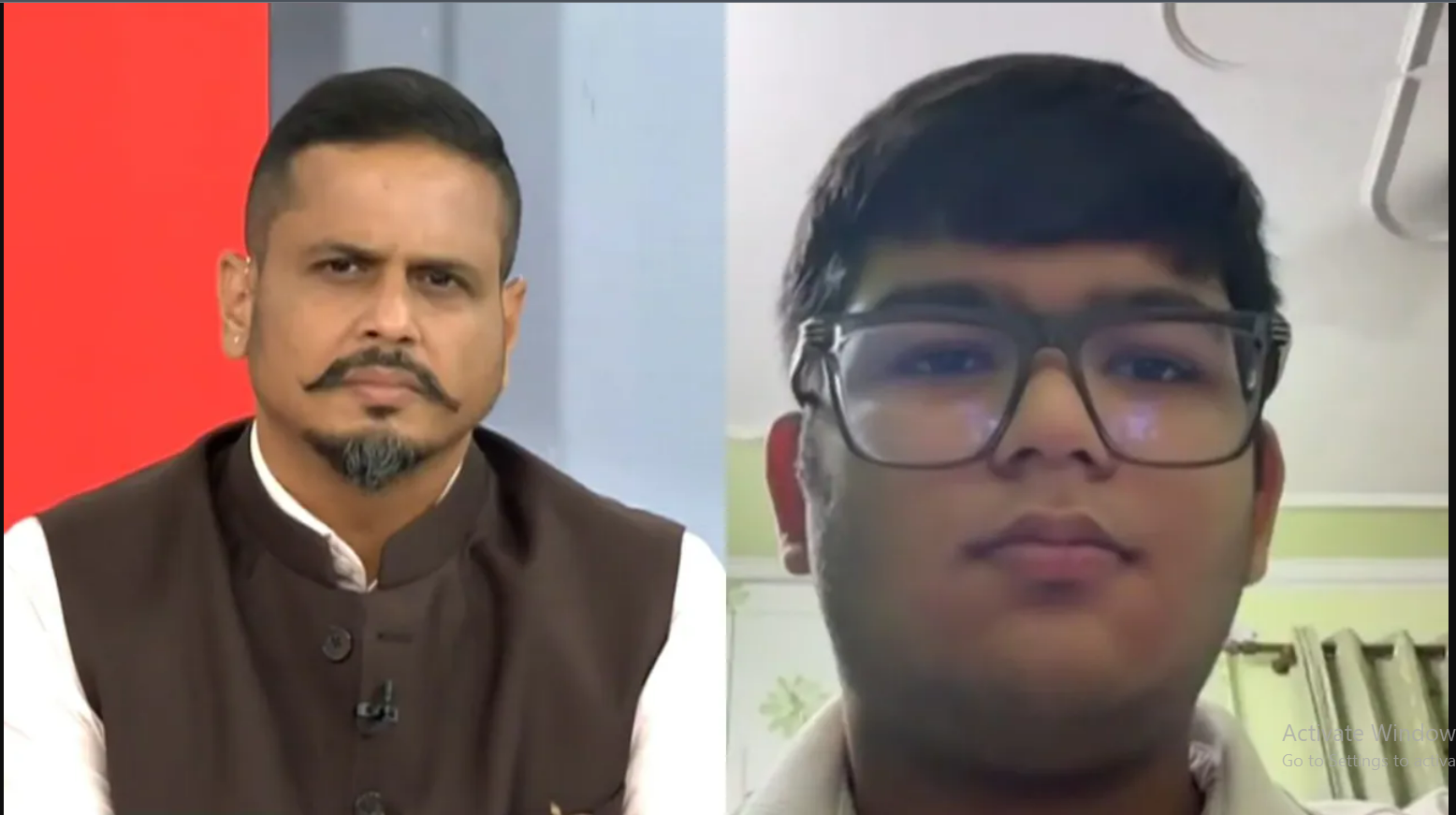
Panshul Bansal, who secured the second-highest rank nationwide in the NEET-UG 2026 re-examination, has said he decided to focus on preparation rather than join the protests that followed the cancellation of the original medical entrance test.
Bansal achieved All India Rank 2 with a 99.9999 percentile after scoring 715 marks in the re-test. Speaking to NDTV, he said the cancellation of the first examination initially left him deeply disappointed, but he soon treated the setback as another opportunity to improve his performance.
The student said he questioned what he would gain by participating in demonstrations when he could use the same time to study, sharpen his skills and raise his score.
His comments come as thousands of students and youth activists continue protesting over the alleged leak of the NEET-UG question paper. Opposition parties have also intensified pressure on the central government and demanded the resignation of Union Education Minister Dharmendra Pradhan.
Educational Resources
Bansal is a student of KR Mangalam World School in Greater Kailash, New Delhi. He had reportedly scored about 706 marks in the original examination before increasing his total by nine marks in the re-examination.
The original NEET-UG test for admission to undergraduate medical programmes was conducted on May 3. It was cancelled on May 12 after allegations emerged that the examination paper had been leaked. India’s Central Bureau of Investigation is examining the circumstances surrounding the alleged breach.
A fresh examination was held on June 21 under stricter security arrangements, and the results were announced on July 16.
Recalling the moment he learned that the first test had been cancelled, Bansal said his immediate reaction was one of sadness and despair. He believed his earlier score was strong enough to secure admission to a government medical college and initially struggled to understand why he had to sit for the examination again.
However, within a few hours, he said he changed his outlook and decided to approach the re-test positively.
Rather than focusing on the controversy, he became determined to improve his result. Bansal said he avoided negativity and concentrated on the goal of performing better in the second examination.
He explained that the extra preparation period did not lead him to make any major changes to his daily study schedule. Instead, he followed the same routine he had used before the original test.
According to Bansal, the difference was his level of determination during the final weeks. He told himself that he had to give everything possible during the additional month and a half of preparation and then accept the outcome.
The topper said he tried to keep his attention on the examination instead of worrying about developments beyond his control.
He believed that continuing to think about the cancellation, protests and uncertainty would only increase his stress. Once he accepted that the re-examination would go ahead, he focused completely on completing it successfully.
Bansal said he expected much of the anxiety to disappear once the new test was over. His approach ultimately helped him improve from approximately 706 marks to 715 and secure one of the country’s highest rankings.
His remarks have introduced another perspective into the wider debate surrounding the examination controversy.
Many students and activists argue that public demonstrations are necessary to demand accountability, transparent investigations and reforms to protect the integrity of national examinations.
Others believe candidates should prioritise their preparation while government agencies and courts handle the investigation.
Bansal, however, declined to express an opinion on the ongoing protests in different parts of the country.
When asked directly about the demonstrations, he said he did not wish to comment.
His decision to remain neutral contrasts with the increasingly politicised debate around NEET, which has drawn participation from opposition parties, student groups and youth-led movements.
The controversy has raised broader questions about examination security, fairness and the enormous pressure placed on students competing for limited medical seats.
For Bansal, the cancellation represented a painful disruption, but also an unexpected second chance. By returning to his books and maintaining his routine, he was able to strengthen his performance and finish just one position below the top rank in the country.
