


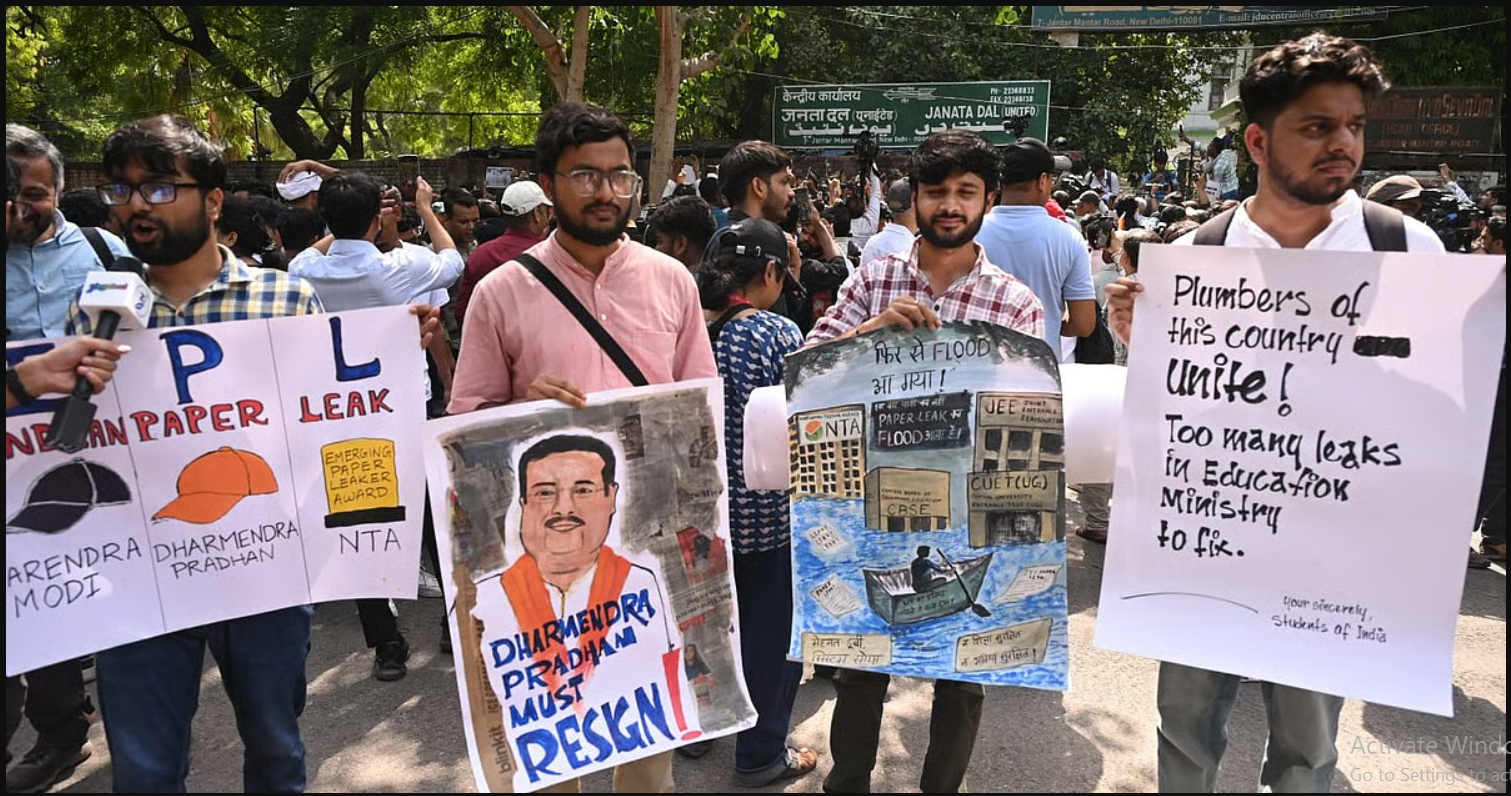
The Akhil Bharatiya Vidyarthi Parishad has condemned the violence that erupted between protesters and security forces at Delhi’s Jantar Mantar during demonstrations over alleged irregularities in the NEET-UG examination.
In a statement, the influential right-wing student organisation expressed concern over injuries sustained by both demonstrators and police officers during the confrontation.
The ABVP alleged that disruptive elements had infiltrated the protest and deliberately transformed a student-led demand for examination reform into an episode of disorder, confrontation and public disturbance.
The clashes took place during demonstrations organised by the Cockroach Janta Party, or CJP, which has been demanding accountability over the alleged NEET-UG paper leak and the resignation of Union Education Minister Dharmendra Pradhan.
The protest movement has attracted nationwide attention after police used tear gas and batons while attempting to prevent demonstrators from advancing towards Parliament.
The ABVP said violence, damage to public order and aggressive confrontation could not be justified in the name of student activism.
However, the organisation also acknowledged that concerns raised by examination candidates were serious and deserved an institutional response from the central government.
It said public confidence in India’s national entrance and recruitment examinations had been weakened by repeated allegations of paper leaks, administrative failures and inadequate security.
To address the crisis, the ABVP called for the formation of a high-level committee to review the country’s competitive examination system.
The proposed panel, it said, should examine transparency standards, security arrangements, administrative procedures and accountability mechanisms across national-level entrance and recruitment tests.
The committee should also recommend long-term reforms to prevent question paper leaks, manipulation and other failures that could affect the futures of millions of students.
The ABVP argued that candidates devote years of study, money and personal effort to preparing for highly competitive examinations and therefore deserve a system that is fair, secure and trustworthy.
It said allegations that the NEET-UG question paper had been compromised had caused widespread anxiety among students and their families.
According to the organisation, the concerns of candidates could not be dismissed or delayed, especially after the controversy surrounding the examination led to demands for cancellation, investigation and accountability.
The ABVP’s position places it between the government and the groups leading the protests.
Although the student body is ideologically linked to the wider Hindu nationalist movement and is generally viewed as close to the ruling Bharatiya Janata Party, it has openly demanded reforms and acknowledged weaknesses in the examination system.
At the same time, it has not supported the demand for Education Minister Dharmendra Pradhan to resign.
Instead, the organisation has called for a formal investigation, administrative responsibility and structural improvements designed to prevent similar controversies in the future.
The statement comes amid growing frustration among young Indians over examination leaks, unemployment, rising education costs and doubts about the credibility of public recruitment and entrance tests.
The CJP movement began as a small online satirical campaign but gradually expanded into a broader youth protest involving thousands of participants.
Opposition politicians, activists and several public figures have also expressed support for the demonstrators’ demands.
The clashes at Jantar Mantar intensified the controversy after images and videos of injured students, police action and tear gas spread rapidly across social media platforms.
Supporters of the protesters accused authorities of using disproportionate force against young demonstrators.
Police and government supporters, however, said officers were forced to intervene after sections of the crowd became violent and attempted to break through security restrictions.
The ABVP sought to take a balanced position by expressing sympathy for injured students and police personnel while condemning those it accused of provoking the violence.
Its call for a national-level reform panel adds further pressure on the government to announce specific measures rather than relying only on assurances and political statements.
Prime Minister Narendra Modi and Education Minister Dharmendra Pradhan have previously said that those involved in examination leaks would face strict punishment.
The government has also promised to strengthen testing procedures and improve the security of future examinations.
Protest leaders remain dissatisfied, arguing that promises of reform must be accompanied by an independent investigation, transparent findings and direct engagement with student representatives.
The ABVP said any reform process should include consultations with candidates, education specialists, examination authorities and relevant government agencies.
It stressed that competitive examinations must be managed in a way that protects students’ interests and preserves trust in national institutions.
The organisation’s intervention has added another important voice to the debate surrounding India’s examination system.
It also shows that calls for greater transparency and stronger safeguards are no longer limited to opposition-aligned organisations, even though political and student groups remain divided over who should be held responsible and whether the education minister should step down.
