


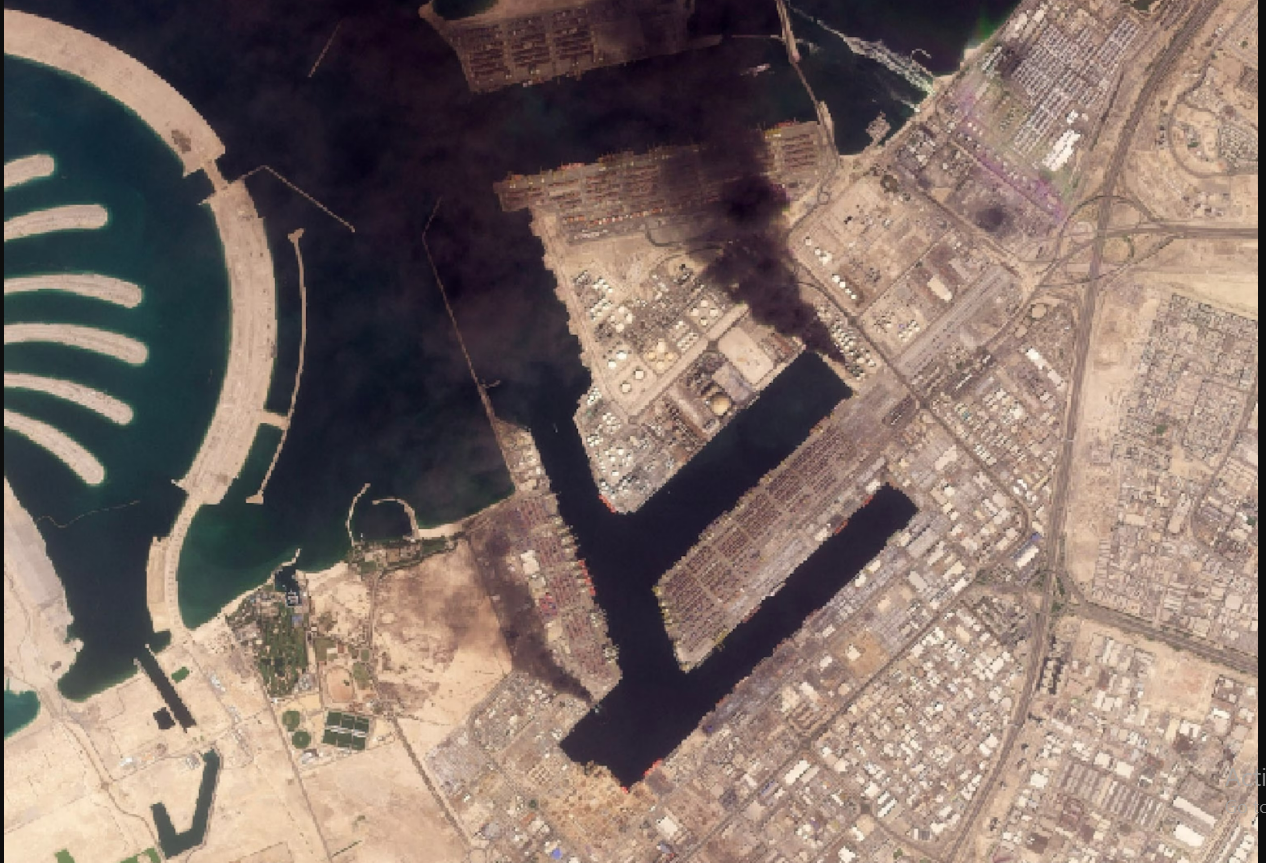
Newly analysed satellite images, photographs and video footage have revealed extensive damage at several United States military locations across the Middle East following a renewed wave of Iranian missile and drone attacks.
A visual assessment of nine US-linked sites struck since the latest ceasefire collapsed indicates that Iran continues to possess the ability to hit specific military targets despite repeated claims from the Trump administration that Tehran’s armed capabilities have been severely weakened.
The attacks damaged accommodation blocks, operational areas, aircraft hangars, drone shelters, radar systems, communications facilities and other military infrastructure across Jordan, Kuwait, Bahrain and Iraq.
The deadliest strike hit Muwaffaq Salti Air Base in Jordan, a major hub for US Air Force operations.
Three American service members were killed in the attack, while several others were wounded. Nearly a dozen troops injured in strikes across Jordan and other regional locations were reportedly transferred to a US military hospital in Germany for specialist treatment.
The soldiers killed at Muwaffaq Salti were First Lieutenant Tyler James Feehan, Private Isabella Gonzales and Sergeant Angel Rampersad. All three were assigned to missile-defence units at the base.
Iran had already targeted Muwaffaq Salti earlier in the conflict, making it one of several sites struck more than once.
Satellite imagery showed that an aircraft hangar was destroyed shortly before the deadly attack. Footage later circulated online showing a projectile exploding close to rows of prefabricated buildings believed to have been used as personnel accommodation.
The video appeared to have been recorded from inside the military installation. At one point, debris could be seen falling as the person filming moved towards shelter.
It remains unclear whether that particular explosion caused the soldiers’ deaths or whether the base was struck by missiles, drones or a combination of both.
No publicly available footage clearly showed whether the base’s air-defence systems were activated during the attack.
A separate photograph showed multiple structures burning following the strike. The original sources of the image and video were not identified, although both appeared to have been captured by people inside the base.
Iran later published high-resolution satellite images that appeared to show at least 20 structures partly or completely destroyed.
The imagery indicated damage not only to the area believed to contain living quarters but also to two hangars and three shelters used for drones.
The scale of destruction raised fresh concerns about the vulnerability of fixed US military installations to repeated precision attacks.
Another Iranian strike hit Tower 22, a US military outpost near Jordan’s northern border with Syria.
Initial signs of destruction appeared in lower-resolution European satellite images. Iranian media later released clearer imagery showing that one structure at the outpost had been destroyed.
A video from the site showed a building reduced to rubble, with its southern section almost entirely levelled.
A US official said a small number of troops suffered minor injuries in the attack. They were treated and later returned to duty.
Tower 22 had previously been attacked in 2024, when a drone strike blamed by Washington on an Iran-backed armed group killed three US service members.
Iran also targeted King Hussein International Airport in Jordan, where the United States maintains a military presence.
Hangars and radar installations were reportedly hit at two additional air bases in the country.
In Kuwait, visual evidence indicated that a radar system at Ahmad al-Jaber Air Base was destroyed around July 20.
The radar installation had reportedly been completed only six months earlier, highlighting how recently constructed defence infrastructure can still be vulnerable to missile and drone attacks.
Earlier phases of the conflict had largely focused on military infrastructure, including radar sites, aircraft hangars, communications systems and air-defence facilities.
However, some attacks also struck locations used by military personnel.
A makeshift command post in Kuwait was hit in March, killing six US soldiers.
US Defense Secretary Pete Hegseth later told lawmakers that every available precaution had been taken to protect American personnel stationed at bases in the Gulf.
Despite those assurances, several of the same installations have now been attacked repeatedly.
Muwaffaq Salti was among four locations struck during the latest two-week escalation that had already sustained attacks earlier in the war.
At a naval facility in Bahrain, Iran previously used one-way attack drones against warehouses, radar equipment and communications infrastructure.
Recent satellite imagery suggests that another warehouse at the facility was struck approximately two weeks ago.
Ali Al Salem Air Base in Kuwait, which had also been attacked earlier in the conflict, sustained relatively limited new damage.
In Iraq, a large military tent at a US site inside Erbil International Airport was seriously damaged. Satellite imagery showed a major section of the tent’s roof had been torn apart.
The Erbil site had also been targeted during an earlier stage of the war.
Determining the full scale of damage has been difficult because detailed commercial satellite images of US military positions have become harder to obtain.
The US government has asked major American satellite providers to limit the release of high-resolution imagery showing sensitive military sites, citing risks to personnel and operational security.
Such restrictions are not new and were used before the current administration.
However, the locations of many American bases are publicly known, while Iran regularly releases imagery of its attacks as part of its information and propaganda campaign.
Researchers have therefore relied on a combination of Iranian satellite images, social media videos, photographs, lower-resolution European satellite data and NASA imagery to assess the strikes.
The visual evidence suggests that some of the Iranian images accurately reflected real damage, even though they were published by media organisations aligned with Tehran.
Independent verification involved matching buildings, road layouts, shelters and other physical details across several different sources.
The US Defense Department has declined to comment on specific satellite imagery, citing operational security.
Officials also said the investigation into the deadly incident in Jordan remained active and that no additional details were available.
The latest evidence challenges Washington’s claims that Iran’s ability to conduct effective military operations has been largely eliminated.
Although US and Israeli strikes may have damaged parts of Iran’s missile, drone and defence infrastructure, Tehran has continued hitting military sites across several countries.
The attacks have demonstrated an ability to damage both advanced systems and more vulnerable personnel facilities.
Repeated strikes on previously targeted bases also suggest that Iran may be testing the resilience of US defensive networks and identifying weaknesses in repaired or replacement infrastructure.
The destruction of radar sites, drone shelters and communications facilities could reduce the effectiveness of regional surveillance and air-defence operations.
Damage to accommodation blocks and working areas also increases the danger to troops stationed at fixed bases.
Even when air defences intercept most incoming weapons, a small number of missiles or drones can still cause casualties and significant disruption.
The spread of attacks across Jordan, Kuwait, Bahrain and Iraq shows that the risk is not confined to a single battlefield.
Instead, US forces across the wider Middle East are facing a coordinated threat to bases, logistics hubs, radar networks and personnel.
The available visuals do not provide a complete picture of every strike or casualty.
However, they offer some of the clearest evidence so far that Iranian attacks have caused meaningful damage to American military infrastructure during the latest escalation.
As the conflict continues, the condition of these bases and the effectiveness of their defensive systems will remain central to assessing whether Washington can protect its forces from a prolonged Iranian missile and drone campaign.
