


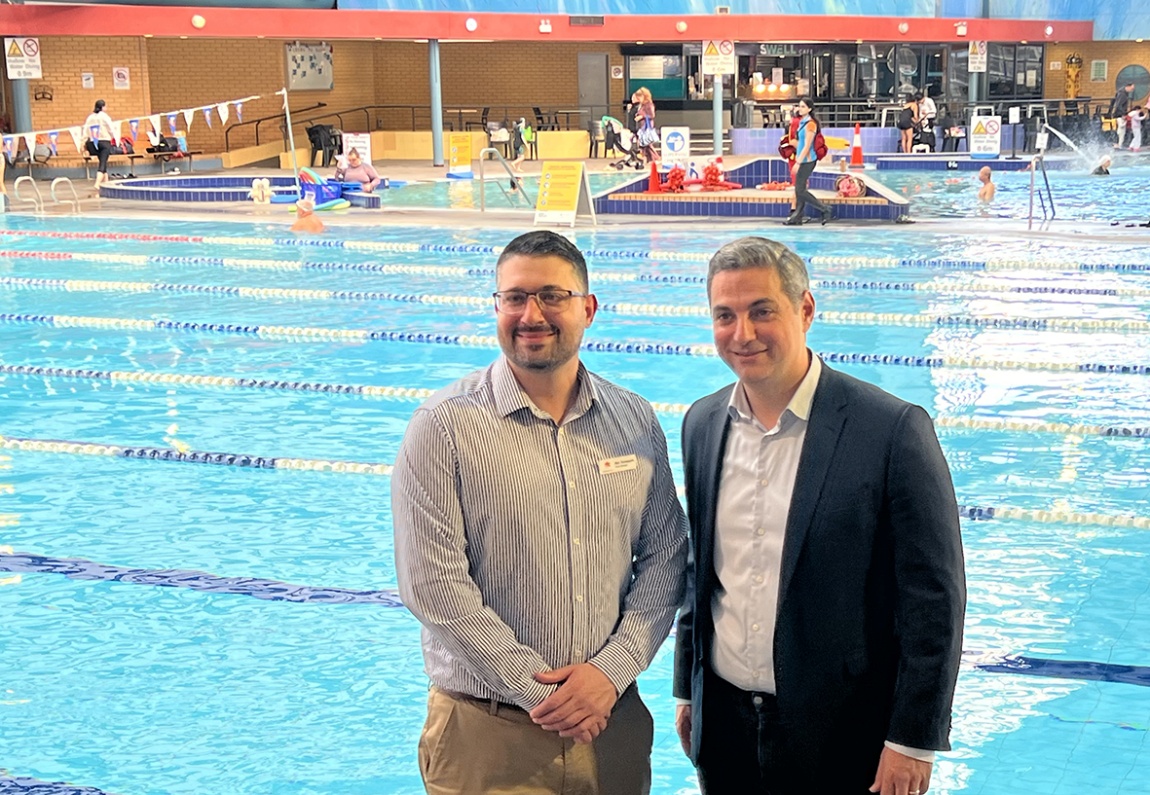
A swimming facility in Liverpool, Australia, has introduced artificial intelligence technology designed to improve swimmer safety by helping lifeguards detect potential drowning incidents more quickly.
Engineering & Technology
The new AI-powered drowning detection system has been installed at the Whitlam Leisure Centre, where cameras and artificial intelligence will monitor swimmers in real time and alert lifeguards if unusual behaviour suggests someone may be in distress.
The technology analyses movement in the water and looks for patterns that could indicate a swimmer is struggling. If the system detects a possible risk, it sends an alert to lifeguards, allowing them to assess the situation and respond rapidly if necessary.
AI Provides Lifeguards With an Extra Layer of Protection
The system has been introduced and funded by Belgravia Leisure in partnership with Liverpool City Council.
The initiative is aimed at creating a safer and more comfortable aquatic environment for local residents while supporting trained lifeguards with additional technology.
Liverpool Mayor Ned Mannoun said the system was designed to act as an extra safety tool rather than replace professional lifeguards.
He described the technology as effectively giving lifeguards “another pair of eyes” to help identify possible problems in the water as early as possible.
Drowning emergencies can develop within seconds, making rapid detection critical.
The new system is intended to provide an additional warning mechanism so lifeguards can react more quickly when a swimmer appears to be in trouble.
Liverpool’s Diverse Community Adds Importance to Water Safety
Mayor Mannoun also highlighted Liverpool’s highly multicultural population as one reason the council is prioritising aquatic safety.
Many families living in the area have come from countries where swimming lessons and water-safety education may not be as widely available from childhood as they are in Australia.
That makes it particularly important, according to the council, to ensure local swimming centres provide environments where people of all backgrounds can feel safe while learning to swim, exercising or enjoying recreational activities.
The council said swimmer safety remains a key priority across its aquatic facilities.
Technology Uses Cameras and Real-Time Analysis
The AI system combines video cameras with software that continuously evaluates activity in the swimming pool.
Rather than simply recording footage, the technology examines swimmers’ movements and looks for behaviour that may indicate distress or an emergency.
When something unusual is detected, the system alerts staff so they can immediately review the situation.
The technology is not intended to make decisions independently about whether someone is drowning. Instead, it is designed to support trained staff by drawing attention to incidents that may otherwise be difficult to detect instantly, particularly in busy pools.
Belgravia Leisure Calls It a Community Safety Investment
Belgravia Leisure NSW Area Manager Rob Thomasams described the installation as an important investment in community safety.
He said the Whitlam Leisure Centre already plays a significant role in supporting health, wellbeing and water safety in Liverpool.
The AI system, he said, will provide staff with additional support while helping create an aquatic environment where visitors can feel safer and more confident.
The technology is part of a broader effort to combine trained staff with modern safety systems to reduce risks around public swimming facilities.
System Can Work in Different Pool Designs
Another advantage of the technology is its flexibility.
The drowning detection system is not limited to conventional rectangular or square pools.
It can reportedly be adapted for swimming pools with different shapes, layouts and designs, making it suitable for a wider range of aquatic centres.
That flexibility could make the technology easier to expand across multiple facilities in Liverpool.
More Liverpool Aquatic Centres Could Receive the Technology
Following the rollout at Whitlam Leisure Centre, Liverpool City Council is planning to introduce the system at the Michael Wenden Aquatic Leisure Centre.
Engineering & Technology
The council is also considering the technology for new aquatic facilities planned for Holsworthy and Carnes Hill.
If those installations proceed, AI-assisted drowning detection could become a standard safety feature across several of Liverpool’s major swimming centres.
The expansion reflects a broader push to use artificial intelligence as a support tool in public safety settings.
For Liverpool swimmers, the system is designed to work quietly in the background, helping lifeguards identify danger faster while leaving trained professionals firmly in control of emergency responses.
