


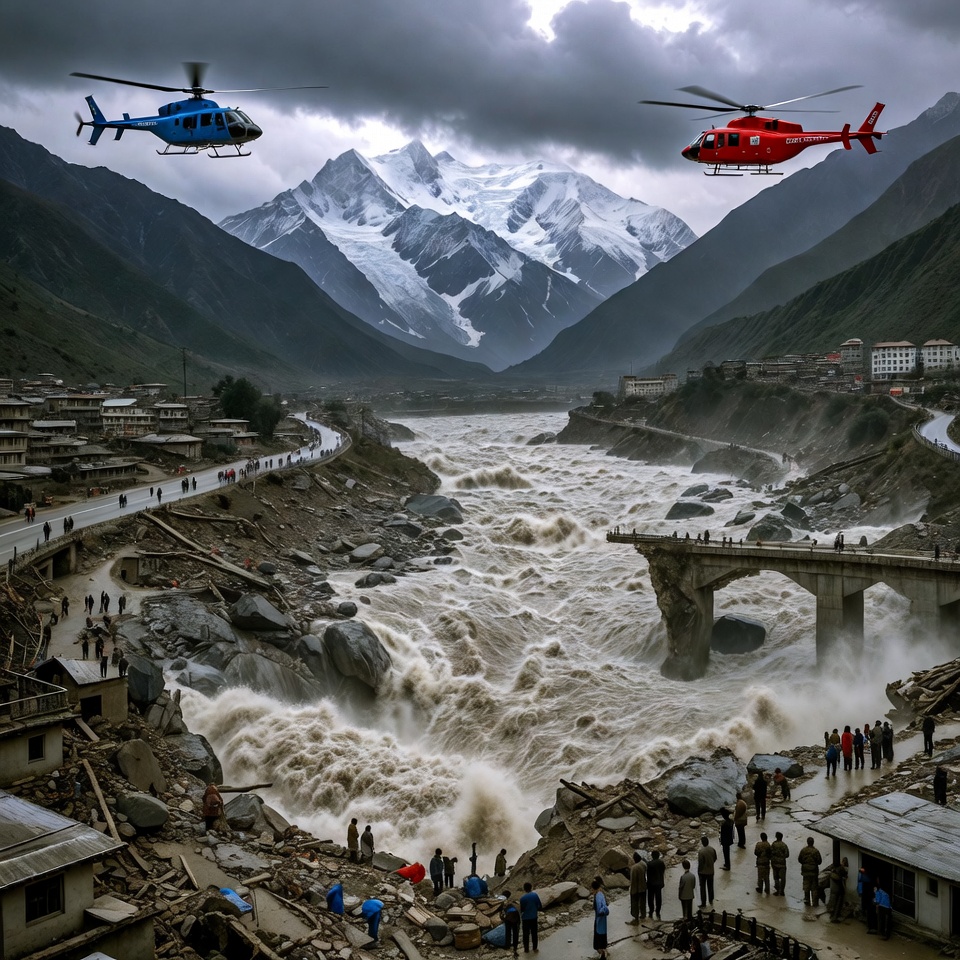
A devastating flash flood that swept through Nepal’s Rasuwa and Nuwakot districts has killed at least 162 people, while hundreds remain missing as rescue teams continue searching through destroyed settlements and damaged infrastructure.
The disaster struck the Bhotekoshi River at around 8:40am on Wednesday, causing widespread destruction across border communities, hydropower facilities and key transport routes connecting Nepal with China.
According to Nepal Police, the death toll had reached 162 by Thursday morning, with authorities warning that the number could increase as search operations continue in remote and severely damaged areas.
Ice-rock avalanche suspected as flood trigger
Preliminary analysis of satellite images from Planet Labs suggests that the disaster may have been caused by an ice-rock avalanche near the Nepal-China border.
The National Disaster Risk Reduction and Management Authority (NDRRMA) said satellite data indicates that an avalanche occurred around 20 kilometres northeast of the Rasuwagadhi border crossing.
The landslide and ice collapse reportedly blocked the Lhende River, a tributary of the Bhotekoshi River, creating a temporary barrier before releasing a massive surge of water and debris downstream.
The flood travelled through Timure and surrounding areas before entering the Trishuli River basin, causing destruction across several districts.
Casualties reported across multiple districts
The disaster affected communities across seven districts.
Officials said Chitwan recorded the highest number of deaths with 64 fatalities, followed by Dhading with 27, Nawalparasi East with 22, Gorkha with 19, Nuwakot with 13, Tanahun with 9 and Rasuwa with 3 deaths.
Nepal Police confirmed that 28 officers remain missing after the disaster.
At least 41 injured people are receiving treatment at hospitals across the affected region, including major medical facilities in Kathmandu and surrounding districts.
Massive damage to roads and infrastructure
The flash flood caused extensive destruction to Nepal’s infrastructure network.
Authorities reported that 19 motorable bridges were destroyed and around 40 kilometres of paved highways became unusable, cutting off transportation routes and making rescue operations more difficult.
Major areas affected include Timure, Syafrubesi, Betrawati, Trishuli Bazaar and Devighat.
Foreign Minister Shisir Khanal described the destruction as severe and warned residents living near the Bhotekoshi and Trishuli rivers to remain alert.
Authorities advised people to avoid travelling through damaged routes, including sections of the Galchhi-Nuwakot and Syafrubesi roads, until further notice.
Government declares disaster zones
Nepal’s Cabinet has declared Rasuwa, Nuwakot and Dhading as disaster crisis areas to speed up rescue operations and allow emergency funding from domestic and international sources.
The government announced free medical treatment for injured victims, relocation support for displaced families and the mobilisation of the Nepal Army and private helicopter companies for rescue missions.
Officials said affected areas will remain under disaster emergency status for three months.
More than 100 people rescued by helicopters
The Nepal Army and private helicopter operators have rescued at least 114 people stranded in flood-affected areas.
The army carried out 85 air rescues, transporting victims from Timure, Mailung, Betrawati and Trishuli to safer locations before transferring many of them to Kathmandu.
Private helicopter companies also assisted rescue operations, evacuating injured and stranded people to hospitals in Kathmandu.
Authorities have asked helicopter and drone operators to coordinate closely with local administrations, security agencies and disaster response teams.
Residents trapped in remote areas have been advised to use smoke signals or visible markers to help rescuers locate them.
International support begins arriving
International assistance has started mobilising as Nepal responds to one of its worst flood disasters in recent years.
India, China and the World Bank have offered financial and humanitarian support for emergency response and reconstruction.
The World Bank’s Nepal Country Director David Sislen informed Finance Minister Swarnim Waglé that up to 25 billion Nepali rupees could potentially be mobilised through emergency assistance mechanisms.
India has requested a list of urgent relief requirements from Nepal and is preparing to send necessary supplies.
China has also pledged immediate financial assistance and instructed officials to begin procedures for transferring support funds.
The government said coordination is underway to ensure that international assistance reaches affected communities effectively.
As rescue operations continue, authorities remain focused on finding missing people, restoring damaged infrastructure and providing support to thousands affected by the Himalayan flood disaster.
