


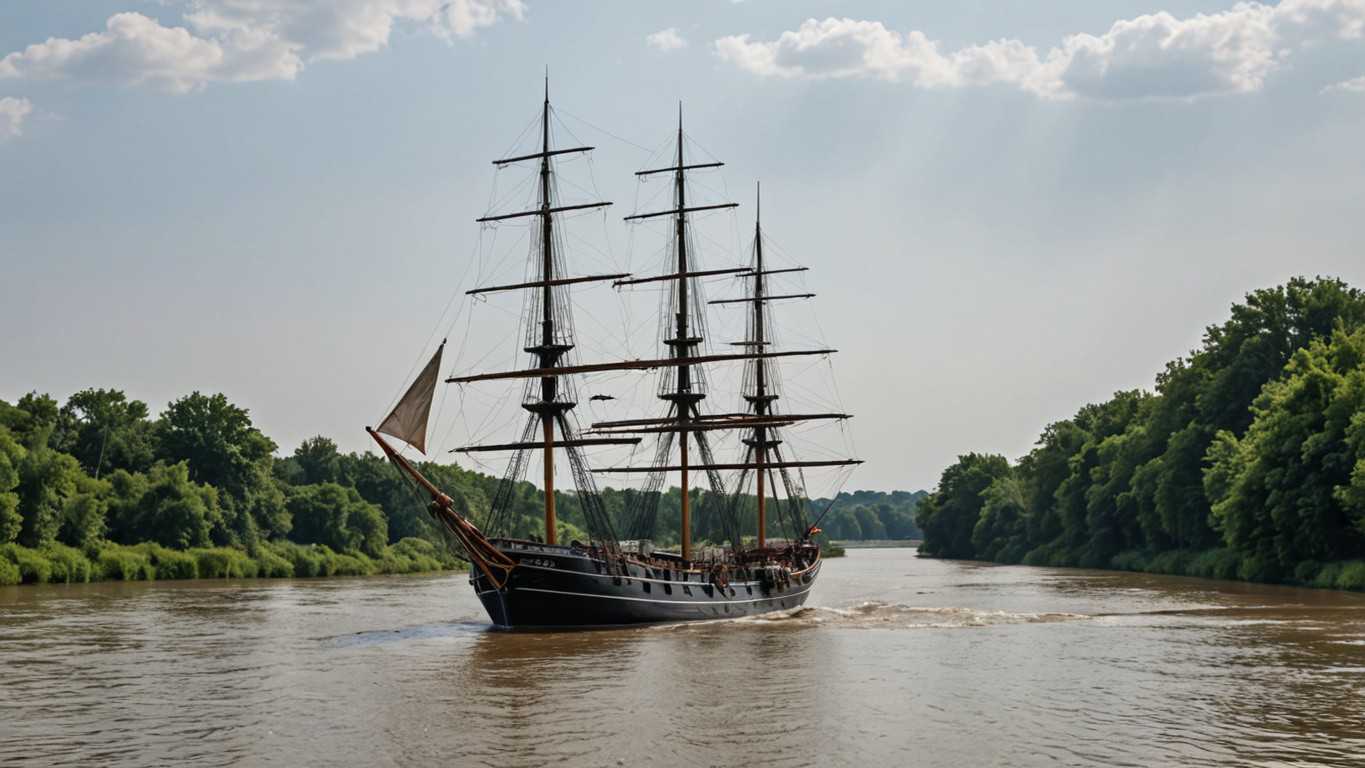
Researchers are confident they have located the site of a nearly 170-year-old shipwreck off South Australia’s south-east coast, following a multi-year search.
In June 1857, the 140-foot Dutch merchant sailing ship Koning Willem de Tweede became stranded in Guichen Bay, just days after unloading over 400 Chinese miners at Robe. Of the 25 crew members, 16 drowned and were later buried in the dunes of Long Beach along the bay’s eastern shore.
James Hunter from the Australian National Maritime Museum confirmed that researchers had now identified parts of the ship’s windlass, or winch, protruding from the bay’s seabed, along with other components.
Dr. Hunter explained that historical records about the ship and its wreckage made the team confident they had found the Koning Willem.
“We considered factors like the ship’s draught and the water depth where it’s sitting, and everything aligns really well,” he said. “The magnetic anomaly we’ve identified is about the same length as the ship.”
“All these factors make us quite confident we’ve found it, though it would be amazing if we could find a bell with the ship’s name on it.”
Sand “blizzards” delayed the search
Dr. Hunter noted that before the COVID-19 pandemic, the Dutch government approached the museum to explore their shared maritime history. In collaboration with the Silentworld Foundation, the South Australian Department for Environment and Water (DEW), and Flinders University, the researchers began the search for the wreck.
The team initially believed they had located the wreck in 2022, but it wasn’t until March of this year that they confirmed their findings due to poor visibility caused by the bay’s fine sand.
“It takes almost nothing to stir up the sand, and it suspends in the water like an underwater blizzard,” he said. “The ship may have run aground on the seabed and been buried by the sand.”
“While I’m not saying the wreck is completely intact, I believe a significant portion is still there.”
The search involved reviewing historical records and using a marine magnetometer to detect iron concentrations on or below the seabed.
“We detected an interesting anomaly and dove on the target in 2023 but found nothing,” he said. “When we returned this year, we used metal detectors and conducted a systematic search. We saw lots of sand, but we were fortunate to find the windlass and other components of the wreck exposed.”
Wreck’s historical significance
Mark Polzer, DEW’s principal maritime heritage officer, explained that the wreck holds significant historical value in understanding Chinese migration during the Victorian gold rush.
“There were many Chinese immigrants arriving in Robe, then walking to the Goldfields to avoid an immigration tax in Victoria,” he said. “It’s an important local wreck, but it also tells a larger story of immigration.”
Polzer also mentioned that some materials recovered from the wreck had been repurposed in the Robe community.
“Locals have stories about doors and other items from the wreck being used in the community,” he said. “If we could expose more of the wreck and document or recover more materials, it would add depth to the heritage story in Robe.”
Dr. Hunter stated that the team plans to continue investigating the site.
“We may return and find more of the wreck uncovered, or we might encounter more sand if it has been buried again,” he said.
Polzer noted that the Koning Willem de Tweede is a protected historic wreck, advising divers to avoid disturbing it.
