


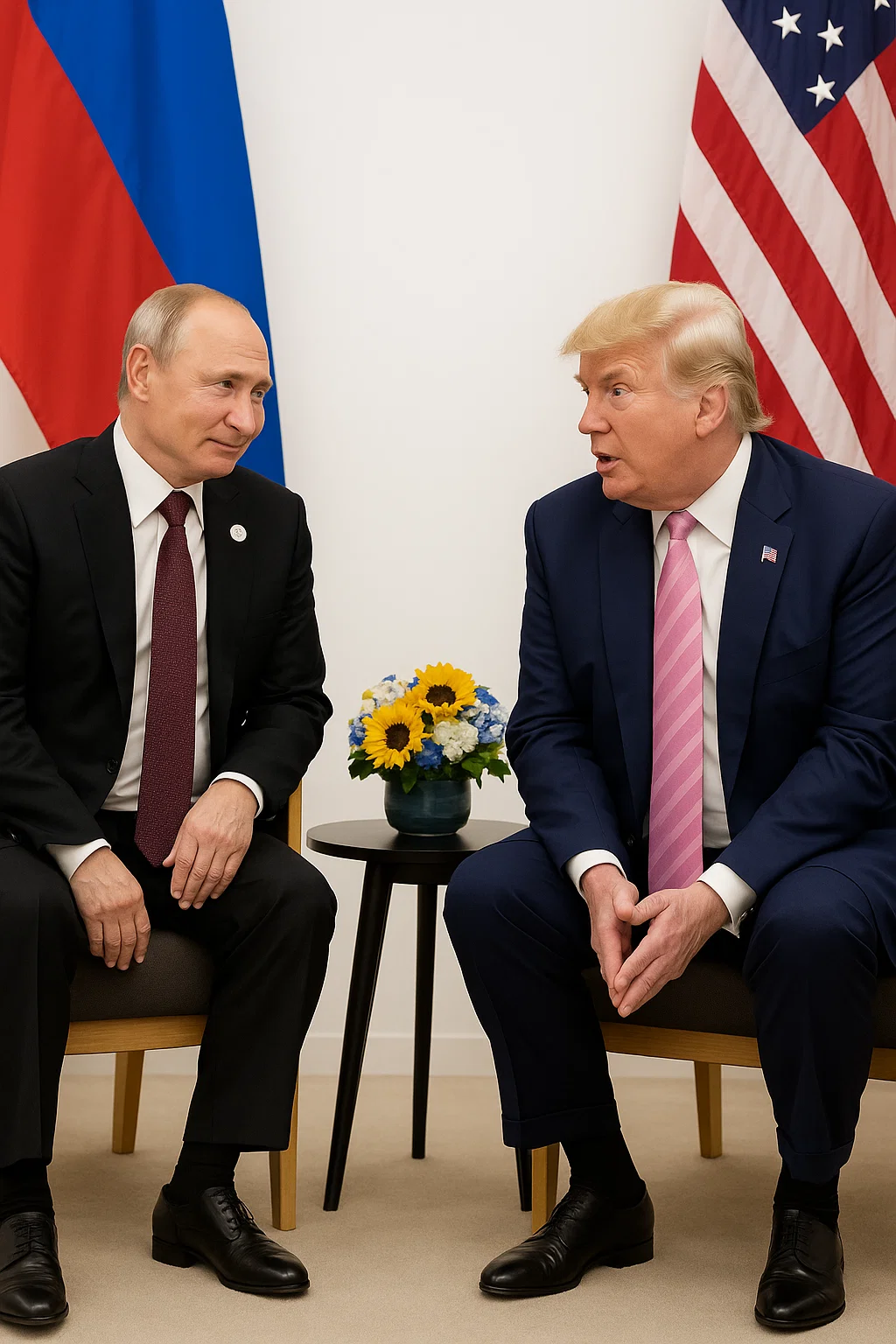
When Vladimir Putin declined to participate in ceasefire talks in Istanbul last week, Donald Trump remarked that it was a sign the two leaders needed another discussion.
“Nothing’s going to happen until Putin and I meet,” Trump stated.
That meeting has now taken place: the U.S. and Russian leaders held a two-hour phone call, which Trump described as highly positive. According to him, Russia and Ukraine will “immediately begin negotiations toward a ceasefire” following the conversation.
“Let the process begin!” Trump posted on social media.
However, in reality, Trump has fallen far short of his goal to end the war in Ukraine.
Throughout his presidential campaign, Trump repeatedly promised to resolve the conflict within 24 hours of assuming office. Yet, four months into his term, peace remains elusive.
Putin appears to be manipulating Trump
It’s increasingly clear that Putin has been deliberately stalling any real dialogue with Trump. Monday’s phone call further confirmed that. Rather than committing to a ceasefire, Putin shifted the conversation to a memorandum outlining potential deal terms—terms he has long refused to revise and which Ukraine and its allies are unlikely to accept.
Despite this, Trump maintains that Putin wants peace.
“I asked him, ‘When are we going to stop this, Vladimir?’” Trump said at a press conference following the call. “I’ve known him a long time… and I do believe he wants to see it end.”
But the ongoing war exists for one reason: Putin initiated and sustains it. If he truly wanted it over, he could simply order his troops to withdraw.
Instead, he has offered no concessions.
And although Trump claims Russia and Ukraine will begin talks immediately, the Kremlin has announced no timeline for negotiations.
It seems increasingly evident that Putin is prolonging the conflict while consolidating control over more Ukrainian territory.
“It should have remained a European issue”
Putin, a product of KGB training, is skilled at analyzing his opponents—and it’s no surprise he’s currently outmaneuvering Trump.
Trump, for his part, seems to be growing weary of the situation.
Before his call with Putin, White House spokesperson Karoline Leavitt described the president as “frustrated and exhausted by both sides of the conflict,” while Vice President JD Vance said the U.S. is “very open to stepping back.”
Following the call, Trump remained hopeful but left the door open to disengagement.
“There are some big egos involved… but I still think something’s going to work out,” he said. Then he added, “If not, I’ll just walk away, and they’ll have to keep dealing with it.”
“This was a European matter,” Trump concluded. “It should have stayed that way.”
A role for the new pope?
Trump is now proposing that the recently inaugurated pope serve as a mediator by hosting peace talks.
“I think the Vatican would be a great venue,” Trump said. “There’s a lot of anger and resentment, and maybe that could help cool things down.”
This follows a proposal from the pope himself, who said last week that the Vatican is “always ready to bring adversaries face-to-face to talk.”
Ukrainian President Volodymyr Zelenskyy, who met the pope following Sunday’s inaugural mass, appeared open to the idea.
“We appreciate the Vatican’s willingness to act as a platform for direct negotiations between Ukraine and Russia,” he tweeted. “We’re prepared to engage in dialogue in any format that leads to concrete outcomes.”
Although Pope Leo has been called the anti-Trump, his willingness to host talks might come at a convenient time for the U.S. president—especially as Trump, who previously insisted peace depended on his involvement, is now hinting he might step away from the process.
