


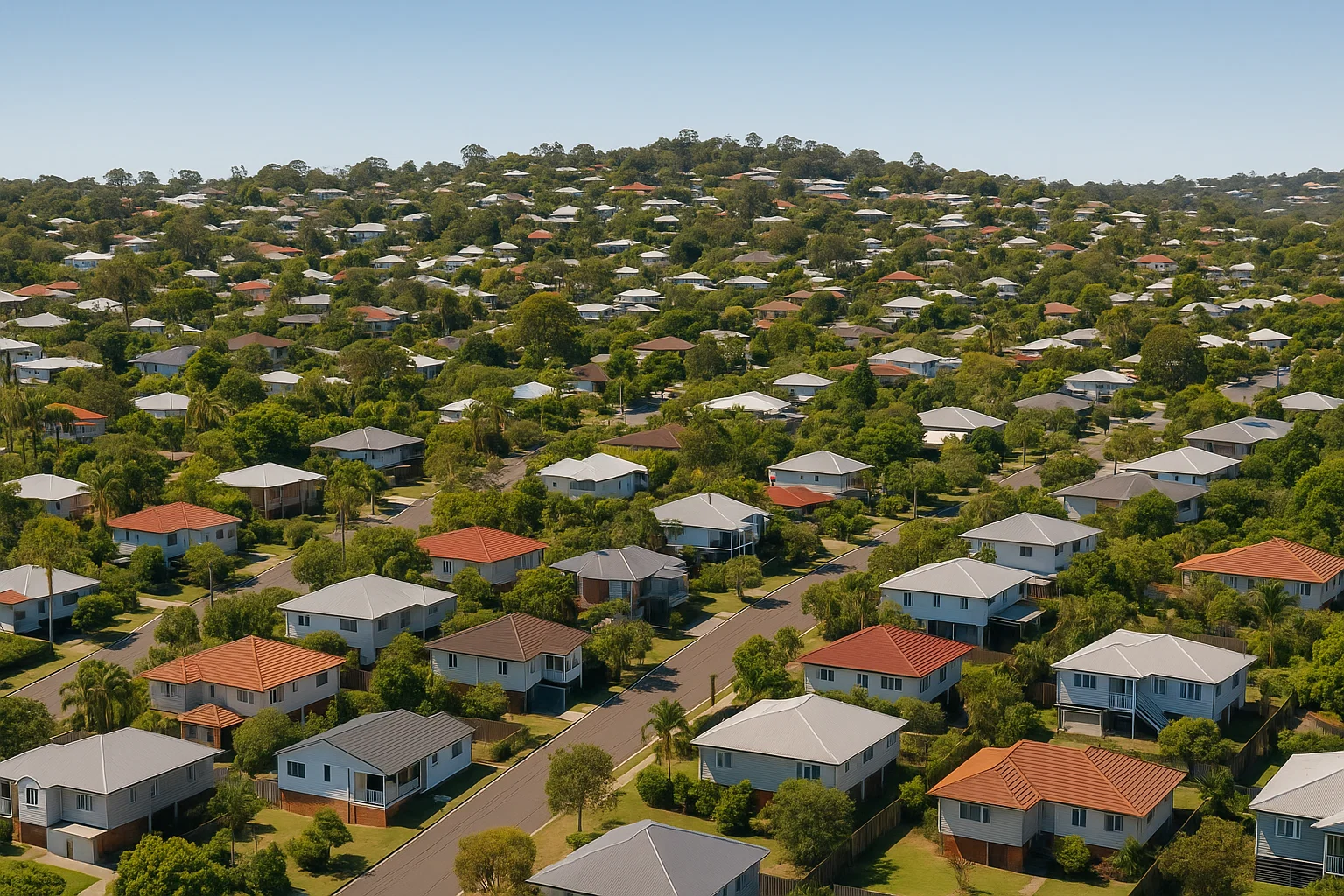
Brisbane City Council has launched a review of low-to-medium density residential zoning in response to the city’s growing housing affordability crisis.
Lord Mayor Adrian Schrinner announced the review during a Queensland Property Council luncheon, expressing his serious concern about rising housing costs.
“We have incredible opportunities as a city, but if people can’t afford to live here, what’s the point?” he said.
Cutting Through the Red Tape
Currently, just 14% of land in the Brisbane council area is zoned for low-to-medium residential use, and only 445 homes were constructed in these zones in 2023—far below the historical average of more than 1,100 per year over the past decade.
“This initiative is focused on getting homes built faster, improving the viability of development, and expanding housing options—especially for first-time buyers—in more areas of Brisbane,” Schrinner said.
He dismissed proposals such as increased taxes on developers and landlords, Airbnb restrictions, and vacant property taxes as “simplistic solutions” that “rarely work.”
Brisbane has also announced plans to remove minimum car parking requirements in selected suburbs, a move the mayor believes will help lower housing costs.
“There’s only one simple approach that consistently works—build more housing,” he added.
The upcoming review will assess car parking rules, building heights, lot sizes, and strategies to streamline planning processes. It will prioritize areas with established infrastructure near transport, shops, and schools.
Council will also look to identify new sites suitable for low-to-medium density development.
“If we get this right, the industry could deliver up to 6,000 new homes in these zones by 2032,” Schrinner said. “We need to act fast and get it done properly.”
Industry Reaction
The Property Council welcomed the announcement, with Queensland executive director Jess Caire calling it a “positive step” in the face of the ongoing housing shortage.
“It’s never been harder to build the homes we need, and we support the council’s efforts to partner with the industry to break down development barriers,” she said.
Paul Bidwell of Master Builders Queensland also described the review as a “good first step” but cautioned that labour shortages remain a critical barrier to meeting housing demand.
“The biggest issue right now—something we’re hearing from builders and tradespeople across Queensland—is the lack of skilled workers to handle the workload,” he said.
Bidwell noted that all levels of government are looking into the problem, but there’s no quick fix.
Shifting Community Attitudes
The Real Estate Institute of Queensland’s Antonia Mercorella said resistance from local communities has contributed to the shortage of housing in suburban areas, but she believes public opinion is starting to shift.
“It feels like the timing is right—the community is becoming more aware of the problem and more open to change,” she said.
