


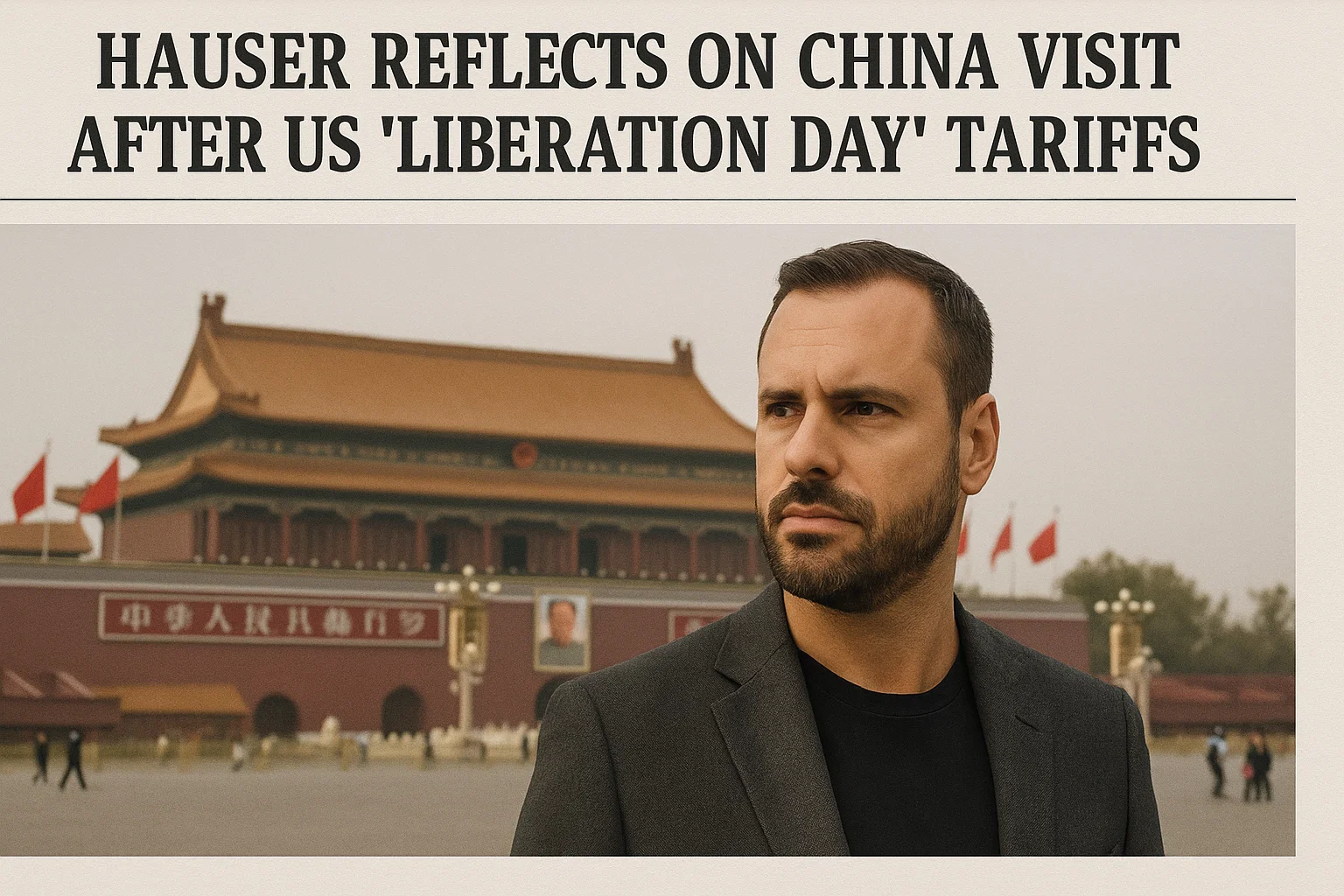
During his visit, Hauser observed a “striking confidence” among Chinese citizens regarding their country’s preparedness for a potential trade war, especially after US tariffs on Chinese goods surged to 145%. He noted a widespread belief that the economic fallout would significantly impact the US, and that China had no intention of softening the blow.
Prime Minister Anthony Albanese is also expected to meet with Chinese President Xi Jinping during a visit to China, following a congratulatory message from Xi after Albanese’s election victory.
Hauser further noted that there was minimal expectation of a currency devaluation in China, as doing so would reduce the impact of US tariffs on American consumers—something China appeared keen to avoid. He also observed that Australian businesses operating in China were optimistic, seeing potential gains in competitiveness if the trade war shifted market dynamics.
“The dramatic escalation of tariffs in early April came as a surprise to many of those we met,” Hauser said during a speech at the Lowy Institute in Sydney. “But that surprise was accompanied by a clear confidence that China was entering this trade dispute from a position of strength.”
He supported his remarks with a graph showing that nearly half of China’s exports to the US involve goods for which the US has few alternative suppliers. These include high-tech items like lithium batteries, computers, smartphones, and gaming consoles. Hauser highlighted how this dependency likely contributed to the swift exemption of some products from the US tariff list.
He also pointed out that much of China’s remaining exports to the US could be redirected to other markets, as they aren’t heavily reliant on US demand.
However, the upper part of the graph—where US demand for Chinese imports is high and alternatives are limited—is notably sparse.
Hauser added that during his stay, there was skepticism about the likelihood of manufacturing shifting back to the US. High labor costs, limited advanced manufacturing capabilities, and the lack of China’s integrated supply chains were seen as major hurdles. Furthermore, US policy unpredictability discouraged long-term investment in American manufacturing.
Since returning to Australia, Hauser noted a slight easing in trade tensions between the US and China. Yet he emphasized the significance of witnessing China’s readiness to confront a trade war.
He concluded by underlining China’s critical role in Australia’s economy:
“Among all the forces shaping Australia’s economy over the last 50 years, none has been more significant than our growing engagement with Asia, particularly China—by far our largest trading partner,” he said. “But with China at the heart of the US’s shifting tariff strategy, the outcomes of this tension are pivotal for Australia’s economic outlook and thus the Reserve Bank’s monetary decisions.”
