
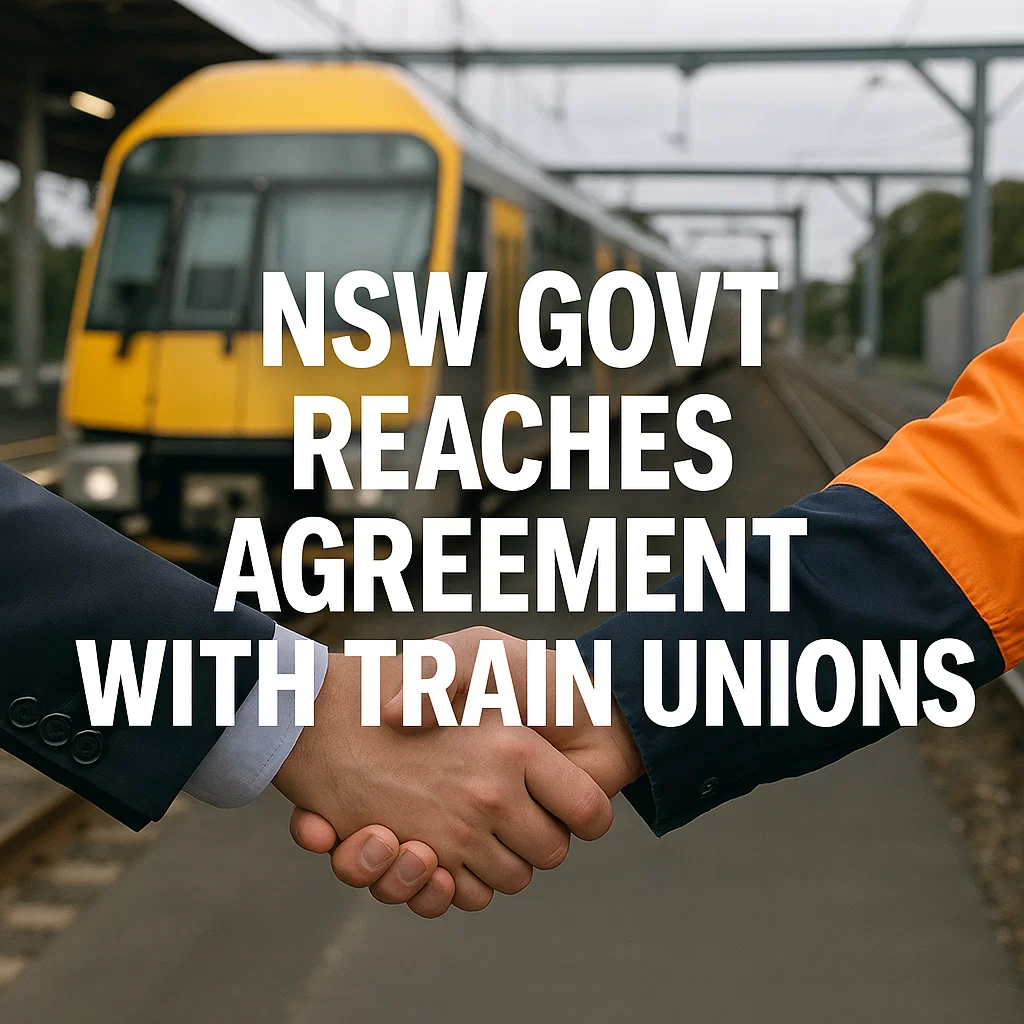
The prolonged pay dispute between the NSW government and train unions, which caused months of intermittent disruptions for commuters, appears to have reached a resolution.
On Friday, both parties agreed at the Fair Work Commission to a 12 per cent wage increase over three years. This follows a lengthy negotiation in which the Rail, Tram and Bus Union (RTBU) and the Electrical Trades Union (ETU) had been demanding a 32 per cent increase over four years, while the government initially proposed a 9.5 per cent rise over three years.
“This agreement will bring relief from the disruption caused by protected industrial action that a million daily rail commuters have had to endure,” said Transport Minister John Graham.
Since last September, industrial actions linked to the dispute have disrupted the travel of millions. The agreement marks the end of these actions by the Combined Rail Unions, allowing Sydney Trains and NSW TrainLink to shift their focus to improving network reliability, the government said in a statement.
Despite the breakthrough, the ETU is expected to oppose the deal.
“This afternoon, the Combined Rail Unions reached an in-principle agreement with Sydney Trains and NSW Trains for a new enterprise agreement,” a CRU spokesperson stated. “Unfortunately, the ETU is blocking a vote by members, effectively withholding any pay rise or improved conditions our delegates have fought for. They are doing this over a misunderstood demand to create a ‘new section’ for their members, for reasons that remain unclear.”
The proposed Enterprise Agreement, overseen by the Fair Work Commission, grants a 12 per cent wage increase over three years, including back pay. It also includes commitments to implement technology-based solutions aimed at reducing delays during rail incidents.
One such solution is a digital disruption management system, which will replace the current manual process involving phone calls and paper instructions during service recovery efforts.
The government and unions also agreed on a more streamlined approach for consulting on new train fleets, infrastructure, and system upgrades.
Minister Graham acknowledged the toll the drawn-out dispute has taken on commuters.
“This long-running disagreement has tested the patience of rail passengers,” he said. “But with this agreement in place, we’ve made a vital investment in system reliability. It’s a chance to move forward with reforms that will benefit both passengers and the rail workforce.”
He added, “We promised to deliver a fair and reasonable wage increase that safeguards public funds, and we’ve delivered on that commitment. I also want to thank commuters for their patience as we worked to finalise this agreement.”
