


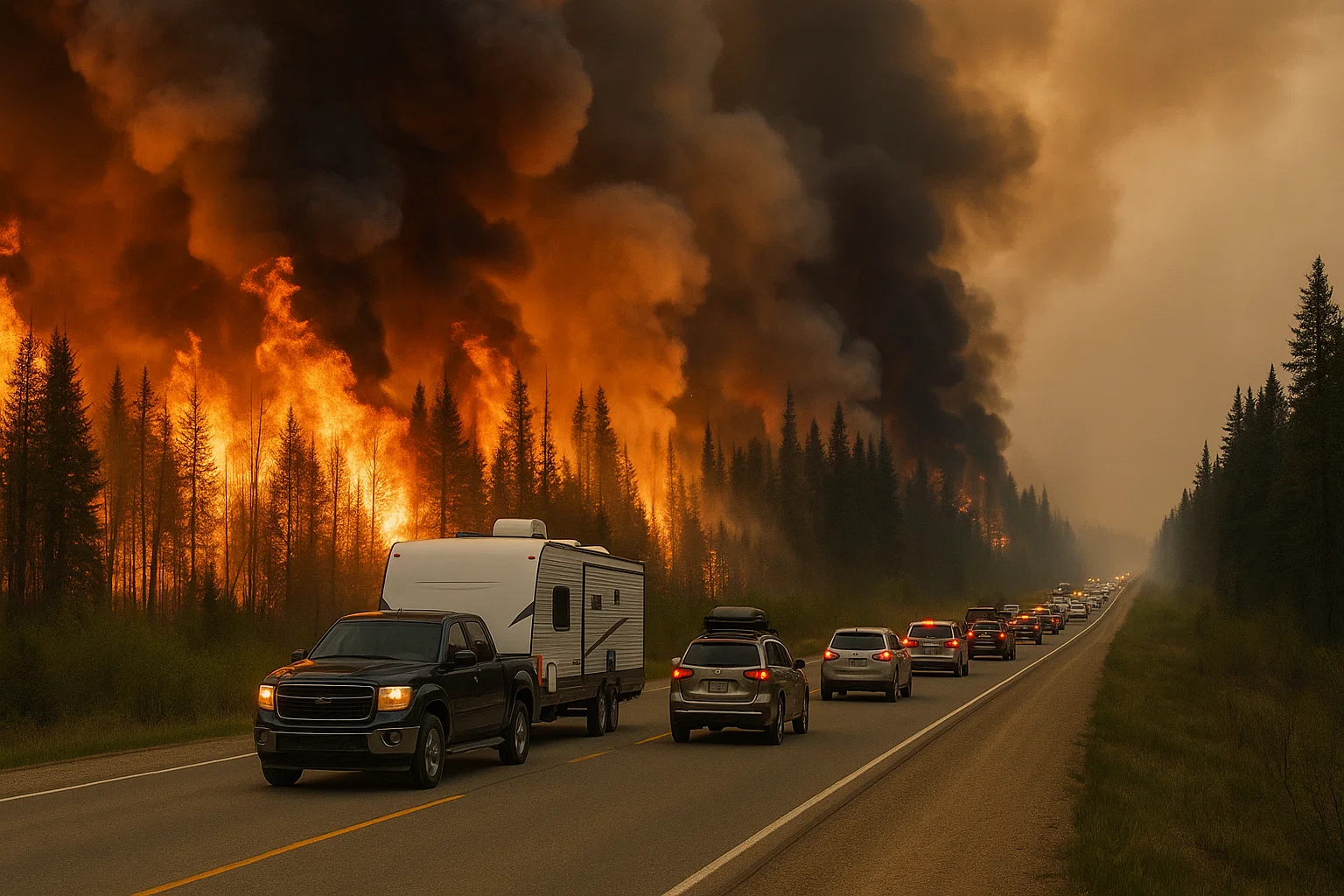
Around 17,000 residents have been forced to evacuate in Manitoba, Canada, as nearly two dozen wildfires sweep through the province, officials report.
Among the evacuees are over 5,000 people from Flin Flon, a mining city near the Manitoba-Saskatchewan border, where dry conditions persist and no rain is expected soon. While no fires had reached Flin Flon as of Saturday morning, authorities fear a shift in wind could quickly bring flames into the area.
Manitoba declared a state of emergency on Wednesday, with fires stretching from the province’s northwest to southeast prompting evacuations across several communities.
Evacuation Efforts Widen
Other provinces are also grappling with serious fire threats. In Alberta, approximately 1,300 residents from Swan Hills, northwest of Edmonton, have been displaced. Meanwhile in Saskatchewan, Premier Scott Moe said about 8,000 people have already evacuated due to wildfires, and that number could soon rise to 10,000.
Moe stressed that emergency resources are under strain and that weather conditions in the coming week will be critical.
“The next four to seven days are absolutely critical until we can find our way to changing weather patterns, and ultimately a soaking rain throughout the north,”
— Premier Scott Moe
Challenges in Firefighting
The fire threatening Flin Flon started in Saskatchewan on Monday and soon crossed into Manitoba. Fire crews have struggled to control the blaze due to dense smoke and drone activity, which at times forced water bombers to remain grounded.
Evacuation centres have been established across Manitoba to assist displaced residents, including facilities near the US border.
Smoke Drifts South, Air Quality Declines
The wildfires are not only affecting Canada — smoke is drifting south, deteriorating air quality across parts of the northern United States. Areas in Minnesota and Wisconsin have reported unhealthy air conditions for both humans and animals.
In response, the US Forest Service deployed an air tanker to assist in Alberta and sent 150 firefighters to help Canadian crews on the ground.
“We are here to help our neighbours during their time of need… I am thankful for the men and women who are bravely stepping up to serve,”
— US Secretary of Agriculture Brooke L. Rollins
Canada is no stranger to destructive fire seasons — 2023 was its worst on record, with smoke from blazes blanketing much of North America for months. The wildfire season typically spans from May through September.
