


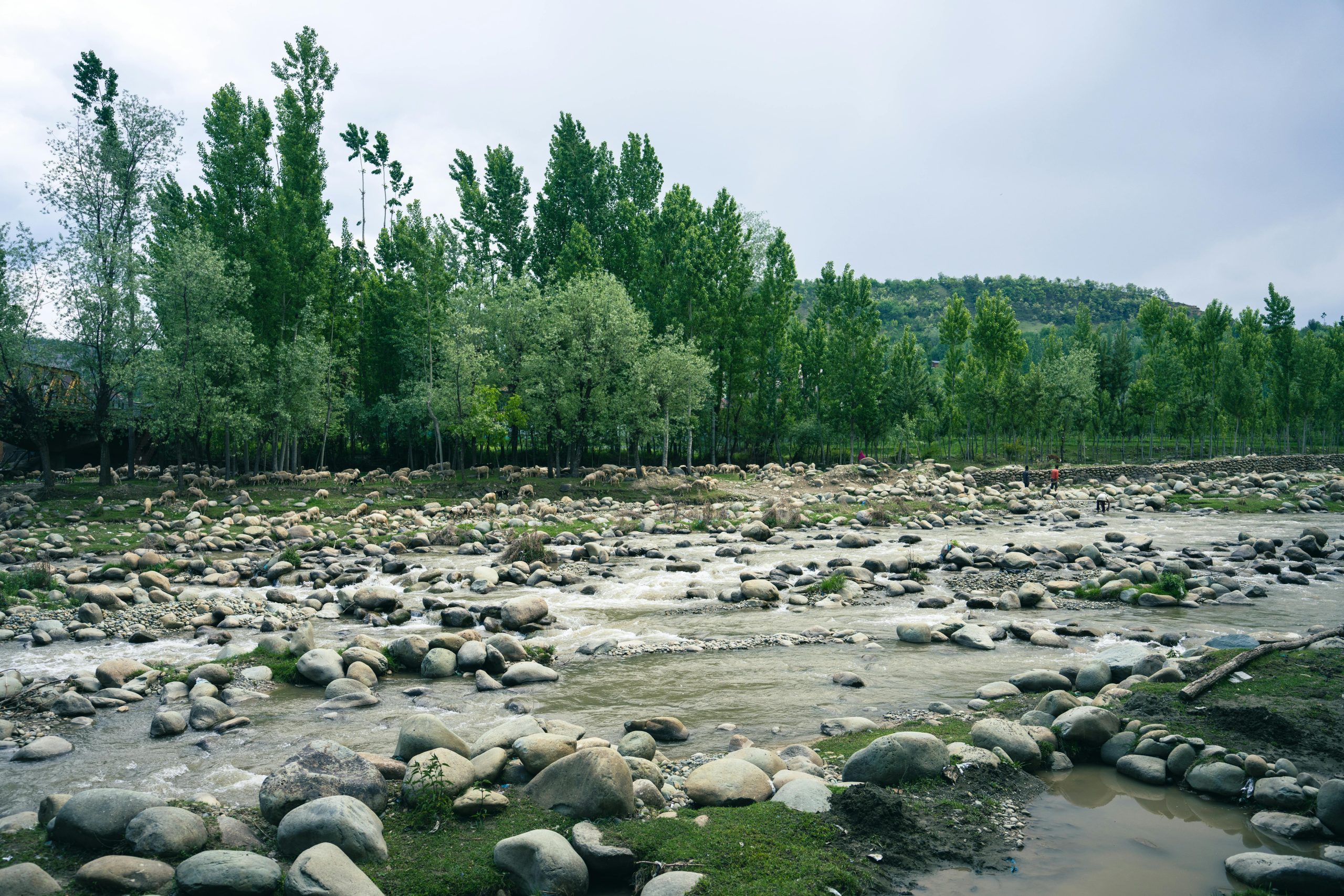
The Himalayan region of Kashmir has long been a sensitive flashpoint, often causing significant concern among world leaders. Over the past sixty years, tensions between nuclear-armed neighbors India and Pakistan have risen and then eased, but currently, the situation is at a boiling point.
Recently, India launched a series of precision strikes on what it claims was “terrorist infrastructure” in Pakistan and Pakistan-controlled Kashmir. This operation, dubbed “Operation Sindoor,” follows a deadly militant attack in Indian-controlled Kashmir last month. The name “Sindoor,” a vermilion powder worn by married Hindu women, carries symbolic meaning, possibly honoring the widows created by last month’s attack.
India maintains that its strikes were “measured, focused, and non-escalatory,” targeting non-military locations to avoid civilian casualties. However, Pakistan’s military claims that the attacks hit mosques and resulted in civilian deaths, including at least 26 people, one of whom was a child.
The scale of India’s response has taken many by surprise, especially since past strikes have been limited to border areas and Pakistan-controlled Kashmir. This time, the strikes reached about 100 kilometers inside Pakistan’s territory, beyond the disputed region. Following the attacks, skirmishes have intensified along Kashmir’s Line of Control (LoC), a heavily militarized border between the Indian and Pakistani-controlled areas, with reports of artillery exchanges and troop movements.
What happens next largely depends on how Pakistan responds. While both nations are rattling their sabers, a full-scale war remains unlikely, as both sides will likely avoid escalating into a broader conflict. Historically, India and Pakistan’s confrontations have been brief and carefully managed to avoid spiraling into all-out war.
However, both sides are taking a firm stance. Pakistan has vowed to retaliate, calling India’s strikes “an act of war,” with retaliation to come “at a time and place of our choosing.” Yet, Pakistan has also indicated a willingness to de-escalate if India backs down. Inside India, the strikes have been politically well-received, aligning with Prime Minister Narendra Modi’s tough image. The main opposition party has also expressed support for the attacks, and India’s Defence Minister praised the army’s actions.
Global leaders are closely watching the situation, and there has been a surge of diplomatic calls for restraint. UN Secretary-General António Guterres warned against a military confrontation between India and Pakistan, stressing the global consequences of such a conflict. US President Donald Trump described the tensions as a “shame,” hoping for a quick end to the clashes, while China, which has its own border disputes with India, called for restraint from both sides.
Meanwhile, preparations for the worst are underway in both countries. Families in Pakistan-controlled Kashmir have been reinforcing bunkers and finalizing evacuation plans, while hospitals stockpile medicines. India has also initiated nationwide civil defense drills for the first time since 1971, conducting blackouts, evacuation exercises, and training civilians for potential hostile attacks.
The current escalation follows a deadly gunman attack last month in Indian-controlled Kashmir that killed 26 mainly Hindu civilians. Indian officials blame Pakistan-based terrorists for the attack, leading to the downgrading of diplomatic relations, visa cancellations, and the suspension of a crucial water-sharing treaty. Armed exchanges have continued nightly since.
The underlying issue between India and Pakistan is the longstanding Kashmir dispute, which dates back to 1947 when British India was partitioned into India and Pakistan. Kashmir, a Muslim-majority region, became a battleground after its ruler acceded to India while Pakistan’s tribal militias invaded. A 1949 UN-brokered ceasefire established the LoC, dividing Kashmir between Indian and Pakistani control. Since then, the two countries have fought several wars over the region.
India accuses Pakistan of supporting militant groups that fuel separatism in Indian-controlled Kashmir, especially since the insurgency began in the 1990s. Pakistan denies this and insists it only provides diplomatic and moral support to Kashmiris seeking self-determination. In recent years, Modi’s government has sought to normalize the situation, even revoking Kashmir’s special autonomous status in 2019.
While international pressure for a bilateral resolution continues, both nations remain entrenched in their positions, making de-escalation challenging. Ultimately, conflicts often occur when both sides refuse to back down, despite the fact that neither side truly wants war.
