


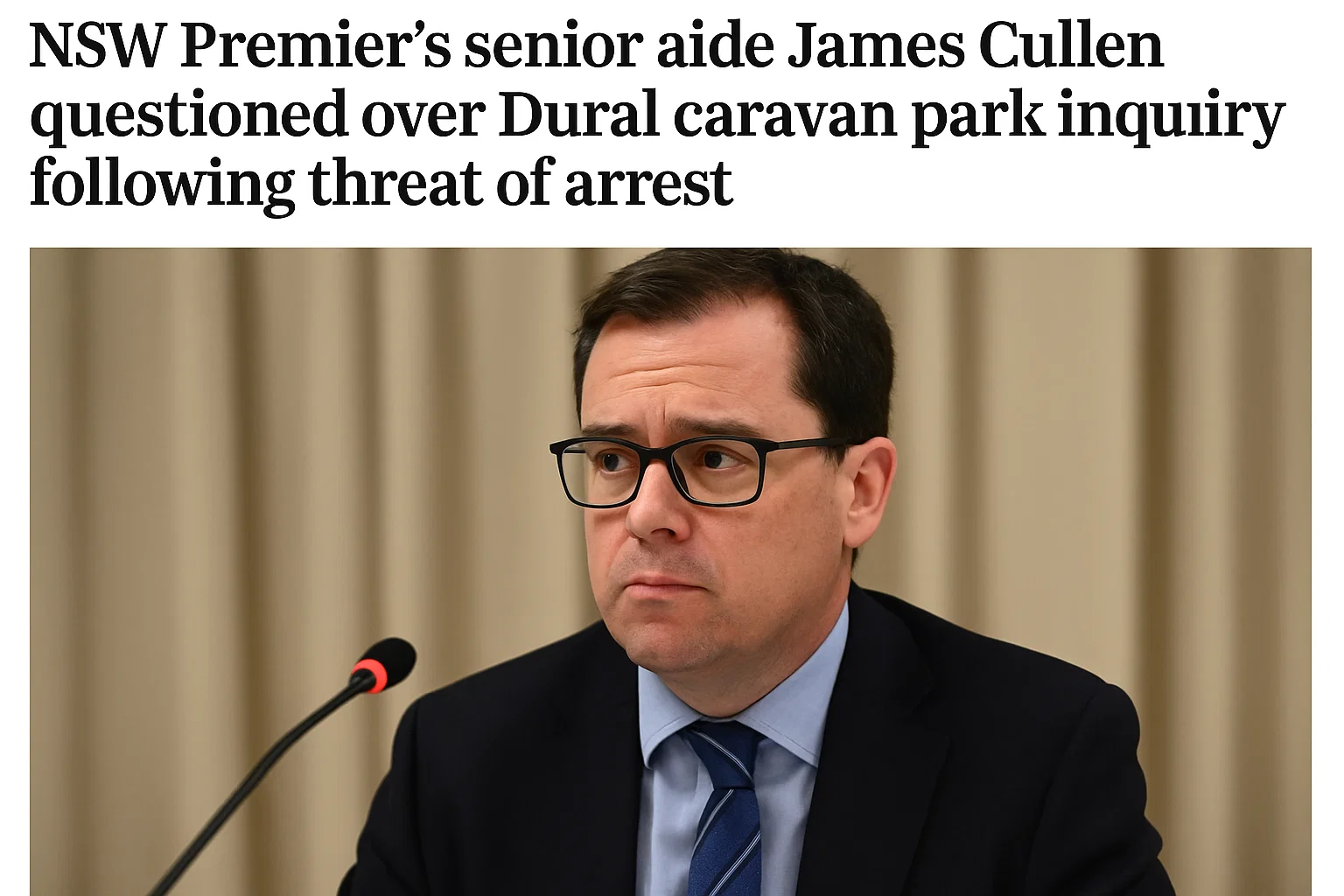
James Cullen, the NSW Premier’s chief of staff, faced intense questioning at a parliamentary inquiry into the Dural caravan incident after being threatened with arrest for initially refusing to appear.
Cullen, along with other senior staffers from Premier Chris Minns’ and Police Minister Yasmin Catley’s offices, appeared before the inquiry on Friday following formal summonses and warnings of possible legal action. Those summoned included Edward Ovadia (Minns’ deputy chief of staff), Sarah Michael (media director), and Catley’s senior aides Ross Nielson and Tilly South.
All five were sworn in and questioned on why they had previously declined to attend the inquiry. Committee member Sue Higginson pressed Cullen on whether he understood failing to comply with a summons could constitute contempt, while Nielson and Michael were challenged over whether they disregarded legal obligations.
“I thought not attending didn’t breach the law,” Nielson said.
The inquiry is investigating whether officials knew the Dural caravan incident was a hoax before using it as justification to pass anti-terror laws.
Cullen rejected claims that the incident influenced legislative changes, arguing that work on the bills had started months earlier. He maintained that NSW Police briefings informed Premier Minns’ comments about terrorism, not internal political motives.
Committee chair Rod Roberts, however, challenged Cullen on the use of the word “terrorism,” pointing out that senior police officials hadn’t used the term publicly, leaving only the Premier to do so.
Roberts questioned the impact of Minns’ language: “How does that provide calm?”
The inquiry also examined whether the Premier’s staff breached their obligations under the State Records Act. Nationals MP Wes Fang confronted Cullen over the lack of note-taking during police briefings. Cullen admitted he didn’t take notes but insisted these meetings weren’t decision-making sessions and that NSW Police were the appropriate agency to maintain records.
Fang pressed him on who designated the briefings as “pens-down,” claiming the Premier’s office had failed its legal obligations. Roberts called it “extraordinary” that no notes were recorded about such a significant national security event.
The committee confirmed that staffers only agreed to attend after Legislative Council President Ben Franklin sought legal advice confirming arrest warrants could be pursued. Roberts said he welcomed their eventual cooperation but criticized the steps it took to get them there.
Tensions flared when Cullen suggested the committee should have shared their questions in advance. Roberts pushed back, saying, “This is my committee… I don’t tell you how to run your office.”
Premier Minns has declined to participate in the inquiry and condemned the arrest threats, calling them a “dangerous precedent” and labeling the process “close to a kangaroo court.” He accused the committee of political bias and punitive tactics.
The inquiry is probing who knew what about the caravan, which was initially described by Minns as capable of causing a “mass casualty event.” Police later revealed it was part of a staged criminal hoax, potentially linked to an anti-Semitic plot.
The matter remains politically charged, coinciding with a separate investigation into anti-Semitism in NSW.
