


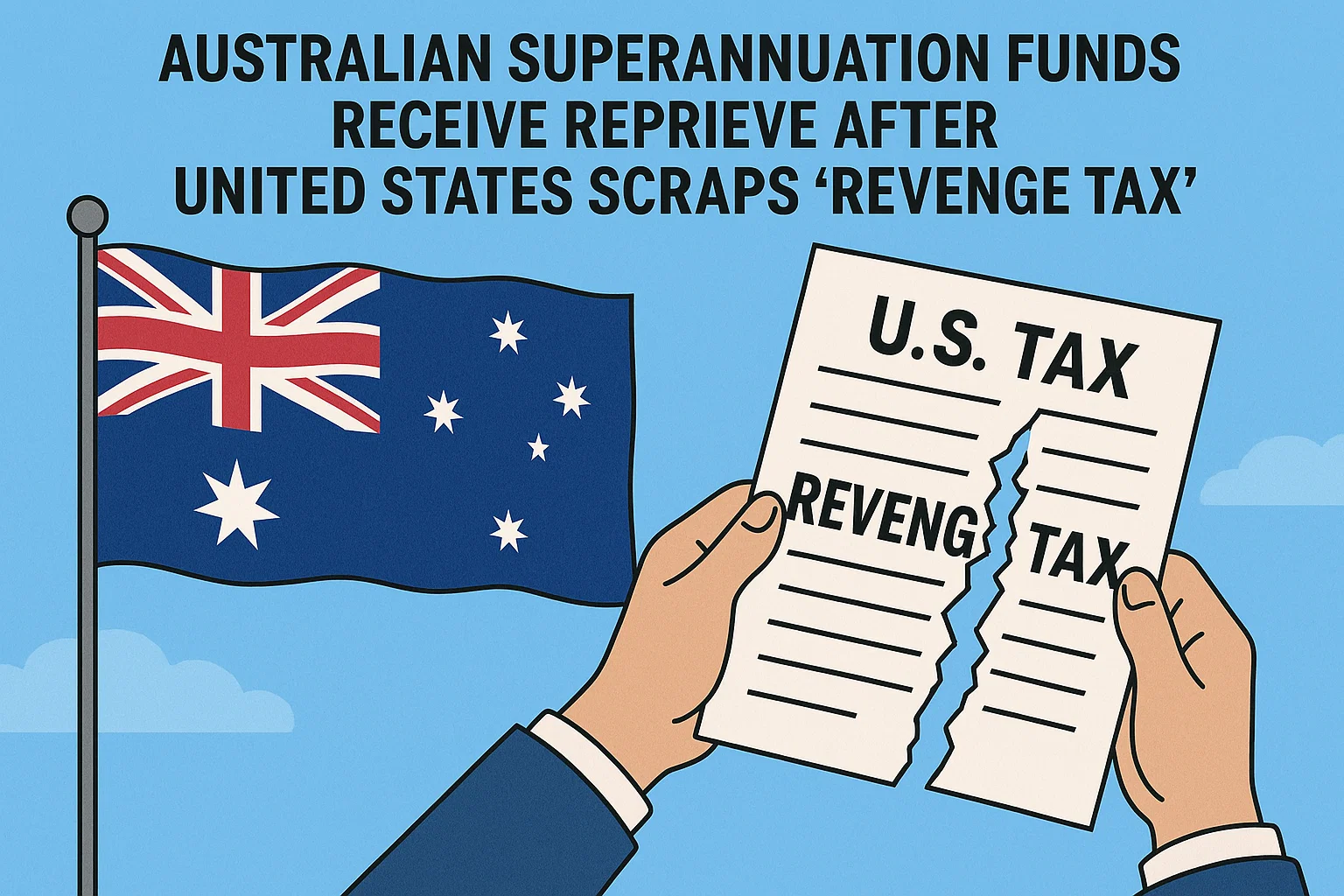
Australians investing in the U.S. will avoid a proposed 15% tax after the Trump administration abandoned plans to introduce a so-called “revenge tax” targeting countries that levy taxes on American tech companies.
U.S. Treasury Secretary Scott Bessent announced he would seek to remove the tax from President Trump’s upcoming legislative package after securing a carve-out from global tax rules.
Australian Treasurer Jim Chalmers, who raised concerns directly with Bessent earlier in the week, welcomed the decision.
“I’d like to thank the Treasury Secretary for his time and for listening to our concerns,” Chalmers said. “It’s encouraging to see some progress on this issue.”
According to government sources, Australia was not the primary focus of the proposed tax—most of the frustration was directed at European nations—but the legislation, which targeted countries with “discriminatory” digital service taxes, would have impacted Australia’s planned levy on social media companies that refuse to pay for news content.
U.S. Trade Representative Jamieson Greer raised objections to that policy in a recent G7 meeting with Prime Minister Anthony Albanese.
Had the tax been implemented, it would have applied to Australian investors in the U.S., significantly affecting superannuation funds.
“We want to ensure our investors and super funds are treated fairly and not put at a disadvantage,” Chalmers said earlier in the week.
Dispute over Multinational Taxation
The Trump administration has been opposed to the global tax deal known as “pillar two,” backed by the Biden administration, which involves 140 nations and aims to impose a global minimum 15% tax on multinational corporations.
In January, Trump issued executive orders withdrawing the U.S. from the agreement and signaling retaliatory action against countries enforcing the minimum tax on U.S. firms.
Bessent now says the U.S. reached a G7 agreement recognizing its existing minimum tax structure on foreign income, known as GILTI, which ranges from 10.5% to 13.125%. In return, the U.S. will drop plans for retaliatory taxes.
While this undercuts the uniformity of pillar two by exempting the U.S., it also averts a broader conflict over the global tax regime.
“I thank my G7 colleagues for working with us on this significant outcome,” Bessent said, adding that he had requested Congress remove the revenge tax provision from the proposed bill.
“This agreement offers greater global economic stability and predictability.”
UK Chancellor Rachel Reeves praised the move, saying it would “help maintain a level playing field on taxation.”
Chalmers stated Australia would review the details but remained committed to fair and effective international tax rules to ensure multinationals pay appropriate tax in Australia.
Possibility of Future Retaliation
Despite this recent decision, Bessent left open the option for future U.S. tax responses against policies it deems unfair.
“The Trump administration will remain alert to any discriminatory or extraterritorial tax measures targeting Americans,” he said. “We will defend our tax sovereignty and ensure fair competition for U.S. businesses and citizens.”
On Thursday, Trump also warned Spain of higher tariffs unless it boosts its defence spending to meet NATO targets—signaling a potential model for future pressure on countries like Australia.
Prime Minister Anthony Albanese declined to comment directly but stressed that Australia would make its own defence decisions.
“My responsibility is to act in Australia’s national interest, including our defence and security—and that’s exactly what we’re doing,” he said on Friday.
