


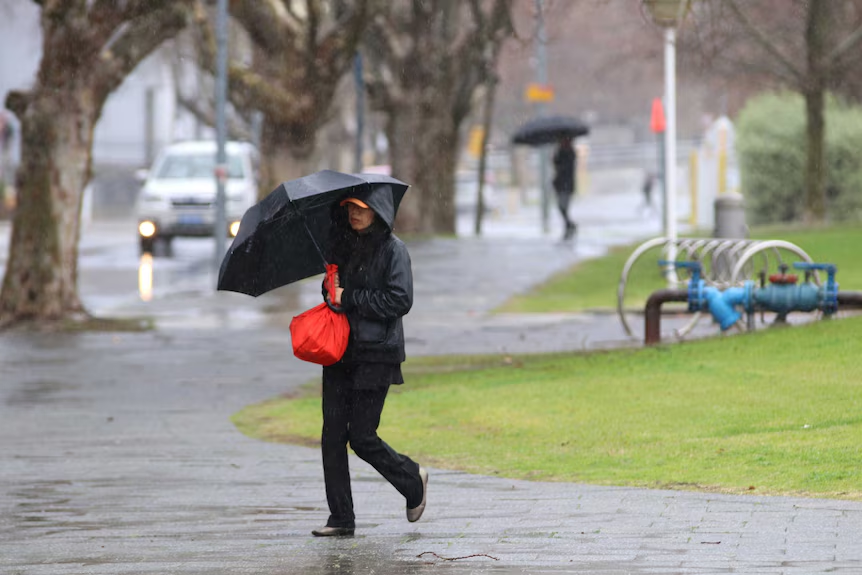
Winter Rain Brings Uneven Relief to WA, Leaving Some Farmers in Desperation
The first month of winter has passed, bringing higher-than-average rainfall to parts of Western Australia (WA), while some inland farming regions remain dry and struggling.
In Cunderdin, farmer Holly Godfrey expressed disappointment with the season’s start.
“So far this year, we’ve only had about 50 millimetres of rain, so we’re really in need of more,” Ms Godfrey said.
She noted that crop growth has been underwhelming.
“The crops are smaller than we had hoped for by this point in the season.”
Patchy germination, especially in her canola crop, has added to the challenge.
“I just compared photos of our canola from this time last year, and it was far more developed than what we’re seeing now.”
Despite the tough conditions, Ms Godfrey remains cautiously optimistic.
“We’re in a fairly reliable area here in Cunderdin, so I believe the rain will eventually arrive,” she said.
Throughout June, four cold fronts moved across WA’s south-west, bringing bursts of cold, wet weather to many regions.
While areas in the South West received significant rainfall—Witchcliffe West recorded 277.8mm, Jarrahwood over 200mm, and Bunbury 190mm—others missed out. Geraldton Airport collected 135mm, and Perth saw solid rainfall, though the metro gauge experienced technical issues. Perth Airport recorded 153.8mm for the month.
However, inland regions didn’t fare as well.
As the cold fronts weakened and lacked support from north-west cloud bands, many inland areas received only 50 to 60 percent of their usual June rainfall. Cunderdin Airport measured just 26.8mm, and York received a little over 21mm.
Ms Godfrey said this wasn’t enough to give crops a strong start.
“There’s some soil moisture now, which helps, but everything is delayed. It’s likely to be a shorter growing season,” she said.
“We were hoping to have had around 100mm by now. Another 50 to 100mm over the next month would make a big difference.”
In contrast, some farmers have had a strong start.
Michael Webster, based in Tenterden—328 kilometres southeast of Perth—reported good progress, thanks to early rainfall and strong soil moisture.
“We’ve had a fantastic start to the season,” he said.
“Since January, we’ve received 234mm, including 64mm in June. There’s still a way to go, but we’re very grateful.”
Mr Webster noted this season was already outperforming the last, particularly in canola growth.
“The canola is doing really well—growth has been phenomenal.”
Still, he acknowledged the disparity across regions.
“You don’t have to drive far to find farmers who missed most of the April to June rainfall,” he said.
“We’re in a bit of a bubble here—others aren’t as lucky.”
York-based agronomist Michael Lamond agreed that while the south had a decent start, crucial follow-up rain has been lacking further north.
“It’s just been enough to keep things going, but we’re in pretty desperate need of more rain now,” he said.
“Winter’s been very cold so far, which has slowed down crop growth significantly—they’re essentially waiting for a drink.”
WA grain growers delivered their third-largest harvest on record last year, after record-breaking seasons in 2021 and 2022. But this year may not follow suit.
Mr Lamond, who compiles the Grain Industry Association of WA’s crop report, said this season is beginning to resemble 2023—a colder year that yielded just 14.5 million tonnes.
“There was optimism early on, but now there’s growing concern,” he said.
“If we don’t get rain in the next week or two, crops may not finish properly in spring. Time is running out, and the situation is becoming critical.”
Some farmers had hoped for relief from a recent cold front and an incoming one on Sunday, but the Bureau of Meteorology says the rainfall will likely be light.
“These fronts are more likely to bring about 10 to 20 millimetres, rather than heavier falls,” said senior meteorologist Joey Rawson.
The bureau’s July outlook isn’t encouraging.
“We’re expecting below-average rainfall and warmer-than-usual temperatures,” Dr Rawson said.
“But hopefully, by August, conditions will improve—with more rain and more typical temperatures.”
