


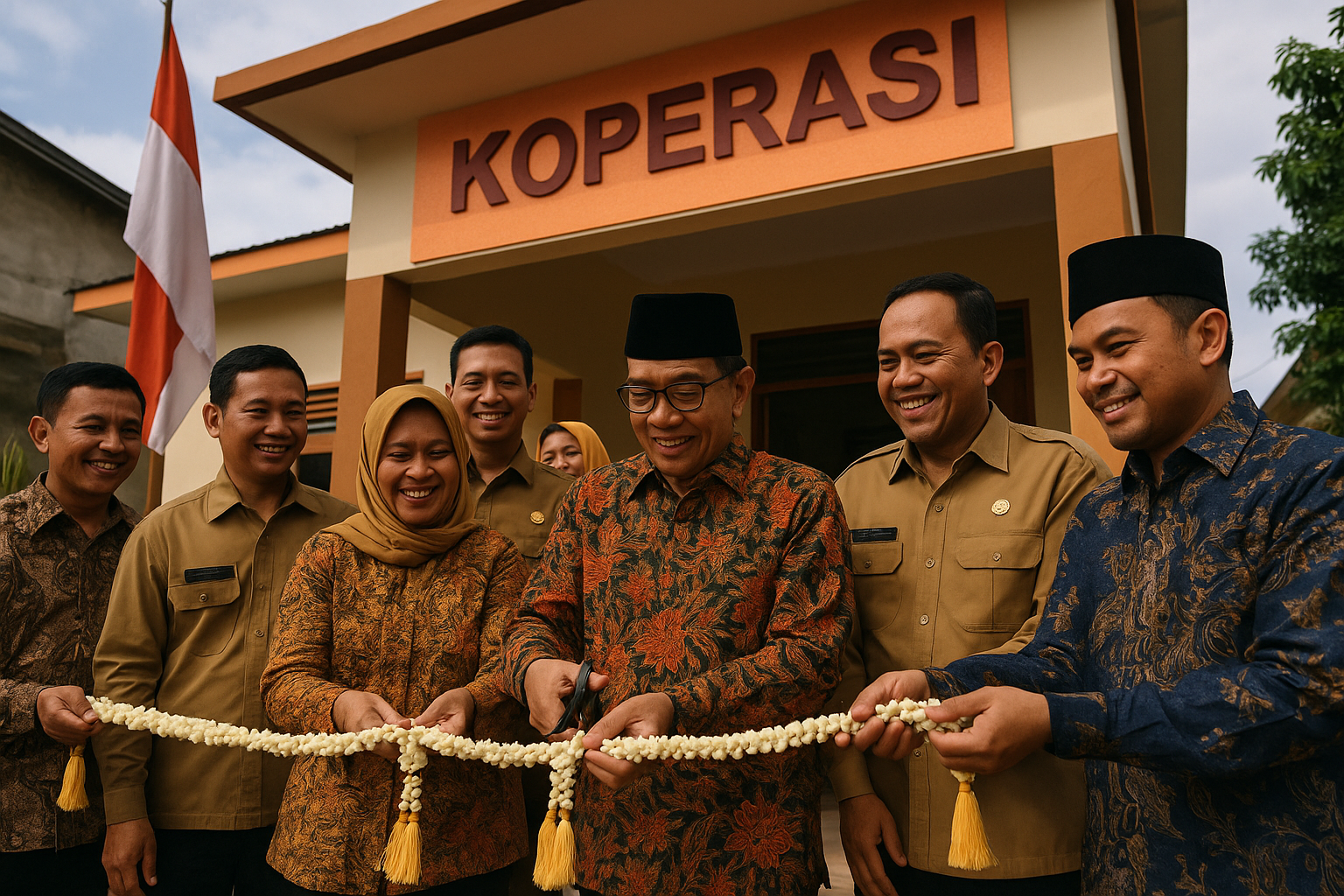
Prabowo Launches First of 80,000 Red-White Cooperatives to Drive Local Growth
On Monday, July 21, President Prabowo Subianto officially inaugurated the first of thousands of planned “Red-White” cooperatives—an ambitious state-led initiative designed to revitalize community economies and bolster food self-sufficiency across Indonesia.
Speaking in Klaten, Central Java, Prabowo framed the project as a means to shorten supply chains and increase access to essential goods, especially for economically vulnerable populations. “Everyone must have access to goods at affordable prices,” he emphasized.
Coordinating Minister for Food Affairs Zulkifli Hasan confirmed that over 100 of these cooperatives are already operational. The government aims to establish more than 80,000 of them nationwide within three months, each embedded in local villages and urban wards across the country.
The program—backed by up to US $15 billion in state bank loans—is designed to bypass bureaucratic delays and market inefficiencies. By decentralizing service delivery, it seeks to uplift grassroots communities, eliminate predatory lending, and stimulate job creation, aligning with Prabowo’s broader economic vision of achieving 8% GDP growth, a level unseen in decades.
The “Red-White” cooperatives, named after Indonesia’s national colors, will function as community hubs offering services like grocery and fertilizer distribution, subsidized cooking gas, financial support, logistics, and basic healthcare. Officials estimate the initiative could generate 2 million jobs and significantly reduce the influence of middlemen and loan sharks. Village heads will oversee each cooperative.
Each unit is eligible to borrow up to Rp 3 billion (approximately S$250,000) from state banks—accumulating to a potential national loan exposure of over Rp 240 trillion (S$18.8 billion). However, concerns have been raised over the financial risk this could pose to rural economies and national banks, especially following a directive from Prabowo last November to forgive US $550 million in bad loans held by small businesses.
The cooperative model is not new in Indonesia. Rooted in colonial resistance and later formalized by the country’s founding leaders, cooperatives were seen as tools of economic democracy. President Sukarno viewed them as essential to achieving food independence, while President Suharto scaled them during the 1970s–80s through heavily subsidized village units. Although they once helped secure rice self-sufficiency, many became politicized and inefficient, collapsing after the 1997–98 Asian financial crisis when state support vanished.
Despite these setbacks, cooperatives remain widespread today, with over 130,000 active cooperatives and participation from more than 10% of Indonesia’s population.
At the launch, Prabowo concluded with a powerful metaphor: “A cooperative is the weapon of the weak. One stick breaks easily. But when bound together, many sticks form a strong, unbreakable force.”
