


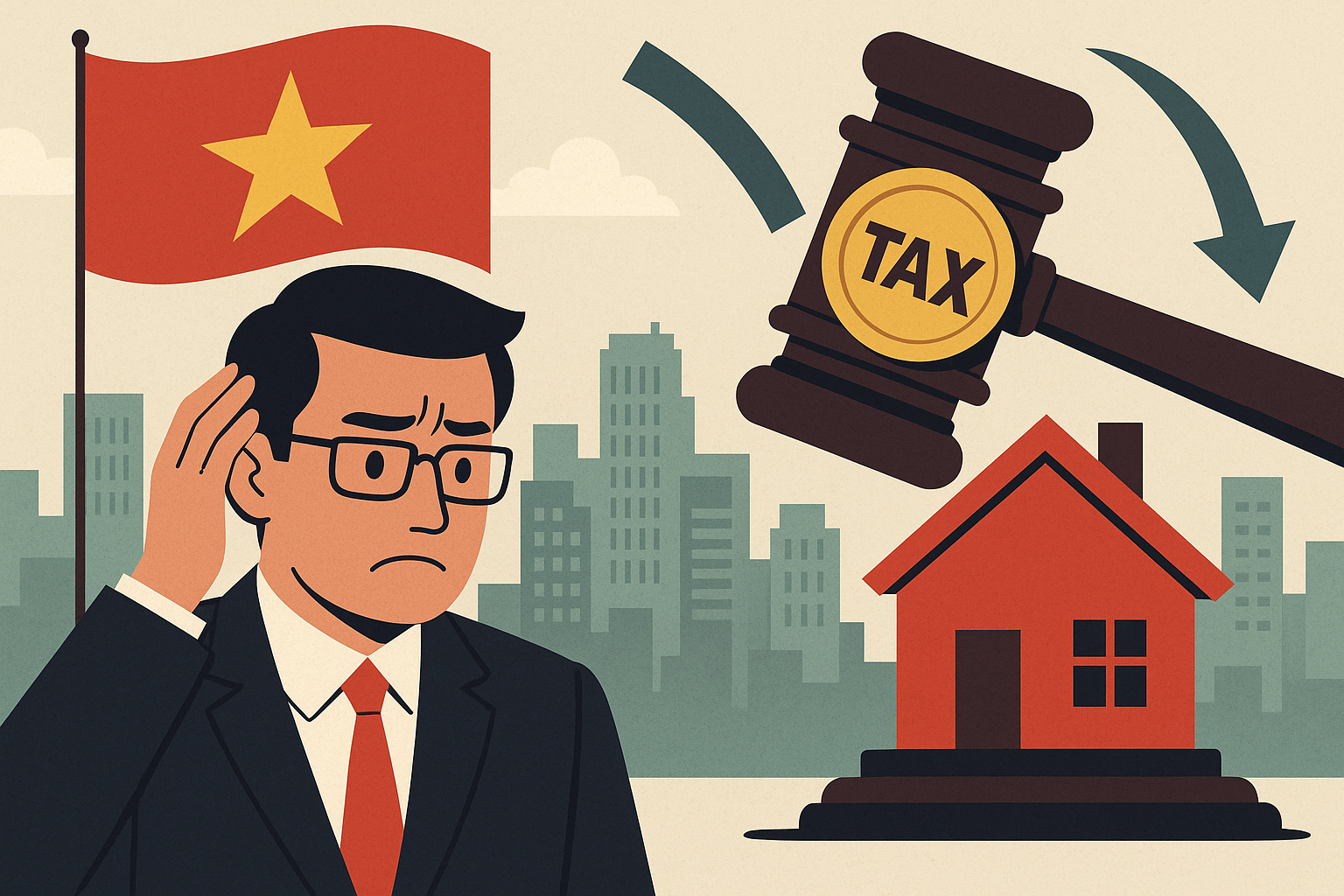
Vietnam’s Proposed Real Estate Tax Reform Raises Concerns Over Market Stability
Vietnam’s Ministry of Finance has introduced a proposal to revamp the taxation system on property transactions, suggesting a shift from the current flat 2% levy on selling prices to a structure based on holding periods or capital gains.
The new model proposes a 20% tax on actual profits—calculated as the difference between selling and purchase prices minus associated costs. If those figures can’t be substantiated, a tiered tax of up to 10% would apply, particularly on properties held for less than two years.
The ministry argues the reform will close tax loopholes, curb speculative activity, and promote fairness. The approach takes cues from markets like Singapore, Taiwan, and Malaysia, where property taxes scale with holding periods to discourage quick flips. For example, Singapore imposes a 100% tax on gains from properties resold within a year.
Still, local industry stakeholders warn the timing could prove detrimental. They argue the proposed structure may hinder liquidity, inflate housing costs for end-users, and complicate tax enforcement—especially as Vietnam’s property market is just beginning to recover from a prolonged downturn.
Savills Vietnam’s Huynh Thi Huong Giang voiced concern over data limitations, citing that declared sale prices often diverge from actual transaction values. She expects higher taxes to discourage sales, slow transaction volumes, and create enforcement challenges, all while driving up prices for genuine homebuyers.
Investor Nguyen Thi Thu Xuan in Hanoi believes the changes could worsen affordability without deterring seasoned speculators, who often navigate loopholes. “Higher tax rates might simply encourage more underreporting rather than increase actual tax payments,” she noted.
Officials acknowledged these hurdles and emphasized a gradual rollout, aligned with improvements in housing policies, land databases, and legal frameworks.
Risky Timing Amid Fragile Recovery
Dinh Minh Tuan of PropertyGuru Vietnam criticized the proposal’s timing, suggesting it could “do more harm than good” in the current market climate. Vietnam’s property sector, which plunged in 2022 and 2023, only began showing signs of revival in 2024–2025 following regulatory easing.
Soaring property prices—driven by limited supply and speculative demand—have pushed homes out of reach for many Vietnamese. In Hanoi and Ho Chi Minh City, it can take decades of average family income to afford an apartment.
A Savills report predicts further price hikes this year, especially with new high-end projects entering the market and supply constraints persisting.
A recent survey from Batdongsan.com.vn revealed that 59% of buyers are investors, many of whom plan to sell within the year. A 10% tax on profits could diminish returns and discourage smaller investors, particularly in the high-end and land segments.
Tuan warned that this could stall momentum in a recovering market and trigger knock-on effects across the economy.
With Vietnam targeting GDP growth of 8.3%–8.5% in 2025, the real estate sector remains a crucial pillar. Prime Minister Pham Minh Chinh has emphasized the need to revive traditional growth engines—including domestic consumption and investment—while embracing green and digital growth.
Analysts say that stabilizing the property market and ramping up infrastructure spending are essential to restoring consumer confidence in an economy where household spending accounts for around 60% of GDP.
