


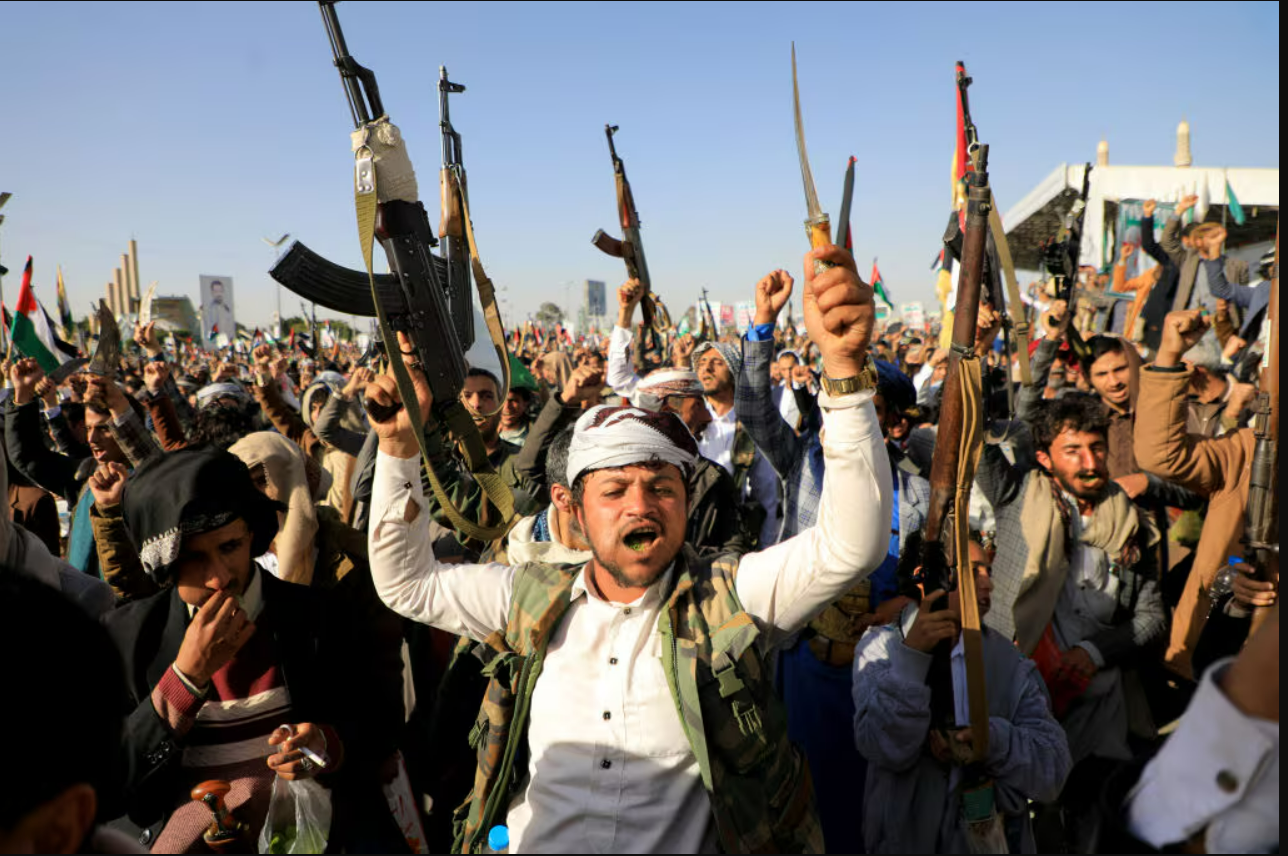
Saudi Arabia has carried out airstrikes on Yemen’s Houthi-controlled port city of Hodeidah, according to the Houthi administration, raising fears of renewed escalation in the long-running Yemeni conflict.
The Houthi-controlled Foreign Ministry condemned the attack, warning that the strikes would trigger further retaliation and mark a new phase of confrontation with Saudi Arabia.
In a statement, the ministry said targeting Hodeidah would lead to an “escalation for escalation” strategy, suggesting that the group would respond to the military action.
Houthi-run Al Masirah television reported that the strikes hit facilities linked to Yemen’s telecommunications authority, while additional attacks were reported on Kamaran Island. At least one woman was injured in the Kamaran Island strikes, according to the outlet.
Witnesses also reported explosions near Hodeidah’s port, a key entry point for commercial goods and humanitarian supplies into areas controlled by the Houthis. However, the Saudi-led coalition denied targeting the port facility.
Hodeidah remains one of Yemen’s most strategically important locations, as the port handles a significant portion of imports reaching northern Yemen, where millions of people rely on external aid and essential supplies.
Saudi-led coalition spokesman Major General Turki al-Maliki blamed the Houthis for the rising tensions, accusing the group of carrying out “reckless” attacks against international shipping in the Red Sea.
Al-Maliki said the coalition would continue taking necessary military measures and warned that further Houthi attacks would be met with a response “without hesitation.”
The latest strikes follow recent Houthi attacks on Saudi-linked maritime targets in the Red Sea. On Wednesday, the group claimed it had launched drone and missile attacks on Saudi oil tankers, damaging at least one vessel.
The Houthis said the attacks were a response to what they described as a renewed blockade, announced on July 20, following a strike on Sanaa International Airport that the group blamed on Saudi Arabia.
Yemen’s internationally recognised government, which is backed by Riyadh, accepted responsibility for the airport operation, saying it targeted an unauthorised Iranian aircraft arrival.
Houthi military spokesperson Yahya Saree said the airport strike ended a period of relative calm that had existed since an unofficial ceasefire began in 2022. The truce, although never formally signed, represented the longest reduction in fighting since the Saudi-led coalition entered Yemen’s war in 2015.
The Houthis had previously disrupted Red Sea shipping during the Gaza war but largely avoided direct involvement in the wider US-Iran conflict. However, the renewed Saudi-Houthi confrontation now risks creating additional instability across the region.
Analysts warn that further disruption to Red Sea shipping could have global economic consequences, as the route is one of the world’s most important trade corridors, carrying a significant share of international container traffic.
Houthi spokesperson Mohammed Abdul Salam said the group’s maritime restrictions were focused only on Saudi-linked vessels and denied that the group was blocking the Bab al-Mandeb Strait, a crucial waterway connecting the Red Sea with the Indian Ocean.
The latest exchange of attacks has increased concerns that Yemen’s fragile security situation could deteriorate further, potentially affecting regional stability and global trade routes.
