


Fire and Rescue NSW has renewed its warning about disposing of batteries in household rubbish after firefighters responded to two separate garbage truck fires in Sydney on the same morning, with improperly discarded batteries suspected as a possible cause.
The incidents occurred at Marayong in Sydney’s west and Chippendale in the inner city, highlighting the potentially serious consequences when lithium-ion batteries and battery-powered products such as vapes are thrown into general waste or recycling bins.
FRNSW is using the incidents to reinforce its public safety message: “Never Bin A Battery.”
Garbage Truck Catches Fire at Marayong
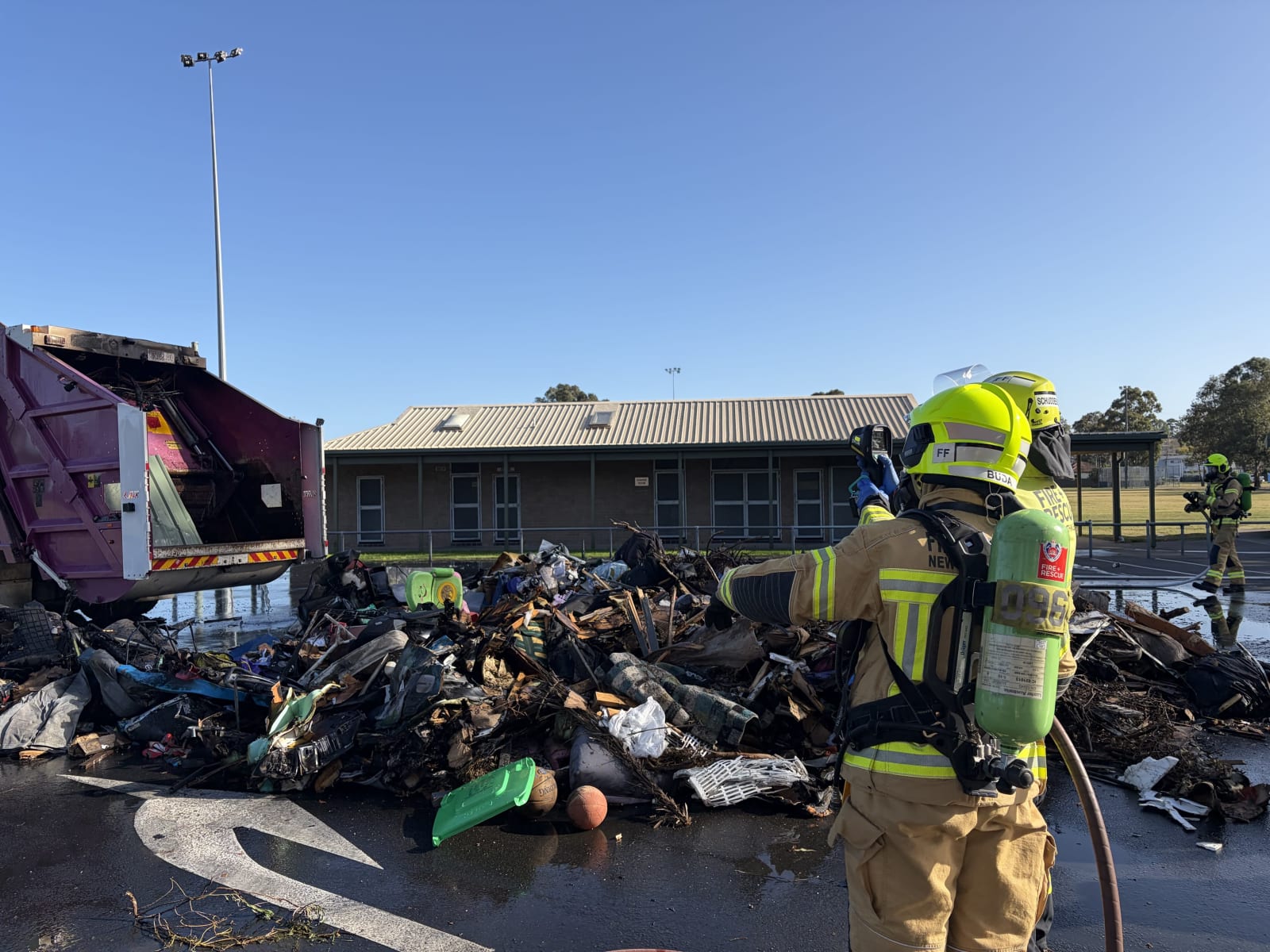
The first emergency unfolded shortly after 7am when FRNSW received a Triple Zero (000) call reporting a garbage truck on fire at Marayong Park in western Sydney.
Two fire appliances carrying eight firefighters were dispatched to the scene.
When crews arrived, they discovered flames burning at the rear of the garbage truck.
The vehicle was subsequently relocated to a nearby car park so firefighters could deal with the burning material more safely.
The truck’s waste load was emptied onto the roadway, giving emergency crews direct access to the contents and allowing them to extinguish the fire.
The incident caused damage to the garbage truck and also disrupted traffic around Sofa Street while firefighters carried out their work.
Second Garbage Truck Fire Reported in Chippendale
Only a few hours later, firefighters were confronted with another similar incident.
Shortly after 9.20am, FRNSW crews were called to a garbage truck fire at Chippendale in Sydney’s inner city.
Firefighters brought the blaze under control quickly.
Investigators believe a vape battery may have been responsible for the second fire, although the cause was described as possible rather than definitively established.
The two incidents occurring on the same morning have prompted FRNSW to remind households about the dangers associated with disposing of batteries through normal waste collection systems.
Why Batteries Can Start Garbage Truck Fires
Lithium-ion batteries are widely used in everyday consumer products, including mobile devices, rechargeable tools, electronic cigarettes and vapes, toys and numerous portable electronic products.
While convenient, these batteries can present a significant fire hazard when damaged.
When batteries are placed in household rubbish or recycling, they can be subjected to considerable physical pressure as waste is collected, compacted, transported and processed.
A battery that becomes punctured, crushed or otherwise damaged can overheat.
In some circumstances, this can trigger a dangerous process known as thermal runaway, in which rapidly increasing temperatures can cause a battery to ignite.
Inside a garbage truck containing large quantities of combustible waste, even a relatively small battery can potentially become the starting point for a much larger fire.
Battery Fires Can Be Difficult to Control
FRNSW warns that fires involving lithium-ion batteries can become particularly intense and may be challenging to extinguish.
The danger extends beyond damage to garbage trucks or waste-processing equipment.
Waste collection workers can be exposed to sudden fires while carrying out their jobs, while firefighters may be required to deal with hazardous and unpredictable conditions.
Members of the public can also face risks when fires occur on suburban streets, near homes or businesses, or at waste and recycling facilities.
Garbage truck fires can additionally lead to road closures and traffic disruption when burning waste needs to be unloaded so firefighters can safely reach the source of the blaze.
FRNSW: ‘Never Bin A Battery’
FRNSW Acting Superintendent Peter Murray said batteries should not be placed in either household rubbish or recycling bins.
He warned that batteries can become crushed or damaged inside garbage trucks and waste-processing facilities, creating potentially significant fire hazards.
Instead, households are being encouraged to take used batteries and battery-powered devices to appropriate battery recycling or disposal facilities.
The message from emergency authorities is that even a small battery can lead to a much larger emergency if it enters the normal waste stream.
Vapes and Other Battery-Powered Products Require Proper Disposal
The possible involvement of a vape battery in the Chippendale incident also highlights the importance of correctly disposing of electronic products containing built-in batteries.
Consumers may not always think of disposable electronic products as batteries, but many contain lithium-ion cells capable of causing fires if crushed, punctured or exposed to damaging conditions.
For that reason, battery-powered products should be kept out of ordinary household rubbish and recycling unless local disposal guidance specifically allows otherwise.
Residents should instead use recognised battery recycling collection points or other approved disposal services.
Joint Campaign Targets Growing Battery Fire Risk
FRNSW’s warning forms part of its joint public safety campaign with the NSW Environment Protection Authority aimed at reducing fires caused by incorrectly discarded batteries.
The “Never Bin A Battery” campaign encourages residents to separate batteries and battery-powered products from general household waste and take them to suitable recycling or disposal locations.
Authorities hope that improving disposal habits will reduce the number of battery-related fires affecting garbage trucks, recycling facilities and other parts of the waste-management system.
The two Sydney garbage truck fires provide a timely example of why those precautions matter.
With rechargeable and lithium-ion batteries now present in an increasing number of everyday products, FRNSW is urging households to treat their disposal as a fire-safety issue rather than simply another form of rubbish.
The central message is straightforward: batteries should never be thrown into household rubbish or recycling bins, because one small damaged cell can potentially trigger a dangerous fire and put workers, emergency crews and the wider community at risk.
