
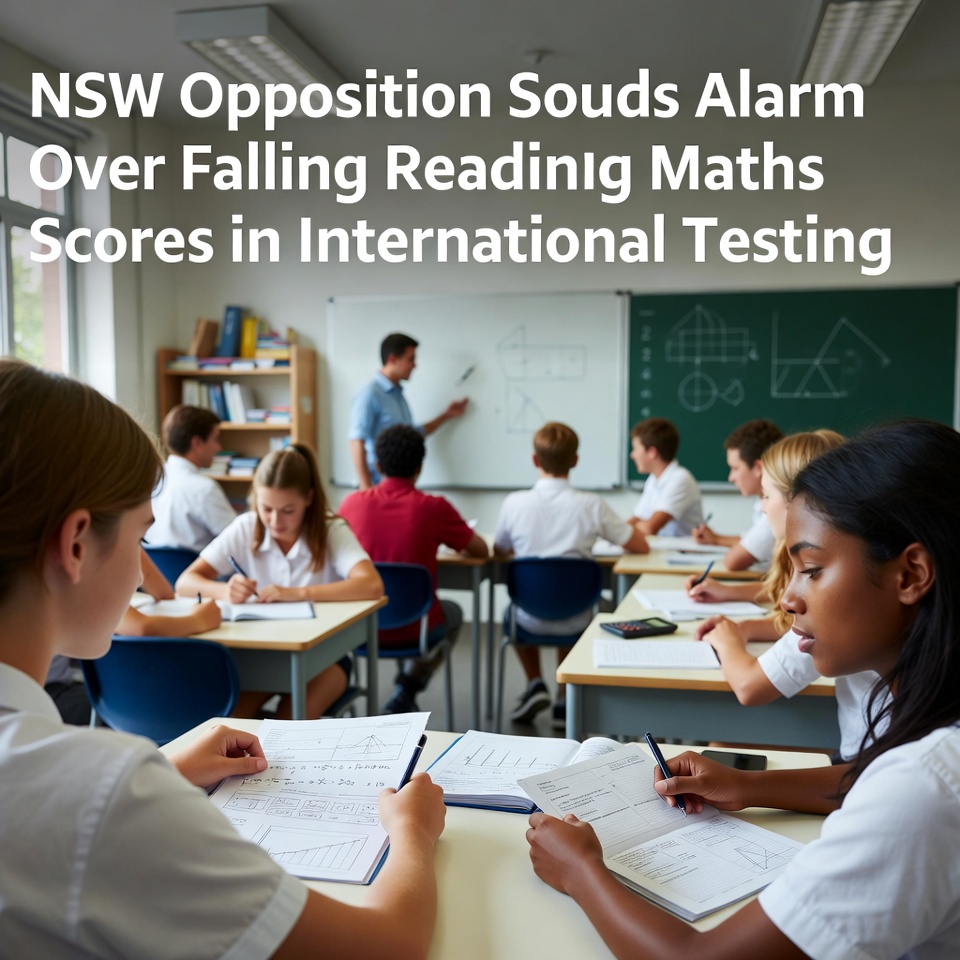
The NSW Opposition has intensified pressure on the state government over education standards, pointing to international assessment results that it says show reading and mathematics performance among NSW students has deteriorated.
The criticism centres on results from the Organisation for Economic Co-operation and Development’s Programme for International Student Assessment, commonly known as PISA, which assesses the skills of 15-year-old students across participating education systems.
According to figures cited by the Opposition, NSW reading and mathematics results declined compared with 2022, prompting renewed debate about classroom teaching, teacher support and academic standards across the state.
Shadow Minister for Education Mark Speakman has argued that the results should serve as a warning to the NSW Labor Government and called for stronger action to improve student outcomes.
PISA Measures Skills Needed Beyond the Classroom
PISA is an international assessment coordinated by the OECD and is designed to examine how effectively 15-year-olds can apply their knowledge and skills to practical situations.
Rather than concentrating solely on whether students can recall curriculum content, the assessment examines their ability to use reading, mathematics and science knowledge when responding to real-world problems.
The results are frequently used by governments, education departments and researchers to compare educational performance between jurisdictions and identify longer-term trends.
The Opposition says NSW’s latest results indicate significant challenges remain in two fundamental areas of learning: literacy and numeracy.
Opposition Says Reading Performance Has Declined
According to the figures presented by the NSW Opposition, reading performance fell from the level recorded in the previous PISA assessment in 2022.
The Opposition says the latest reading result is at the lowest level NSW has recorded since PISA testing began in 2000.
It argues that the decline should be of particular concern because strong reading skills underpin learning across almost every other school subject.
The figures cited in the statement indicate that 56 per cent of NSW students reached the national proficiency standard for reading.
That would mean a substantial proportion of students assessed were below the nominated proficiency benchmark.
Mathematics Results Also Raise Concerns
Mathematics was another major focus of the Opposition’s criticism.
According to the Opposition, NSW’s mathematics score has fallen to its lowest recorded PISA level.
The figures it provided indicate that only half of NSW students met the national proficiency standard in mathematics.
The Opposition also said NSW was being outperformed by Victoria, which it described as the state’s closest comparable education system.
The results have prompted calls for greater attention to the way mathematics is taught and how teachers are prepared and supported to deliver numeracy instruction.
NAPLAN Results Add to Education Debate
The PISA findings come amid broader debate over student achievement following the release of recent NAPLAN results.
The Opposition claims the proportion of NSW Year 3 students requiring additional support in numeracy has risen by more than a quarter over the three years since Labor took office.
It also says around 30 per cent of NSW students across Years 3, 5, 7 and 9 are not meeting national benchmarks in reading, writing and numeracy.
Taken together, the Opposition argues the PISA and NAPLAN results indicate that more needs to be done to strengthen foundational academic skills.
Speakman Questions Government’s Education Record
Shadow Education Minister Mark Speakman used the results to criticise the Minns Labor Government’s performance on education.
Speakman argued that declining academic results could undermine parents’ confidence in the public education system if improvements are not achieved.
He also pointed to changes in public school enrolments.
According to figures cited by Speakman, enrolment in government schools increased by more than 40,000 students during the period of the previous Coalition governments, while numbers fell by more than 260 during Labor’s first two years in office.
The Opposition is presenting those figures as another indicator of pressure facing the public school system.
Education Budget and Teacher Numbers Under Scrutiny
Speakman also raised concerns about education funding and staffing.
He claimed the latest NSW Budget reduces education employee expenses by about five per cent in real terms after accounting for inflation.
He further argued that budget assumptions point towards continuing declines in both public school enrolments and teacher numbers.
The Opposition says those trends need to be considered alongside student performance because adequate staffing, teacher preparation and classroom resources can influence the quality of education delivered in schools.
Opposition Calls for Greater Use of Explicit Teaching
Among its proposed responses, the Opposition is calling for greater use of evidence-based explicit teaching approaches in reading and mathematics.
Explicit teaching generally involves teachers clearly explaining concepts, demonstrating skills, guiding students through practice and gradually moving them towards independent work.
The Opposition wants to ensure such evidence-based approaches are consistently implemented across classrooms rather than being adopted unevenly between schools.
It is also calling for greater attention to both initial teacher education and ongoing professional development in literacy and mathematics instruction.
The argument is that teachers need strong subject knowledge as well as effective methods for teaching foundational skills.
Classroom Behaviour Management Also Identified
Behaviour management is another area the Opposition says requires additional attention.
It wants teachers to receive sufficient training and practical support to manage classroom behaviour effectively, arguing that maintaining orderly learning environments is important for academic progress.
Disruptive classrooms can reduce teaching time and make it harder for students to remain engaged with lessons, particularly when they are already struggling with fundamental literacy or numeracy concepts.
The Opposition therefore wants behaviour-management training to form part of a broader strategy aimed at improving educational outcomes.
Technology’s Classroom Role Should Be Examined
The Opposition has also called for closer scrutiny of technology use in schools.
While digital technology can provide valuable educational resources, Speakman wants the government to ensure its use does not become counterproductive or distract students from learning.
The issue reflects a wider debate within education about finding an appropriate balance between digital learning and traditional classroom instruction.
The Opposition’s proposed reforms also include stronger consideration of support for students with disability to ensure they can participate effectively in learning.
Education Performance Set to Remain Political Focus
The latest dispute places literacy, numeracy and public school performance firmly back on the NSW political agenda.
The Opposition argues that after more than three years in office, the Labor Government should be delivering stronger improvements in student achievement and says the latest results demonstrate a need for a change in approach.
For parents and educators, however, the central question extends beyond the political contest over responsibility.
The latest assessment figures cited by the Opposition raise broader questions about how NSW can strengthen foundational reading, writing and mathematics skills and ensure students are adequately prepared for further education, employment and everyday life.
With international testing and national assessments providing continuing measures of student achievement, education outcomes are likely to remain closely scrutinised as the government and opposition debate the best approach to improving NSW schools.
