


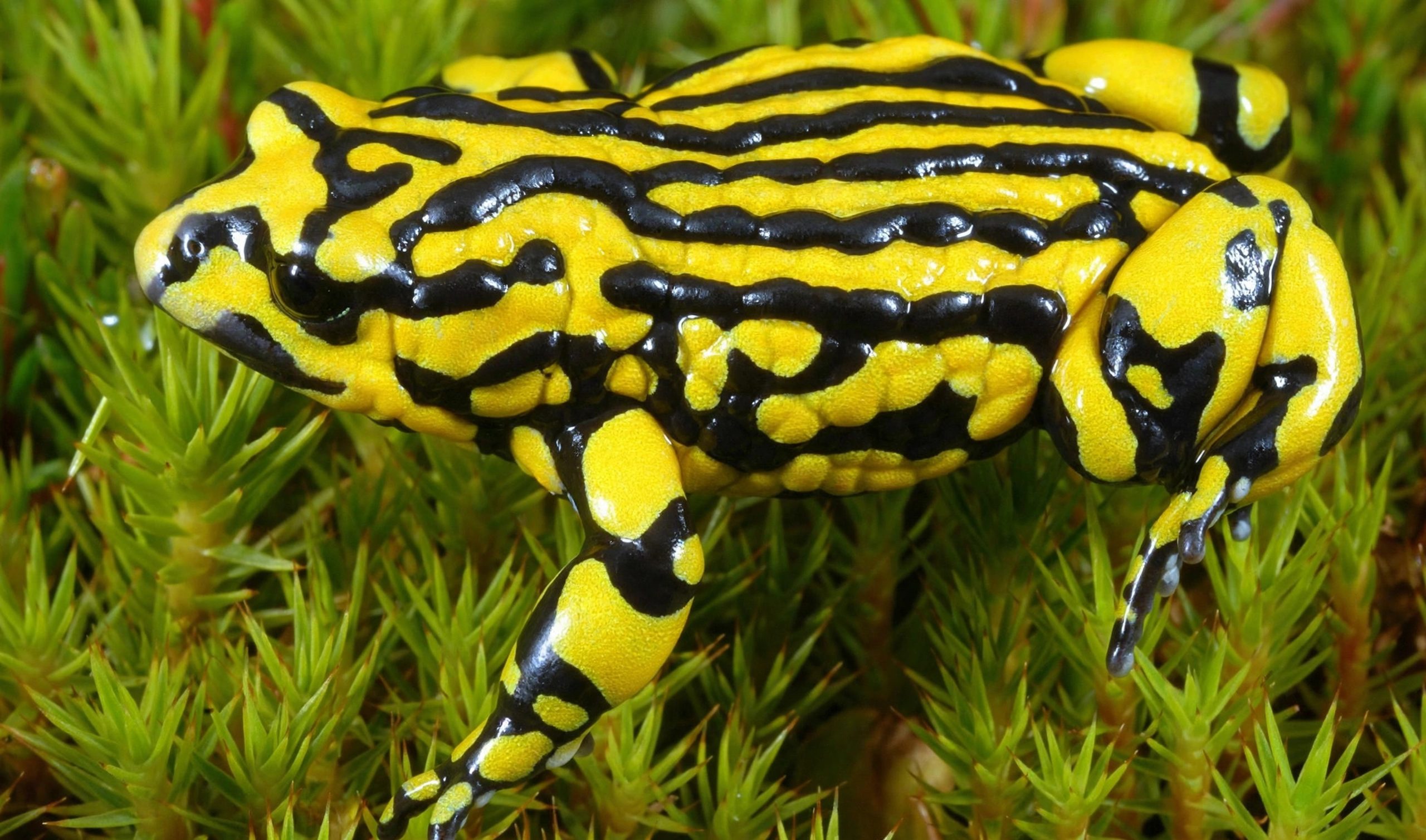
Australian researchers have shown for the first time that genomic selection — a breeding technique widely used in agriculture — could help one of Australia’s most threatened frogs become more resilient to the deadly disease that has driven it to the brink.
The southern corroboree frog (Pseudophryne corroboree) is considered functionally extinct due to chytridiomycosis, an infectious disease caused by the amphibian chytrid fungus. Captive breeding has kept the Critically Endangered species alive, but returning frogs to the wild remains difficult because the fungus persists in the environment.
The research, published in the journal npj Biodiversity, found that southern corroboree frogs differ in how long they survive after exposure to chytrid fungus, and that some of this variation is inherited. That finding opens the door to selective breeding for disease resilience — a first for conservation.
Lead author Dr Mikaeylah Davidson completed the work as part of her PhD at the University of Melbourne, and said the study marks the first application of genomic selection in conservation. “Using genomic data, we were able to show that survival following chytrid infection is a heritable trait, meaning some of the differences in survival are due to genetic differences that can be passed on to the next generation,” Dr Davidson said. “This means there is genetic variation we could potentially use to improve survival through selective breeding.”
“Excitingly, this approach is a potential way to move beyond simply keeping endangered frogs alive in captivity, towards actively improving their ability to cope with the threats preventing their recovery in the wild.”
The team of researchers from the University of Melbourne, James Cook University, the NSW Government, Zoos Victoria and Taronga Conservation Society combined laboratory experiments with genome-wide genetic information, including a custom genotyping array developed for the southern corroboree frog. Modelling indicated that genomic information could be used to guide breeding decisions and potentially increase average survival time after exposure to chytrid fungus by around nine per cent in the next generation, while managing inbreeding and retaining genetic diversity.
Importantly, the research suggests improved disease resilience does not need to come at the expense of genetic diversity. That is particularly significant for small, Critically Endangered populations, where maintaining diversity and limiting inbreeding are central to long-term population health and evolutionary potential.
Senior author University of Melbourne Professor Lee Skerratt said the approach may also have potential for other threatened wildlife affected by persistent disease, particularly species already managed through captive breeding. “Amphibians are an important focus, with hundreds of species now maintained in captivity for conservation as chytrid fungus continues to threaten populations globally,” Professor Skerratt, from the Melbourne Veterinary School, said. “Genomic selection could help conservation breeding programs move beyond preventing extinction by moving animals into captivity towards actively supporting animals’ ability to survive threats in the wild.”
The research builds on six years of work to develop the genomic tools and disease datasets needed to explore new conservation strategies for the critically endangered southern corroboree frog. By combining a newly mapped genome and a custom genotyping array with extensive disease-resilience data, researchers were able to investigate selective breeding as a proactive approach to species recovery.
The next stage of the research is to improve and validate the predictions using genomic information from more of the breeding population and to explore other genetic approaches to improve disease resistance. Researchers will also test whether predicted improvements are realised in subsequent generations and, critically, whether greater survival under laboratory conditions translates into better outcomes in the wild. Dr Davidson is now a research fellow at James Cook University. The research was supported by Australian Research Council grants.
