


In an opinion piece for the Lowy Institute’s The Interpreter, Melissa Conley Tyler argues that the Coalition is sending mixed signals on climate change — and that young Australians are the ones who will pay the price.
Her focus is a set of remarks made on Monday by the Opposition’s foreign affairs spokesperson, Ted O’Brien, as he argued against ratifying the proposed free trade agreement between Australia and the European Union. O’Brien said it was unacceptable that the deal would “lock Australia in” to achieving its Paris Agreement commitments through a legally binding agreement.
Conley Tyler writes that O’Brien appeared to say the Paris Climate Agreement was not legally binding — or perhaps that the Coalition would exit it. One of the two, she says. His objection, she argues, only makes sense if he does not believe the Paris Agreement is legally binding, or if the Coalition is planning to leave it.
That premise is wrong, she argues. The Paris Agreement, she writes, is a binding treaty in the same way that a free trade agreement is. Australia was one of 195 parties that adopted the agreement at the United Nations Climate Change Conference in Paris in 2015 — incidentally, under a Coalition government. The agreement was duly considered by the Joint Standing Committee on Treaties, which recommended ratification. In 2016, then foreign minister Julie Bishop announced that Australia would ratify it, describing the negotiation of the agreement as “a turning point in the global transition to a lower emission future” and confirming Australia’s target of reducing emissions by 26 to 28 per cent below 2005 levels by 2030 — a target she said was comparable with other advanced economies. Bishop said at the time that Australia’s policy was “to meet our international commitments on emission reduction while at the same time maintaining energy security and affordability.”
The EU agreement would go through the same process, Conley Tyler notes. It also needs to be signed, scrutinised by the Joint Standing Committee on Treaties and then ratified — in the European Union’s case, by the European Parliament. There is no basis, she argues, for viewing climate treaties as somehow less “binding” than trade agreements.
Nor is the EU deal an outlier, she writes. A commitment to climate action is also included in Australia’s legally binding treaties with Fiji, Naoero and Tuvalu, to mention just three recent instances — with wording that is arguably broader, though less specific, than the EU agreement.
So is the Coalition planning to exit the Paris Agreement? Both the Liberals and the Nationals have reiterated their commitment to the climate treaty in the context of One Nation’s policy that Australia should withdraw, Conley Tyler notes. But O’Brien’s words, she argues, could be interpreted as leaving a door open for exactly that. She quotes him directly: “Introducing legally binding climate obligations in the EU FTA risks eroding Australian sovereignty, by constraining the choices of future Australian governments.”
It is not a view shared by all his colleagues, she points out. South Australian Liberal Senator Andrew McLachlan has said the climate clauses in the EU trade agreement simply refer to honouring existing commitments — the same as in the United Kingdom free trade agreement signed by the Morrison government in 2021 and ratified by the Albanese government in November 2022.
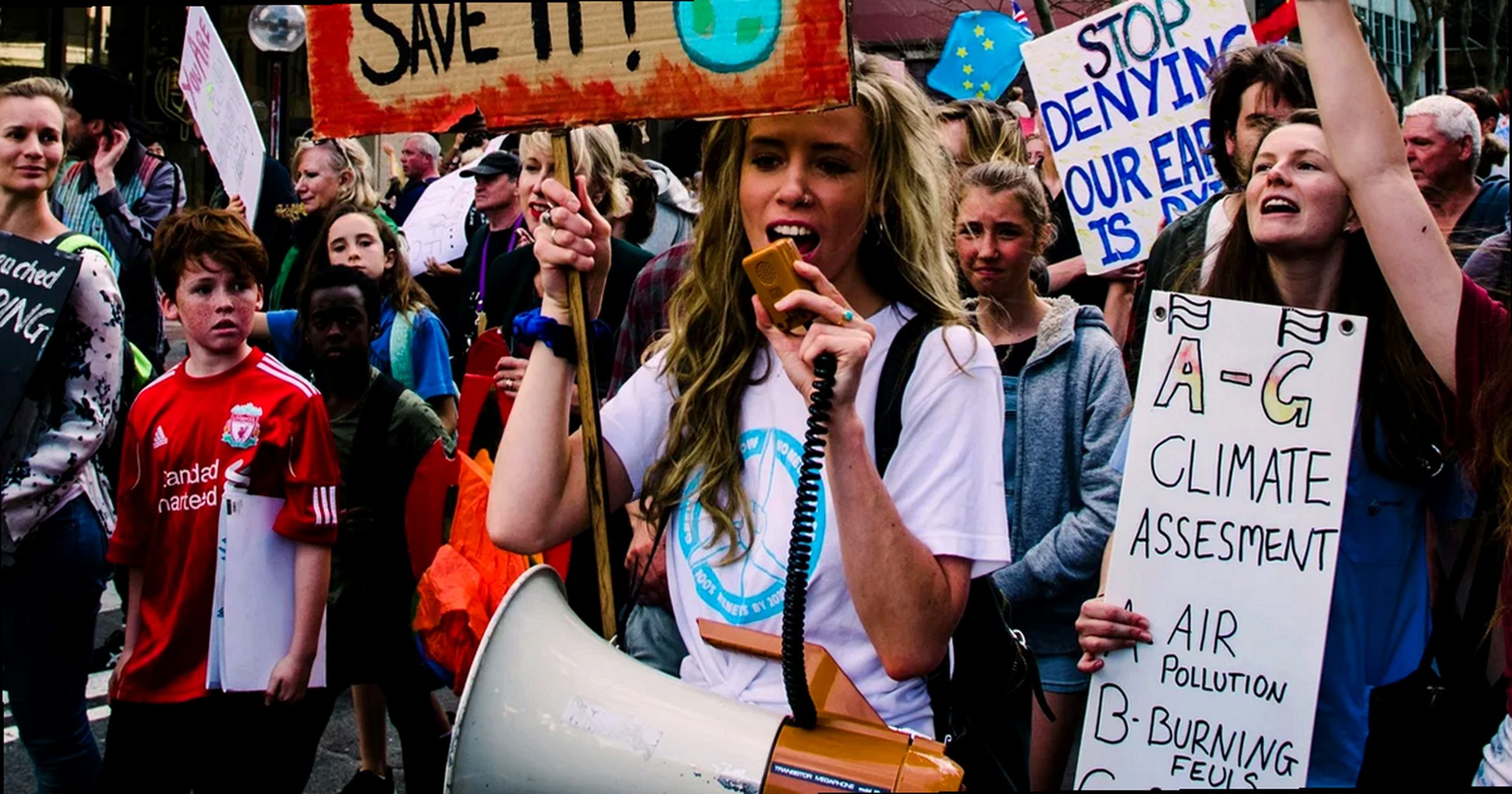
The generational stakes were put to O’Brien directly, Conley Tyler writes. A Monash University student in the audience asked him how Australia can truly be part of the Pacific family if it ignores the region’s climate concerns. Polling consistently shows that climate change is considered a serious and pressing issue by most young people. O’Brien had framed his remarks by talking about what sort of Australia his young daughter will live in, urging the country to act with “ambition, urgency and courage”. But his comments, Conley Tyler concludes, left the impression that he was dismissing the very issue that is top of mind for the next generation.
