


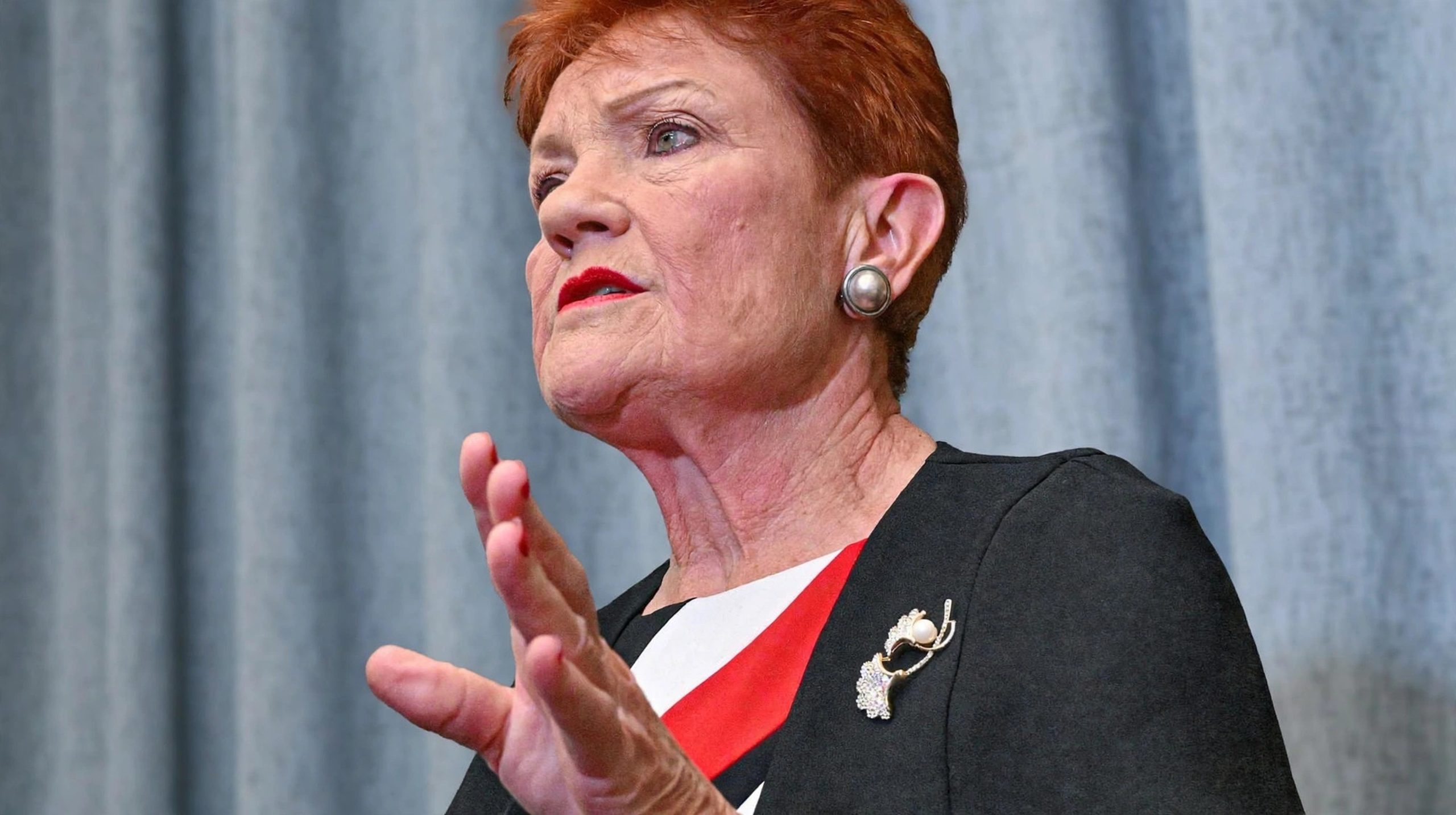
One Nation has unveiled the hardest-line migration policy of the current political debate, vowing to slash Australia’s annual refugee intake by 90 per cent and scrap permanent visas for the parents of migrants.
Party leader Pauline Hanson announced the latest details of One Nation’s migration policy in Canberra on Wednesday, including cutting the annual refugee and humanitarian intake from 20,000 places to 2,000. Under the proposal, thousands of parents and grandparents of migrants already in Australia waiting for a permanent visa would be refunded their $50,000 fee and told to leave the country, although they would then be allowed back on a temporary visa sponsored by their family. There are about 150,000 migrant parents in the queue for a visa, with some already on bridging visas.
“We’ve got to take a tough stance on this. My concern is for the Australian people out there. They’re the ones that are doing it tough,” Senator Hanson told reporters. “If you want to bring in your parents, your cost, not a cost to the taxpayer, no problem with (that) whatsoever. It’s called tough love, but my love is for the Australian people first and foremost.”
Senator Hanson denied the cut to the annual refugee intake was targeting Muslim-majority nations. “I’m not slamming the door shut at all. I’m saying 2000 people, that is the limit,” she said. “We will have a humanitarian program of 2000 people a year who can actually get to come to Australia, but you’re not going to just have an open door for these people to come in anymore. We can’t afford it.”
One Nation says its modelling shows the refugee and parent visa changes would save the budget $140 billion over the next decade, although detail was not included of how much the visa fee refunds would cost. Scrapping the parent visa has been floated as part of efforts to slash 750,000 overall migrant places over three years, then impose an ongoing cap of 130,000 a year as part of One Nation’s immigration policy.
The plan drew swift condemnation. Immigration Minister Tony Burke said kicking out family members could undermine the workforces of industries reliant on overseas workers. “If you look at how reliant our hospitals are on overseas doctors, or our construction workers are on people in skill shortage trades, 50 per cent of those people who come at the moment bring family with them,” he told reporters in Newcastle. “If they can’t bring their family, they won’t come. What One Nation is proposing is a complete attack on the services that Australians rely on.”
The Asylum Seeker Resource Centre’s deputy chief executive, Jana Favero, described One Nation’s policy as a cheap attack. “People are worried about paying rent and affording groceries. People are sick of politicians finger-pointing and blaming our newest arrivals for problems,” she said.
The proposal sits far below the Coalition’s position, which has pledged to cut refugee migration levels in half. Opposition Leader Angus Taylor said the Coalition would not lower its targets after One Nation’s stance. “Some of the greatest Australians came here through as refugees to this country … but we need to make sure the people who come here as refugees do share our values and they’re the right people,” he said.
The OECD’s latest international migration outlook, released earlier in November, said Australia had the second-highest number of refugee resettlements in 2025 with 19,000 arrivals, an increase of nine per cent on the previous year. Australia also had the second-highest number of resettled refugees per capita, with 700 people per million, behind Canada on 970 people per million. The same report said the number of new asylum applications had fallen by seven per cent in 2025.
