


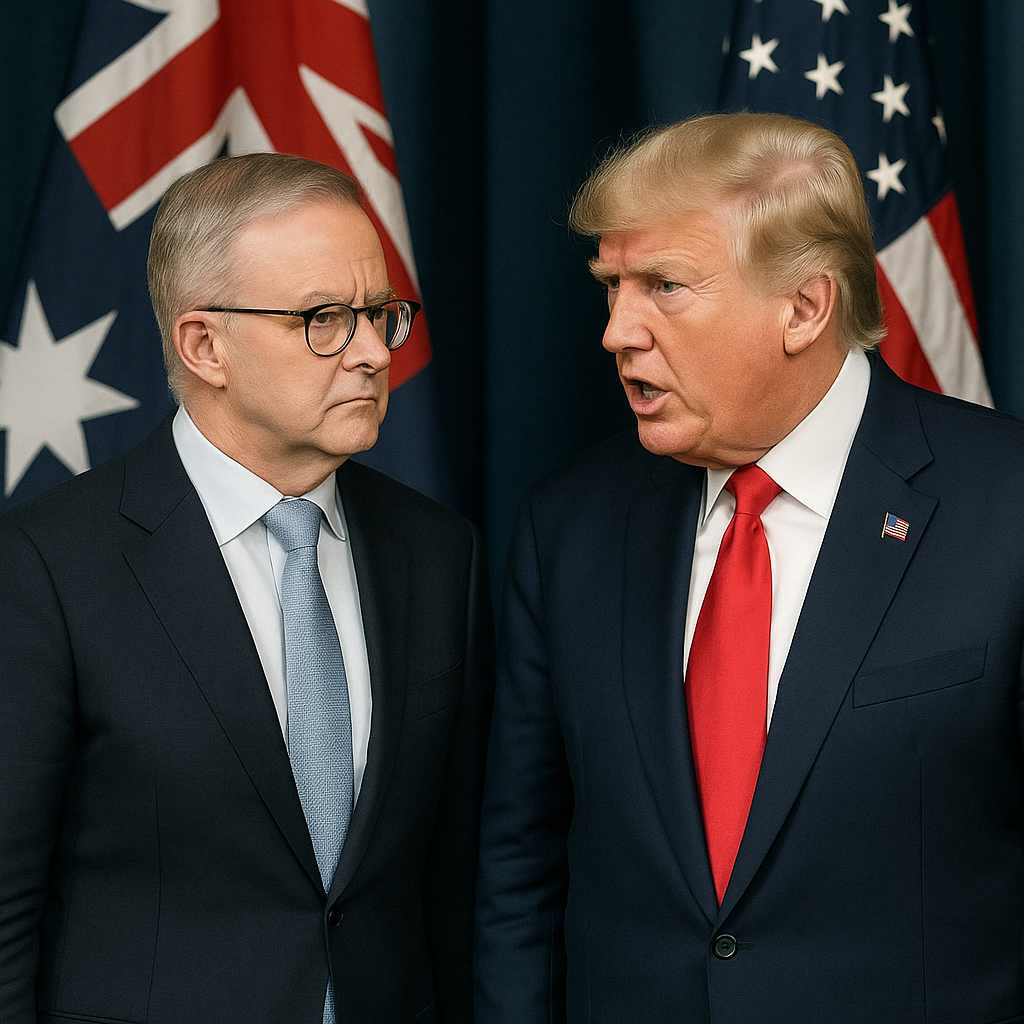
ANALYSIS: Trump’s White House Performance Returns—Will Albanese Face the Heat or a Handshake?
Donald Trump’s return to presidential theatrics is in full gear. Just three months into his second term, it’s clear that a White House visit now means more than a diplomatic photo opportunity—it’s often a stage for confrontation.
Ukrainian President Volodymyr Zelensky recently received a stern lecture on NATO contributions, while South Africa’s Cyril Ramaphosa endured a headline-making ambush on controversial issues during his own visit.
So, what can Prime Minister Anthony Albanese expect?
While no meeting has been scheduled, both Albanese and Trump have publicly expressed a desire to sit down. Earlier this year, Albanese invited Trump to visit Australia and has since described private conversations with the U.S. President as “warm.” Still, the two leaders offer a striking contrast in personality and political style.
Tensions already exist. Trump recently imposed 25% tariffs on Australian steel and aluminium, prompting Albanese to criticize the move as “entirely unjustified” and unfriendly. Adding to the complexity is Albanese’s 2017 remark—before his time as PM—where he said Trump “scares the s**t out of me” and called his presidency “a worry for the world.” These past comments resurfaced during the last election cycle but have been largely muted in the current diplomatic environment.
If Albanese does meet Trump at the White House, he may face a very public test of composure. Trump thrives on confrontation and unpredictability, traits that have energized his political base through two successful election campaigns.
Beyond personalities, deep ideological differences exist. On climate policy, for instance, Trump has rolled back environmental protections and abandoned the Paris Agreement, while Albanese has passed ambitious emissions-reduction targets and promoted renewable energy infrastructure through programs like “Rewiring the Nation.”
Then there are social issues. Labor has embraced LGBTQ+ inclusion policies, whereas Trump has pushed bans on transgender athletes in women’s sports. While such topics might not arise in formal talks, they underscore the ideological gulf between the two.
Trump’s allies have also taken aim at Australia’s COVID-era policies, portraying the country as overly authoritarian. Right-wing commentators like Tucker Carlson likened Australia to “China-lite,” a view that resonated strongly among Trump supporters.
If a future meeting occurs—possibly during the G7 summit in Alberta this June—it may stick to safer territory like AUKUS and strategic defense ties. But any deviation could spark Trump’s characteristic on-the-spot criticism, as he’s demonstrated with other world leaders.
Still, Albanese has so far navigated Trump diplomacy with cautious professionalism. After Trump’s re-election, Albanese said they held a “very warm” phone call discussing AUKUS and tariffs. He also noted Trump offered personal compliments and expressed interest in future cooperation.
Trump, in turn, described Albanese as “very good” and “a friend,” downplaying his role in Australia’s election outcome but reaffirming their rapport: “We’ve had a very good relationship,” he said.
While the past may haunt any future meeting, both leaders appear to be laying the groundwork for a cordial—if carefully managed—relationship. But with Trump, the only certainty is unpredictability.
