


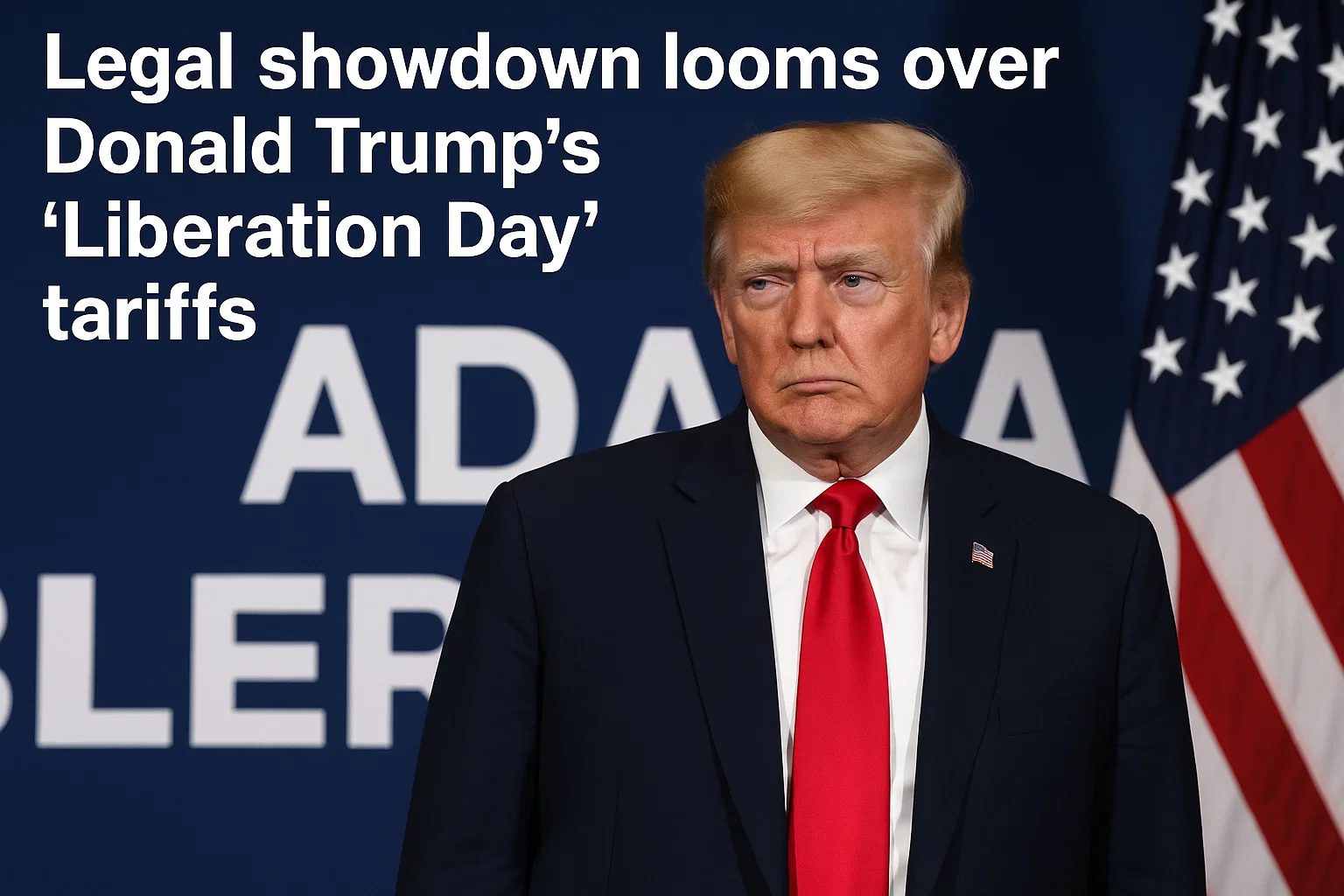
A legal clash is brewing over former President Donald Trump’s “Liberation Day” tariffs, after a U.S. appeals court paused a ruling that had declared many of them illegal.
Earlier this week, the U.S. Court of International Trade found Trump had exceeded his authority by imposing broad tariffs, ruling that such actions violated constitutional limits that give Congress—not the president—control over tariff policy. However, the U.S. Court of Appeals for the Federal Circuit has temporarily halted that ruling, setting the stage for a significant legal battle.
University of Michigan economist Professor Justin Wolfers explained that while Congress has delegated limited tariff powers to the executive branch, Trump’s use of the Emergency Powers Act to justify sweeping, global tariffs was both legally and practically dubious. “There’s no emergency,” Wolfers noted, arguing the act doesn’t cover tariffs.
The tariffs, already under legal scrutiny for some time, were struck down this week by a three-judge panel that included appointees from across the political spectrum. In a separate case, a district court judge also ruled the tariffs unconstitutional. Yet the federal government’s swift appeal has kept them in place—for now.
Wolfers expects the appeals court to ultimately rule the tariffs unconstitutional, but predicts the case will end up in the U.S. Supreme Court. Until then, the tariffs remain active, adding uncertainty to trade policy and financial markets.
Markets have reacted with less volatility this time compared to Trump’s initial tariff announcement in April, which caused sharp fluctuations. Wolfers suggested this may be because markets now see the policy as legally flawed and economically misguided. Alternatively, early reactions may have reflected a broader fear about instability and poor decision-making in the administration.
Andrew Lilley, chief interest rate strategist at investment bank Barrenjoey, said the financial world is adjusting to a more aggressive and unpredictable Trump. He pointed out that Trump’s persistence in enforcing the tariffs—even in the face of falling stock markets—signals a shift from the more cautious approach seen during his first term.
The Court of Appeals has ordered the small businesses challenging the tariffs to respond by June 5, with the U.S. government required to file its reply by June 9.
