


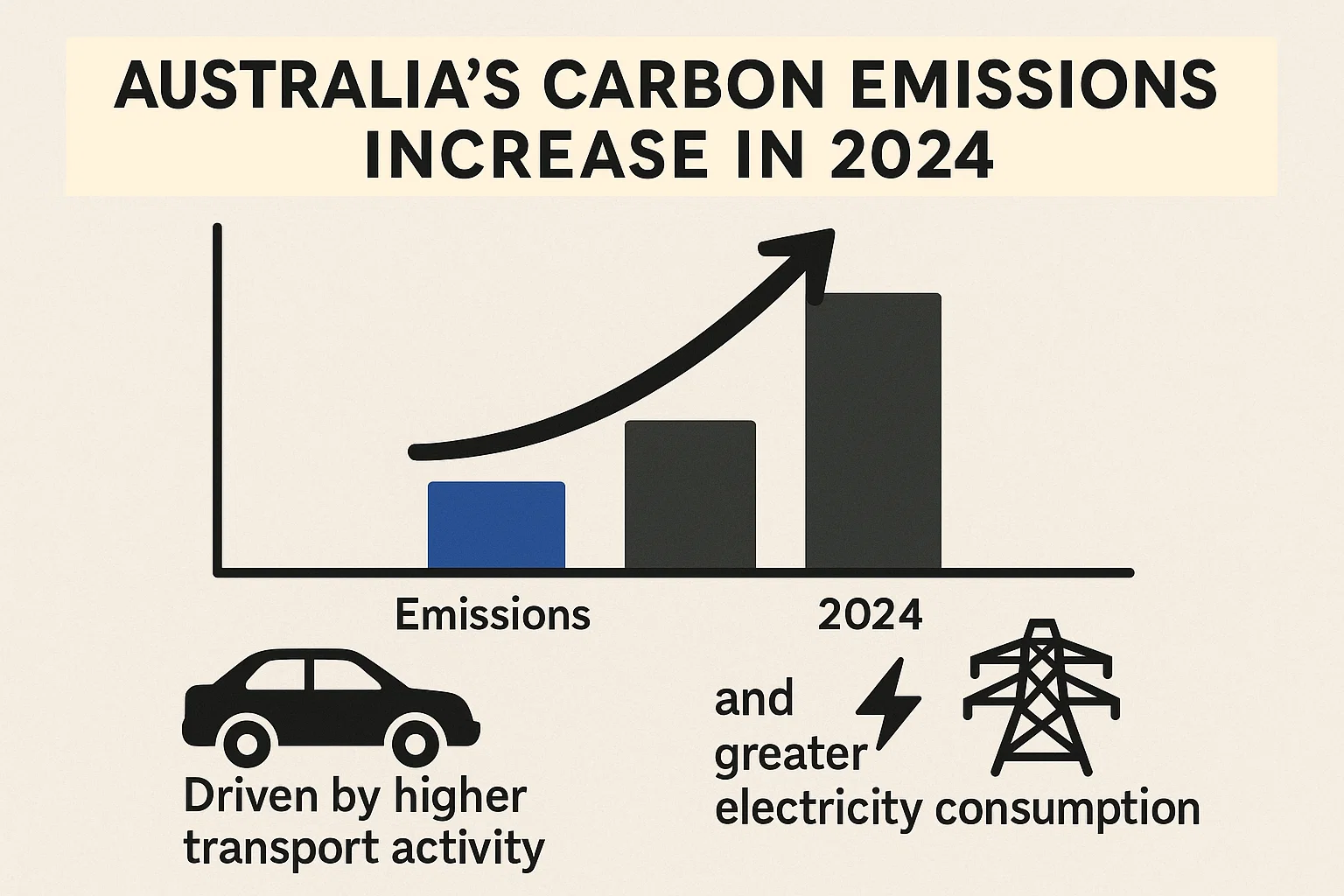
Australia’s latest emissions report shows the nation has made limited progress in reducing greenhouse gases, with emissions edging up slightly in 2024.
According to the quarterly update, emissions rose by 0.05% compared to 2023, largely due to increased electricity demand and a rise in transport sector emissions.
While Australia had made notable progress in cutting emissions between 2005 and 2021, reductions have stalled in recent years. In 2024, electricity emissions rose due to a 2.2% increase in power consumption and reduced output from hydroelectric sources. Meanwhile, transport emissions increased by 1.9%, driven by higher usage of aviation fuel and diesel, despite a drop in petrol consumption.
Some declines in emissions came from sectors like agriculture—affected by lower crop yields—and from reduced output in industries such as chemicals and steel manufacturing.
Energy Minister Chris Bowen highlighted those improvements as positive signs, noting industrial emissions are now lower than during the COVID-19 pandemic, even as the economy has rebounded. He reaffirmed the government’s commitment to achieving its 2030 emissions targets and stressed the importance of sustained effort across all sectors.
However, the Greens criticised the government’s climate record, linking the new emissions data to Labor’s recent approval of a 40-year extension for Woodside’s North West Shelf gas project. Greens leader Larissa Waters accused the Albanese government of failing to meaningfully cut emissions, claiming they are now higher than under the previous Morrison government. She also noted Labor had approved more than 30 new coal and gas projects during its current term.
The electricity sector remains Australia’s largest source of emissions, responsible for over one-third of the total. Despite renewable energy generation increasing by 5.6% in 2024, emissions rose due to unusual weather conditions. A drought in Tasmania reduced hydroelectric output, and wind generation also declined mid-year, prompting greater reliance on coal and gas.
Transport is the second-largest contributor to national emissions. The recent increase is attributed to surging aviation fuel and diesel consumption, even as petrol use continues to decline post-pandemic.
