


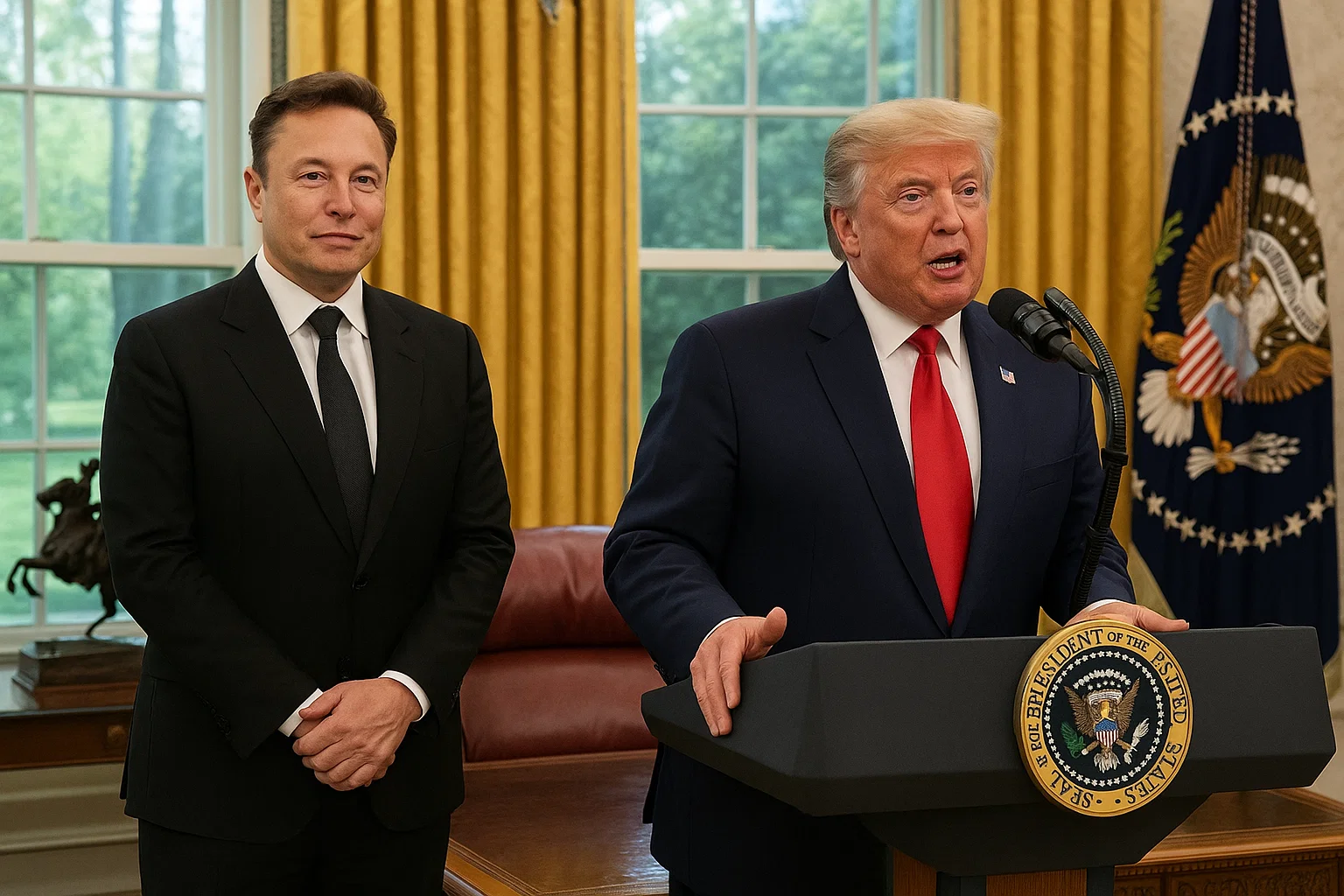
If not for his aggressive dismantling of government institutions, Elon Musk’s time in the DOGE administration might be remembered more for his frequent and fiery disputes with MAGA figures.
One of the first major rifts occurred even before Trump’s inauguration, setting the tone for future personal confrontations.
“We’re going to rip your face off,” declared Trump ally Steve Bannon on his podcast late last year, in what appeared to be a warning to Musk during a spat over specialist work visas. Bannon, who served as Trump’s chief strategist in his first term, had already vowed to take Musk down, calling him a “parasitic illegal immigrant.”
Reports from inside the White House indicate Musk quickly made other powerful enemies. In one instance, Treasury Secretary Scott Bessent allegedly shouted a string of expletives at Musk in a West Wing hallway in April, after Musk appointed a new tax agency head without informing Bessent.
Tensions had already flared at a prior cabinet meeting where Musk clashed with Secretary of State Marco Rubio and Transportation Secretary Sean Duffy, criticizing both for not cutting enough staff.
An Unorthodox Management Style
Musk’s aggressive cost-cutting methods earned comparisons to wielding a chainsaw. He also took to X (formerly Twitter) to feud publicly with Trump’s trade adviser Peter Navarro. When Navarro dismissed Tesla as merely a “car assembler,” Musk hit back, calling him “a moron” and “dumber than a sack of bricks,” later escalating the insult by calling him “Peter Retarrdo.”
Trump spokesperson Karoline Leavitt downplayed the spat, saying, “Boys will be boys,” and framing the conflict as an example of the president’s openness to diverse viewpoints.
Alienating Allies
These public battles contributed to the perception that Musk was a disruptive force with excessive influence. Some within Trump’s circle were likely relieved when Musk tweeted that his government role was ending.
“This is a way to make a lot of enemies and not that many friends,” Musk admitted roughly a month before his resignation announcement.
Throughout his tenure, Musk was embroiled in legal challenges related to DOGE’s activities. States like New York are investigating ways to penalize his companies. He also faced frequent public clashes, both online and politically, with members of both major parties.
While some of this may be written off as part of the increasingly aggressive American political landscape, the backlash has significantly impacted his businesses — especially Tesla.
Economic Fallout
Tesla suffered a steep drop in stock value, declining sales, and was targeted by protests and vandalism. These issues culminated in a 71% fall in profits during the first quarter of the year.
Nonetheless, some analysts believe Musk’s overall business portfolio — including SpaceX — could benefit from his time in the White House.
Still, Musk expressed disappointment about the limitations he faced in government. “I think we’ve been effective — just not as effective as I’d hoped,” he told his cabinet in a final meeting.
DOGE Vision Undermined
Musk had often portrayed DOGE’s mission as essential to saving the country, warning that the U.S. was on a path to bankruptcy due to rising debt.
He voiced strong opposition to Trump’s recently proposed spending legislation — formally named the One Big Beautiful Bill Act. “I think a bill can be big or it can be beautiful,” Musk quipped to CBS. “But I don’t know if it can be both.”
The bill would raise the debt ceiling by $US4 trillion ($6.2 trillion), introduce new tax cuts, and extend previous tax breaks, which critics argue benefit the wealthy. It also imposes stricter access requirements for food stamps and health insurance, potentially affecting millions.
After narrowly passing the House, the bill now moves to the Senate.
“I was disappointed to see a spending bill that actually increases the budget deficit,” Musk told CBS, arguing that it undermines the DOGE team’s work.
At what may have been his final White House press conference, Musk wore a “The Dogefather” T-shirt and sported a black eye, which he claimed came from letting his five-year-old son punch him.
More than the slogan, the bruise may be the most fitting symbol of Musk’s bruising stint in government — one he may later question was worth the cost.
